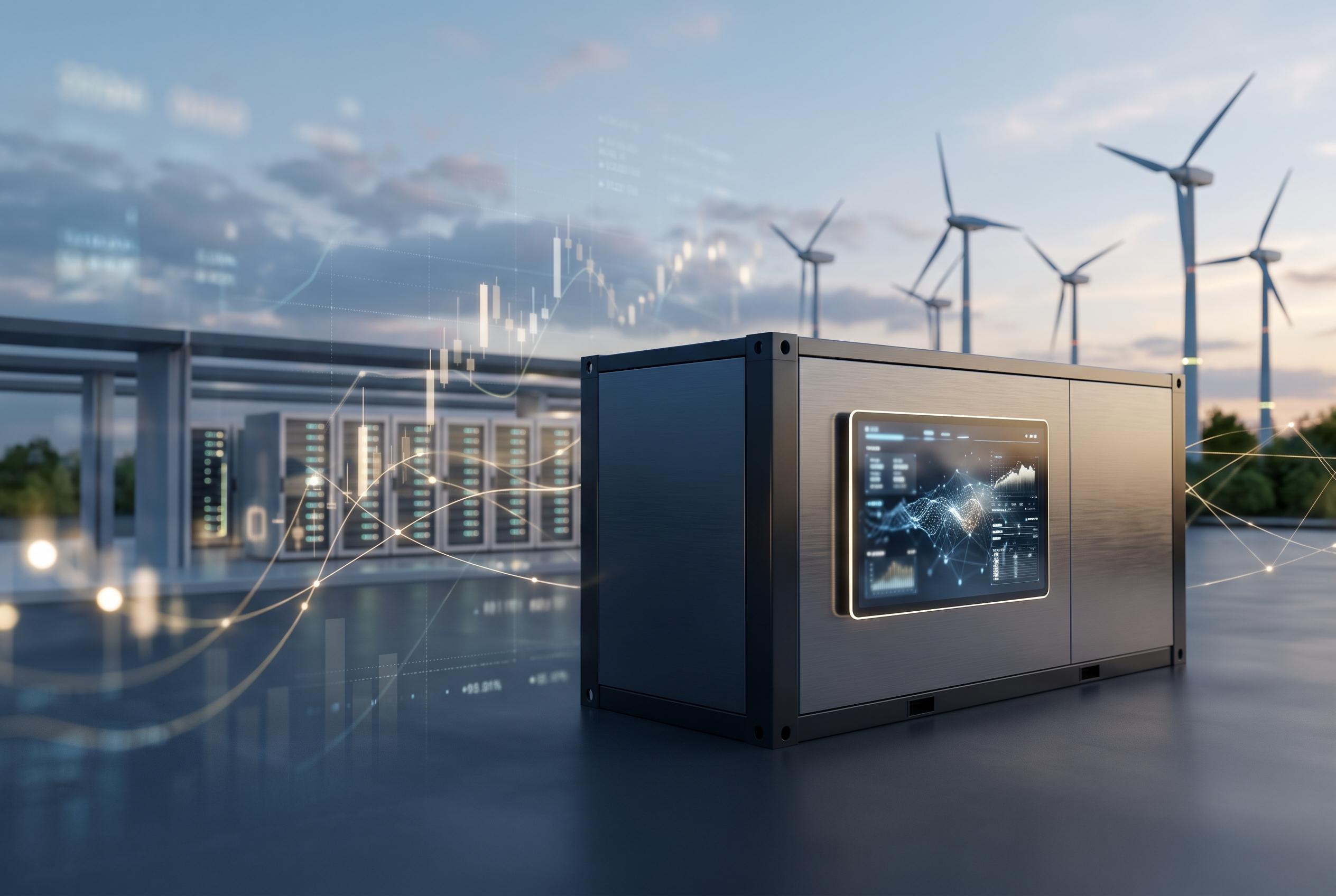

Delta X is shifting from traditional battery sales towards integrated energy storage systems, leveraging AI and automation to expand into Japan and India amid rising demand from data centres and renewable energy projects.
Delta X is betting that artificial intelligence will do more than reshape computing.It will also redraw the battery business.
As AI data centres multiply and renewable power expands, demand is shifting away from simple battery sales towards a broader model in which design, production lines and key parts are delivered together. Suhoon Kim, chief executive of Delta X, told the company’s Korean-language interview that data centres create demand for both standard energy storage systems and uninterruptible power supply units, with the latter covering sudden power interruptions and the former providing longer-duration backup.
That shift is helping Delta X push its energy storage system integration business into Japan and India. In Japan, the company is working with SoftBank on a battery project tied to the telecoms and technology group’s AI ambitions in Osaka. SoftBank said in May that it is launching a Japan-based battery business to support rising electricity demand from AI use, with production targeted to begin in the fiscal year ending March 2028 and mass manufacturing on a gigawatt-hour-a-year scale planned around FY2028. Technology publications have reported that the Sakai site is being developed as a vertically integrated complex linking an AI data centre, battery production and other manufacturing lines.
Delta X says its role goes well beyond design work. The company is supplying battery modules, battery management systems, power components, enclosures and containers, while also helping to build automated production lines that clients can use to assemble finished units themselves. Kim said the attraction for customers is not a one-off development fee but a recurring revenue stream built on the continuous supply of core parts.
Japan is also shaping the company’s supply-chain strategy. Delta X said its work with SoftBank involves South Korean automation equipment and components rather than Chinese machinery, reflecting a broader preference among some Japanese buyers for non-China sourcing. The company is also discussing expansion into the US market, where it sees similar demand from large-scale data centres and industrial power users.
India is the other main pillar of Delta X’s growth plan. Kim said the company already has a local entity in Hyderabad and is in talks with clients who increasingly want to assemble branded storage products in-country rather than import finished systems. Delta X is evaluating five states , Gujarat, Rajasthan, Maharashtra, Andhra Pradesh and Tamil Nadu , and hopes to finalise a site in the third quarter. The company is planning an initial pilot line before moving into larger-scale component supply.
The timing reflects how fast the market is moving. Kim said Indian government forecasts point to cumulative storage demand of 236 gigawatt-hours by 2032, while the broader economics of storage are improving as solar, industrial demand and grid strain increase. He also pointed to a longer-term strategy that includes Europe and the US, with Delta X eventually aiming to pair its hardware work with software and AI capabilities. For now, the company is positioning itself as a systems supplier rather than a battery maker, hoping that the biggest growth will come from the machinery and components that sit around the cell itself.
Disclaimer: This article is intended to inform and educate, not to recommend or endorse any financial product, investment or strategy. Please consider your own financial circumstances and seek professional advice where appropriate before making financial decisions.