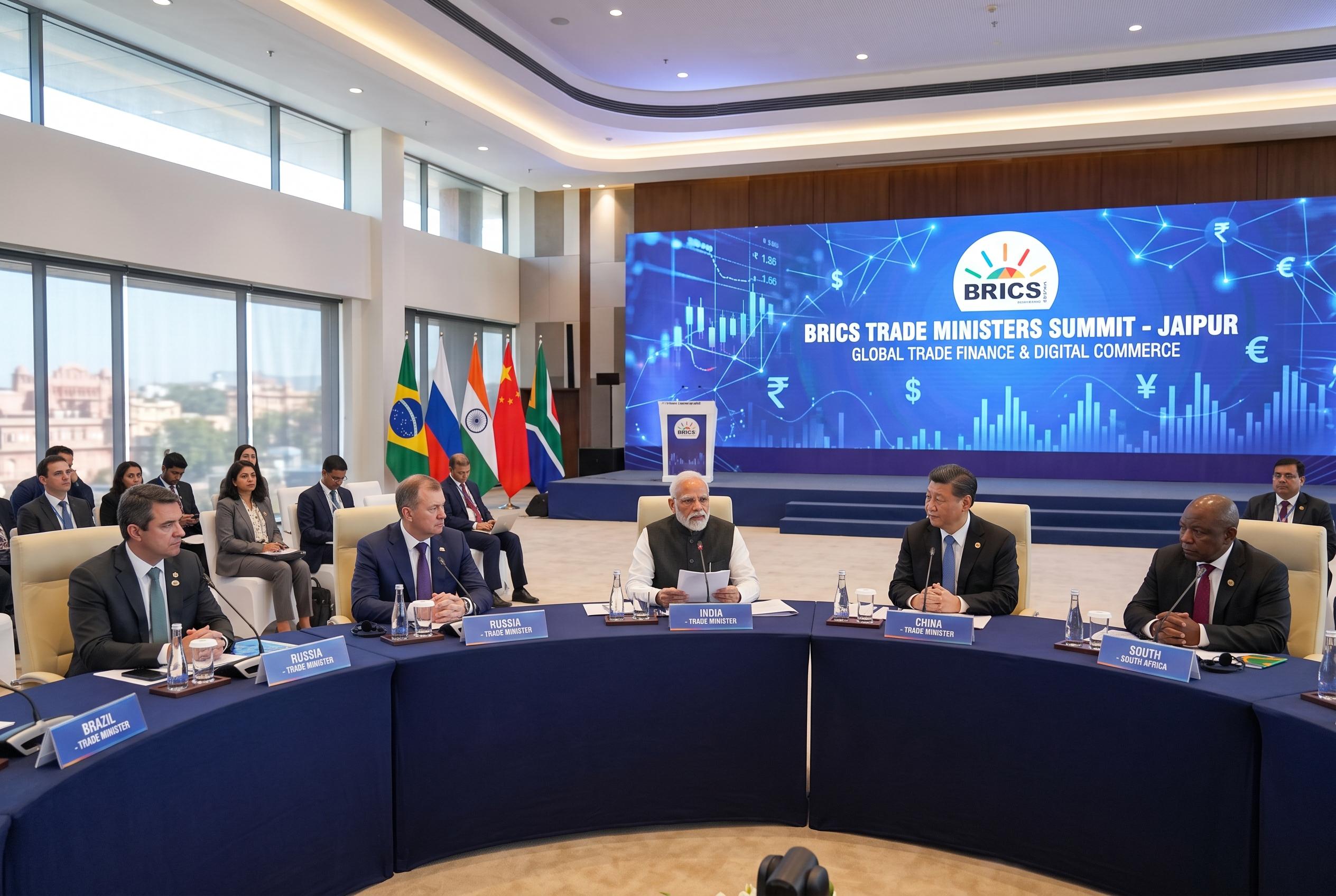

Trade ministers from BRICS nations convened in Jaipur to new measures aimed at closing a $2.5 trillion gap for MSMEs, boosting digital services, supply chains, and reinforcing multilateral trade support.
BRICS trade ministers meeting in Jaipur has backed a set of measures aimed at widening access to trade finance for smaller companies and reinforcing support for the World Trade Organization-centred multilateral trading system, according to India’s commerce ministry. The gathering, held under India’s chairship, ended with a chair’s statement and outcome document containing four annexes focused on MSMEs, supply chains, digital services and the wider BRICS economic partnership agenda.
A central theme of the meeting was the financing gap facing small firms. The ministers agreed to study a BRICS invoice discounting mechanism and adopted guiding principles for credit assessment frameworks for export-oriented MSMEs, a move meant to judge firms more on cash flow than on collateral. India said the package responds to a global trade finance shortfall of about $2.5 trillion that continues to limit the ability of smaller businesses to expand into export markets. Industry reporting has also pointed to a broader Indian push during its 2026 chairship to improve access to finance and strengthen fintech-led lending for small enterprises.
The ministers also reiterated support for the multilateral trading system with the WTO at its core, including development at its centre, special and differential treatment for developing economies and the restoration of a fully functioning, two-tier dispute settlement system. According to the ministry, they also backed policy space for developing countries to safeguard food and livelihood security, underscoring a familiar BRICS line on preserving room for industrial and social policy.
Beyond finance and trade rules, the meeting advanced work on supply chains and digital commerce. Ministers adopted a workplan on shared understanding of global value chains, including a 2026-2030 action plan, and discussed possible new platforms for supply chain and investment promotion, including in pharmaceuticals and food security. They also approved BRICS principles to facilitate digitally delivered services across borders, reflecting a push to place digital trade and services more firmly at the centre of cooperation.
The Jaipur meeting came after the Third BRICS Contact Group on Economic and Trade Issues in New Delhi on August 3 and 4 and followed earlier BRICS work on agriculture, where ministers met in Indore in June and adopted a joint declaration on food security, regenerative farming and innovation. India said the trade ministers are now working towards finalising the BRICS Economic Partnership Strategy 2030, which covers trade in goods and services, the digital economy, industry, technology, investment, financial cooperation and sustainable development.
Disclaimer: This article is intended to inform and educate, not to recommend or endorse any financial product, investment or strategy. Please consider your own financial circumstances and seek professional advice where appropriate before making financial decisions.