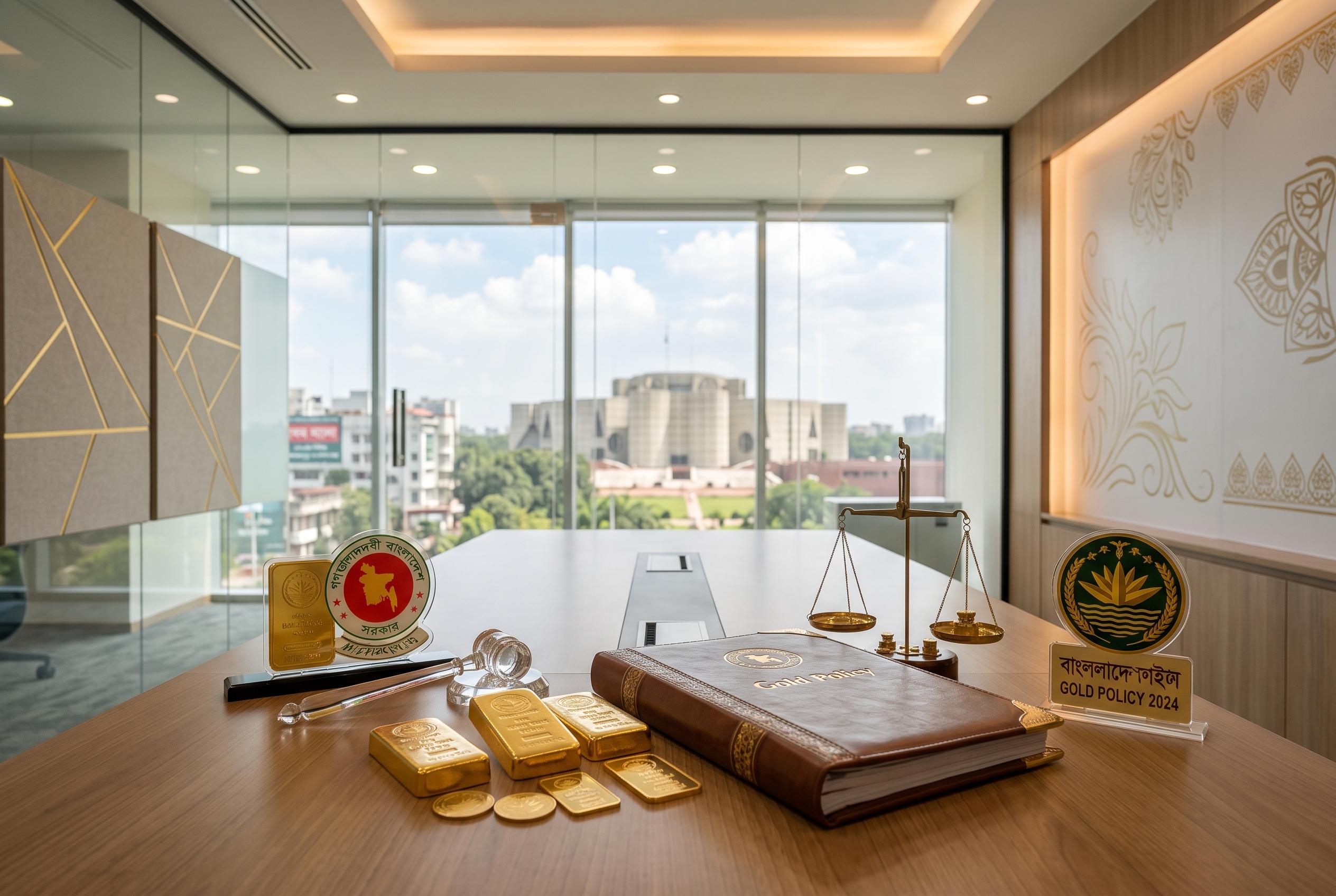

Bangladesh’s government has unveiled a revised national gold policy aimed at increasing transparency, expanding legal trade, and enhancing government revenue, amid efforts to better regulate a historically unmonitored sector.
Bangladesh’s government has drawn up a revised national gold policy aimed at bringing the sector into a formal system of regulation, documentation and oversight, in a move officials say could improve transparency, expand legal trade and lift state revenue. Commerce Minister Khandakar Abdul Muktadir told a meeting in Dhaka that the draft, titled “Gold Policy 2018 (Revised) 2026”, should be reviewed by relevant agencies and industry stakeholders before final approval.
The plan reflects a long-standing concern in Bangladesh that much of the gold business has operated with limited supervision. According to the ministry, the revised framework would require proper records at every stage of the legal gold trade, from import and sale to storage. Muktadir argued that formalisation would also support job creation, boost legal imports and make it easier for the government to monitor gold stocks and transactions.
The policy push comes alongside wider changes in the jewellery tax regime. The government has already introduced a fixed VAT structure for gold, silver and diamonds after objections from the Bangladesh Jewellers Association, which said a flat rate would be harder to evade than a percentage-based levy. The latest move also followed sharp swings in domestic gold prices over the past year, with local market rates rising to record levels before easing again in recent weeks.
Muktadir said the revised policy is also meant to encourage jewellery manufacturing and exports by allowing certain raw materials to be imported at lower duty rates, helping local producers compete through value addition. He added that the authorities want to narrow the gap between domestic and international prices to reduce smuggling, while also comparing the gold rules of several exporting countries, including India, before finalising Bangladesh’s own framework.
Disclaimer: This article is intended to inform and educate, not to recommend or endorse any financial product, investment or strategy. Please consider your own financial circumstances and seek professional advice where appropriate before making financial decisions.