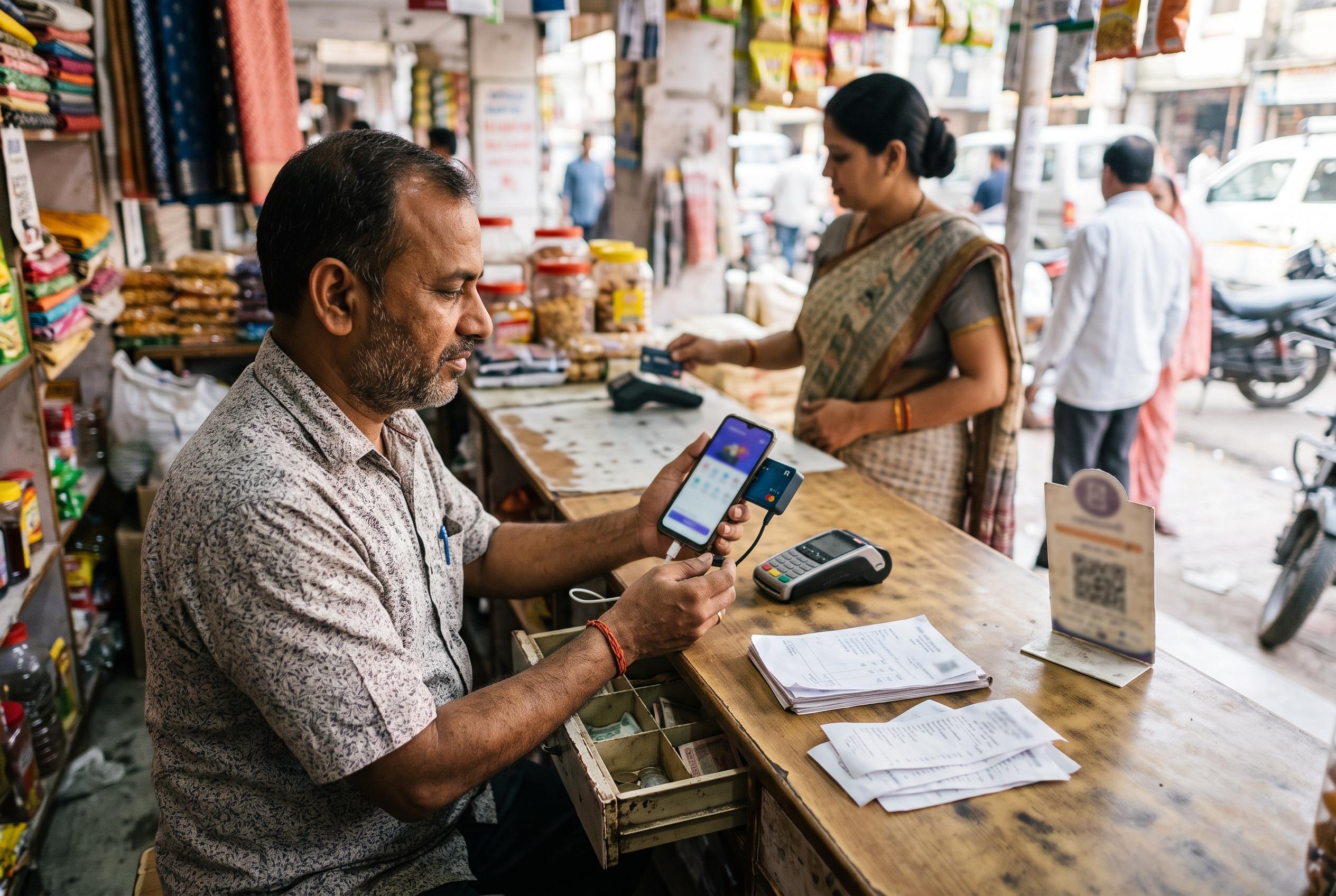

India’s Unified Payments Interface (UPI) processes billions of transactions annually, but its ownership and revenue models remain misunderstood. With new merchant fee regulations coming into force, experts emphasise that UPI remains a public infrastructure rather than a profit-driven enterprise.
India’s Unified Payments Interface has become one of the most widely used digital payment systems in the world, but its scale has also fuelled a basic misconception: many users treat it like a private payments company with a single owner and a simple revenue stream. In fact, UPI is a bank-to-bank payments rail run by the National Payments Corporation of India, a Reserve Bank of India-regulated body created by the banking industry with central bank backing, and the apps people use, such as PhonePe, Google Pay, BHIM and Paytm, are only the customer-facing layer on top of that infrastructure. According to the original article, the point matters because ownership of NPCI does not translate directly into a claim on UPI transaction income.
NPCI itself has a broad banking shareholding base. The article says that, as of 31 March 2025, major shareholders included Union Bank of India, Punjab National Bank and Bank of Baroda, each with about 9.15%, followed by Canara Bank at 8.14% and a group that included SBI, Bank of India, HDFC Bank, ICICI Bank, Citibank and HSBC at roughly 7.12% each. Together, those ten holders accounted for about 78.19% of NPCI’s equity. But that ownership structure should not be confused with the economics of UPI payments, because the value flowing through the network is not the same as revenue earned by the operator.
The scale of the system is enormous. The original article says UPI handled about 24.51 billion transactions worth ₹29.82 lakh crore in August 2026 alone, with roughly 752 banks live on the platform, and it put transaction value for April to August 2026 at about ₹147.56 lakh crore. Those figures describe money moving between users and merchants, not income retained by NPCI. In other words, a ₹10,000 payment adds ₹10,000 to transaction value, even though that money belongs to the customer and the merchant, not the network operator.
That distinction becomes especially important under the new merchant fee framework due to take effect on 15 October 2026. Reporting by LiveMint, Business Standard and other outlets says person-to-person transfers will remain free, while selected person-to-merchant payments above ₹2,000 will attract a merchant discount rate of 0.40%, capped at ₹300 per transaction. Small-value merchant payments below that threshold, as well as certain low-ticket merchant categories and some designated sectors, are protected or subject to separate rules. LiveMint reported that sectors such as railways, fuel, utilities, telecoms, insurance and tax payments will face a flat ₹5 charge, while capital-market transactions will have a different rate of 0.02%.
The way that fee is split also helps explain why UPI economics are often misunderstood. The article says the 0.40% charge is divided among the issuing bank, acquiring bank, UPI app and PSP or sponsor bank, with NPCI taking no direct percentage share from that specific distribution. On a ₹1 lakh eligible merchant payment, that would amount to ₹400 in total fees, split roughly into ₹160 for the issuing bank, ₹120 for the acquiring bank, ₹80 for the app and ₹40 for the sponsor bank, although the ₹300 cap limits the charge on larger single transactions. Industry estimates cited in the article suggest the framework could eventually generate about ₹13,000 crore to ₹15,000 crore a year across the ecosystem, but that figure still would not represent NPCI revenue. The larger point is that UPI is best understood as public digital infrastructure: a national payments rail that connects banks, merchants, fintech firms and consumers, rather than a single company monetising every rupee that passes through it.
Disclaimer: This article is intended to inform and educate, not to recommend or endorse any financial product, investment or strategy. Please consider your own financial circumstances and seek professional advice where appropriate before making financial decisions.