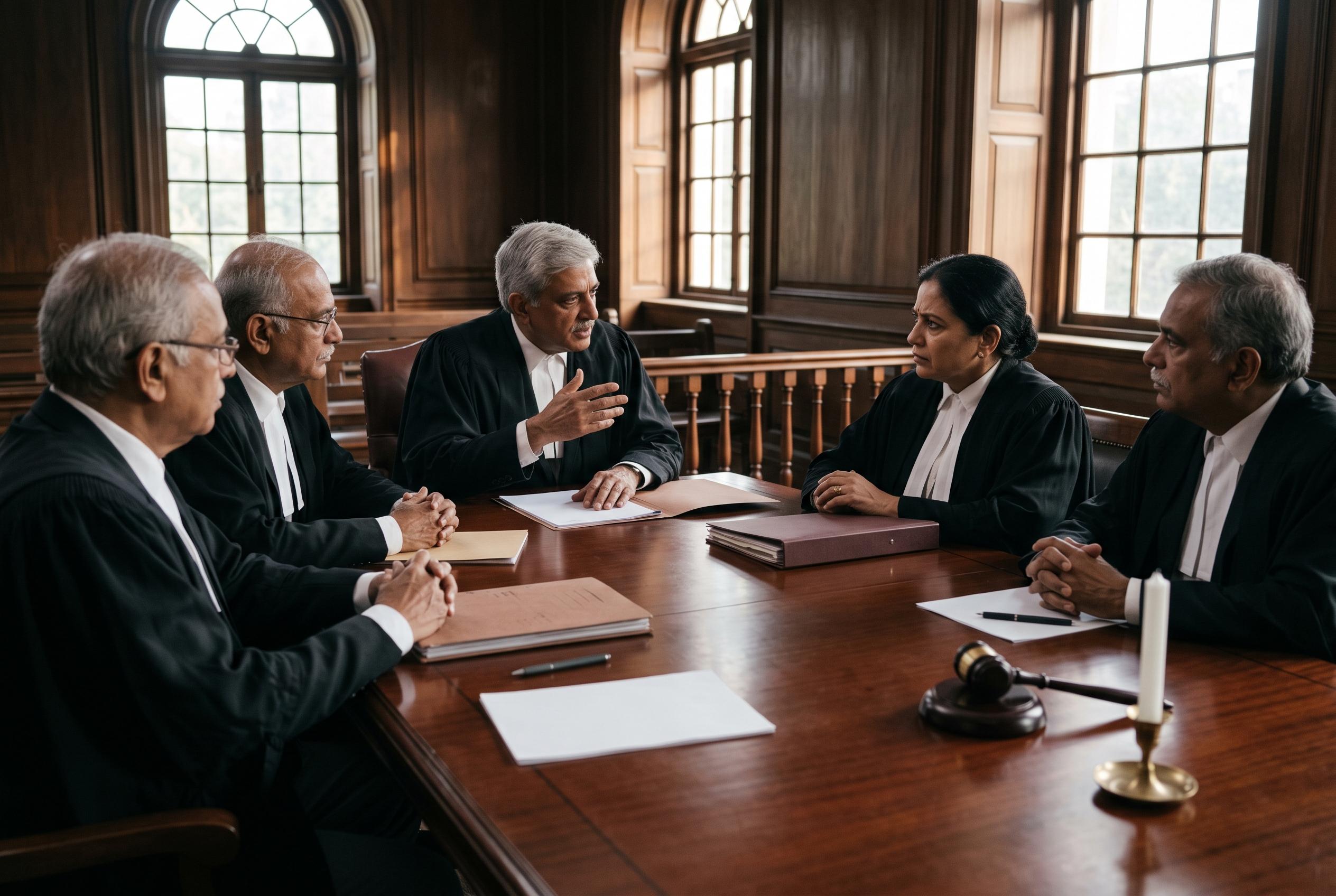

The Supreme Court will hear a petition this week challenging a tax exemption that permits political parties to receive anonymous cash donations below ₹2,000, potentially reshaping the landscape of political transparency in India.
The Supreme Court is due to hear on Monday a petition challenging a tax rule that allows political parties to accept cash donations below ₹2,000 without naming the giver, a provision the petitioner says undermines transparency in political funding. The case has been listed before a bench of Justices Vikram Nath and Sandeep Mehta, after the court earlier sought responses from the central government, the Election Commission and other parties. According to the petition, voters cannot make a fully informed choice if the sources of party funding remain hidden.
The plea seeks to strike down clause (d) of Section 13A of the Income Tax Act, 1961, which exempts certain income of political parties from tax, including voluntary contributions. It argues that the cash-donation exemption creates a loophole that permits anonymous funding and weakens the public’s right to know who finances parties and why. The petition also points to the Supreme Court’s 2024 ruling that invalidated the electoral bonds scheme, saying the court has already recognised the need for greater openness in political finance.
The petitioner has asked the Election Commission to make disclosure of donors a condition for party registration and symbol allotment, and to bar political parties from receiving cash contributions. It also wants the commission to scrutinise Form 24A contribution reports, to act against parties that fail to file complete records, and to require independent audits of party accounts. In addition, the plea seeks action by the Central Board of Direct Taxes on tax returns and audit reports filed by parties over the past five years.
The challenge has emerged against the backdrop of long-running criticism of opaque political funding in India. In November 2025, the Supreme Court had already agreed to examine the provision after issuing notices to the Centre, the Election Commission, the tax authorities and several political parties. The current hearing marks the next stage in a case that could have wider implications for how parties raise money and how much of that financing must be disclosed to the public.
Disclaimer: This article is intended to inform and educate, not to recommend or endorse any financial product, investment or strategy. Please consider your own financial circumstances and seek professional advice where appropriate before making financial decisions.