

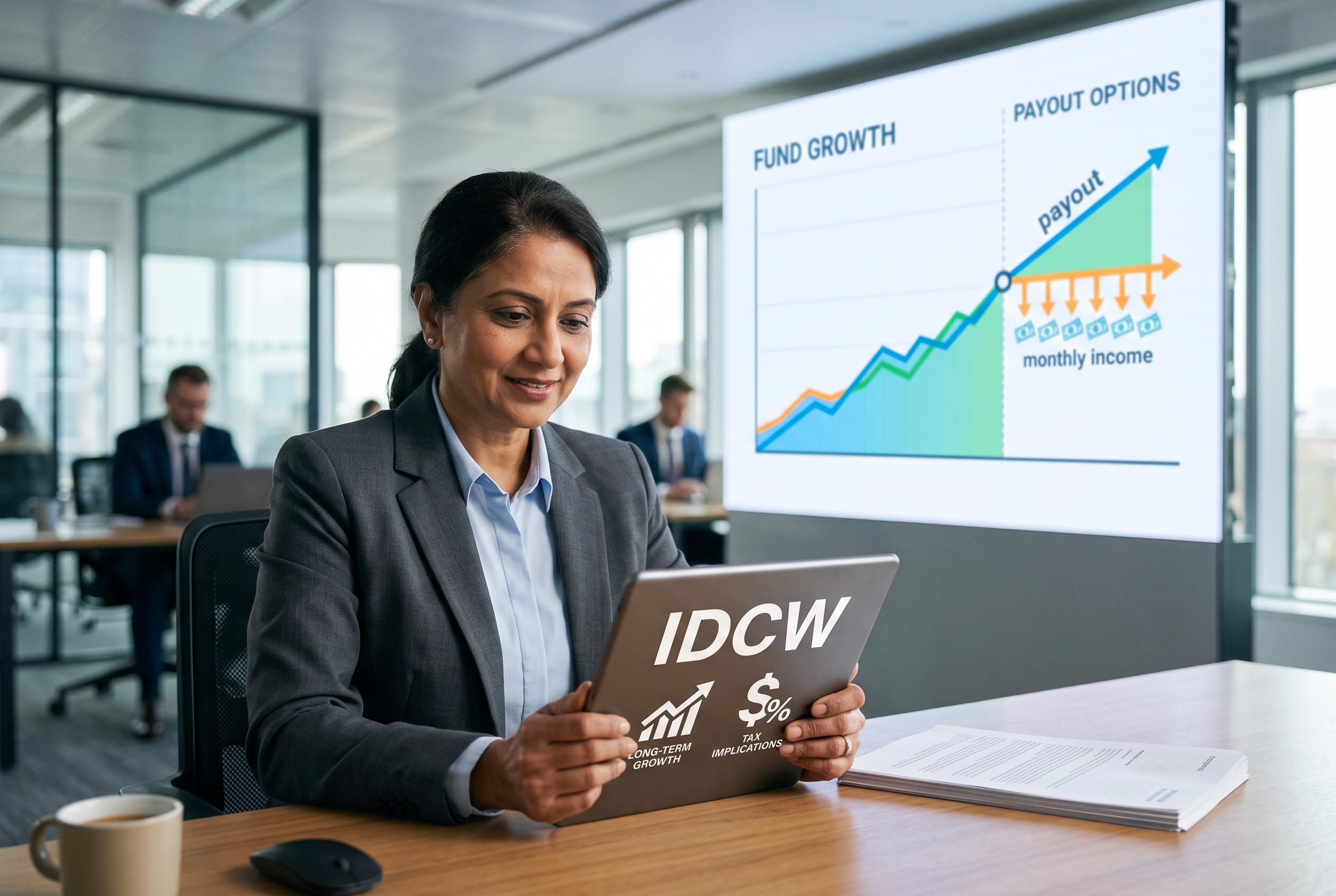

SEBI has replaced the dividend option label with income distribution cum capital withdrawal (IDCW) to prevent investor misconceptions, highlighting the differing tax effects and long-term growth impacts of payout, reinvestment, transfer, and growth options.
IDCW, or income distribution cum capital withdrawal, is the label now used for what mutual funds once called the dividend option. According to CAMS Online, the change took effect from April 1, 2021 after SEBI said the old term could mislead investors into thinking payouts were extra profit, when they may also include a withdrawal of part of the investor’s own capital.
In practice, an IDCW payout works like a transfer from the fund back to the investor. When a scheme declares a distribution, its net asset value falls by the same amount, while the number of units stays the same. The fund house decides whether to pay out at all and how much to distribute, based on whether there is a surplus. As Kuvera explains, the payout is not assured and depends on the scheme’s performance.
Funds typically offer three IDCW variants. Under the payout option, the money is credited to the investor’s bank account. Under the reinvestment option, the amount is used to buy more units in the same scheme at the post-distribution net asset value. A transfer option can redirect the distribution into another pre-selected mutual fund scheme. By contrast, the growth option leaves profits inside the fund, allowing compounding to continue uninterrupted, which is why multiple advisers say it usually suits long-term wealth creation better.
Tax treatment is one of the biggest differences. As Angel One, 5paisa and other industry explainers note, IDCW payouts are added to an investor’s income and taxed at the applicable slab rate, while growth plans are taxed only when units are redeemed. That makes IDCW less efficient for many higher-rate taxpayers, even though it can suit investors who want periodic cash flow, such as retirees or those with shorter investment horizons. Industry guidance also warns that frequent payouts can dilute compounding over time, leaving IDCW schemes likely to lag equivalent growth plans in the long run.
Disclaimer: This article is intended to inform and educate, not to recommend or endorse any financial product, investment or strategy. Please consider your own financial circumstances and seek professional advice where appropriate before making financial decisions.



