


India’s regulators and companies respond to RBI’s move to categorize large NBFCs under stricter supervision, while RailTel and others secure significant infrastructure and defence orders amid corporate developments.
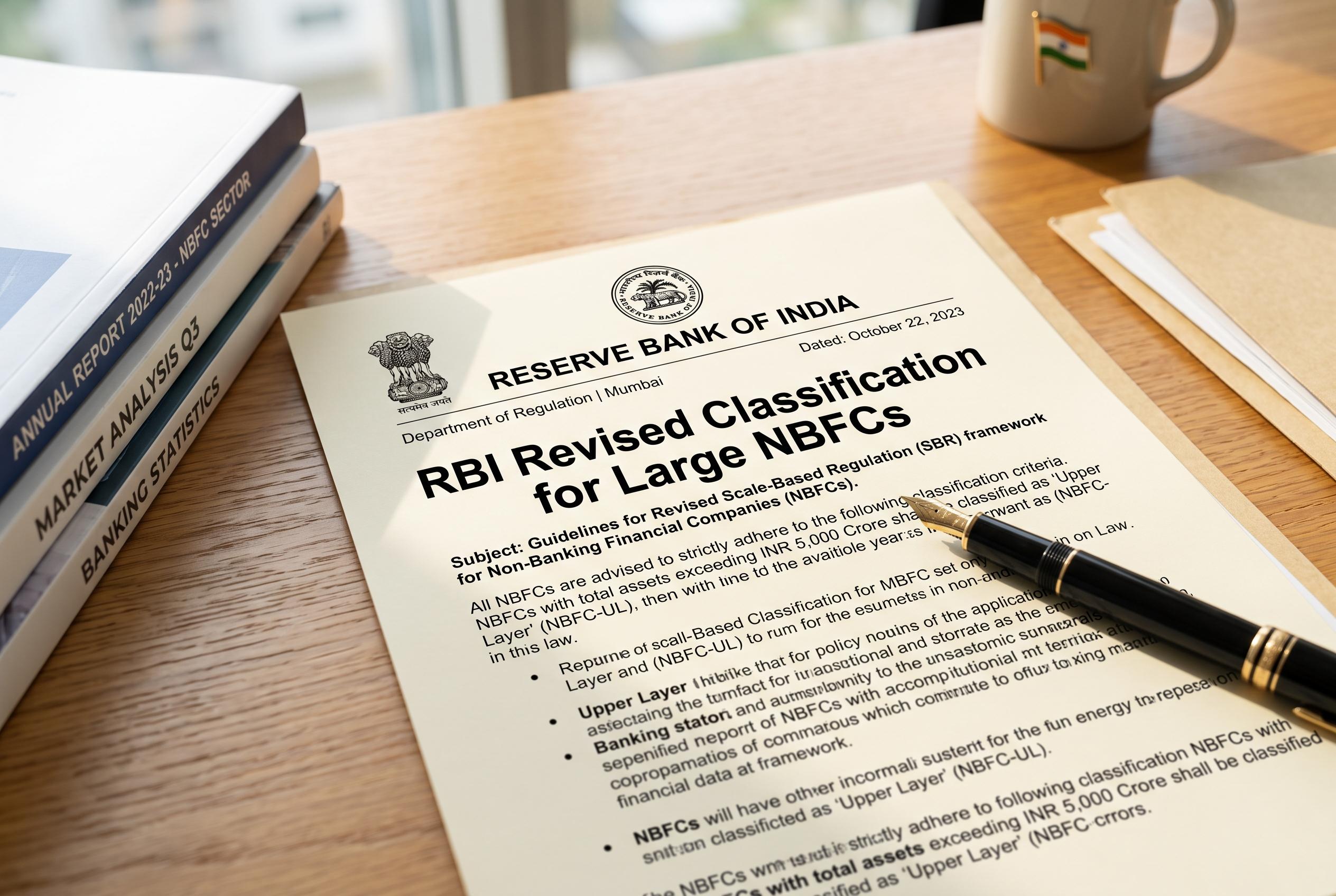
Indian regulators and listed companies set the tone for Thursday’s trading after the Reserve Bank of India on August 6 added four state-backed financiers to its upper-layer non-bank lender category, a move that brings REC, Power Finance Corporation, Indian Railway Finance Corporation and Housing and Urban Development Corporation under tighter supervision. The designation is part of the central bank’s scale-based framework for larger NBFCs, which subjects the biggest firms to bank-like rules on capital, governance and reporting. Business Standard said the RBI had been moving towards an asset-based test, while Moneycontrol reported that the final threshold for upper-layer inclusion was set at ₹1 lakh crore.
The new classification matters because it places the four lenders under stricter regulatory oversight at a time when the RBI is pushing to align the largest non-bank finance companies more closely with commercial banks. Under the framework, firms in the upper layer are expected to meet tougher capital requirements, including higher Common Equity Tier 1 buffers, and face tighter board and disclosure standards. The move also revived debate around other large financial groups that could fall within the same net, including Tata Sons, according to Moneycontrol.
RailTel Corporation of India was also in focus after it received a letter of acceptance from the North Western Railway’s senior deputy chief signal and telecom engineer in Ajmer for work linked to the Indigenous Train Collision Avoidance System across all divisions of the network. The project, valued at about ₹37.67 crore including tax, is due to be completed by August 6, 2027. The company has been steadily winning railway-related orders this year, including network equipment work for Central Railway and signalling contracts for other rail divisions, according to earlier disclosures reported by Marketscreener.
Bondada Engineering said its subsidiary Bondada Dynamics’ majority-owned unit, KCS Engineering Solutions, secured defence orders worth ₹2.1 crore for specialised equipment and materials. Aegis Logistics, meanwhile, signed a framework agreement with its subsidiary Aegis Vopak Terminals to build an additional refrigerated propane storage tank and allied facilities at the JNPA tank farm area. The project is valued at ₹142.5 crore and will include a double-steel-wall, full-containment insulated tank with capacity for 51,998 metric tonnes, the company said.
Alkem Laboratories drew attention after its manufacturing plant in Amaliya, Daman, was classified as Official Action Indicated by the US Food and Drug Administration. The designation followed an inspection from April 20 to May 1, during which the regulator issued a Form 483 listing seven observations. For investors, the key issue is not just the inspection outcome but how quickly the company addresses the regulator’s concerns and whether the status affects output or exports from the site.
J Kumar Infraprojects said it received a ₹990.16 crore contract from the Karnataka Housing Board to build an international cricket stadium and related infrastructure in Bengaluru. The award covers design, engineering, procurement and construction work at the Suryanagara 4th Phase KHB layout in Anekal taluk, the company said. TVS Motor Company also featured after launching its premium electric scooter, the iQube, in Kenya, marking what it described as the first entry by an Indian original equipment manufacturer into Africa’s premium e-scooter market.
Disclaimer: This article is intended to inform and educate, not to recommend or endorse any financial product, investment or strategy. Please consider your own financial circumstances and seek professional advice where appropriate before making financial decisions.



