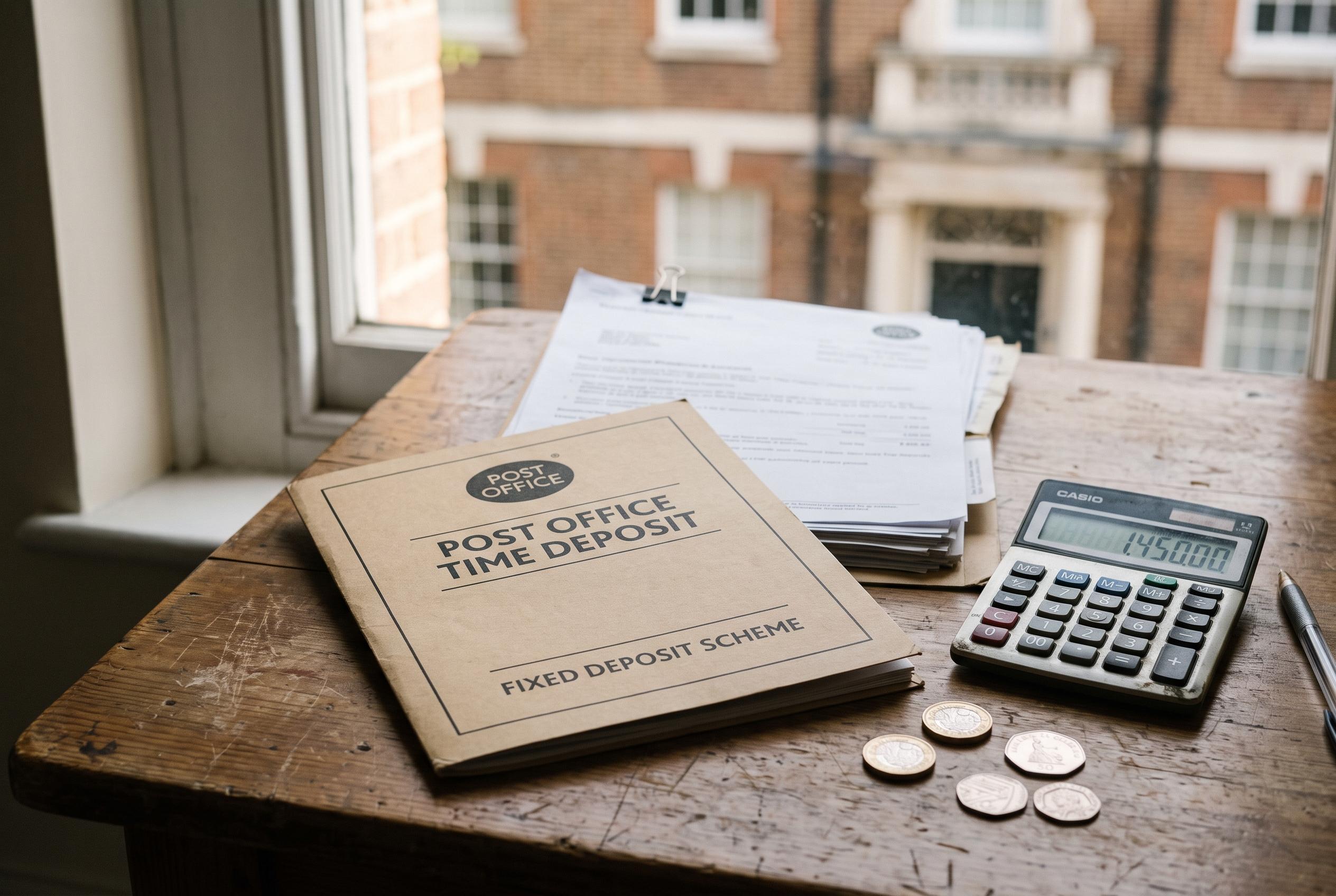

The government-backed Post Office Time Deposit scheme offers flexible terms, attractive interest rates, and Section 80C tax benefits, appealing to savers aiming for capital safety and steady income.
A lump-sum deposit in the Post Office Time Deposit scheme can still appeal to savers looking for capital safety and a predictable return. The scheme is backed by the government, allows deposits for one, two, three or five years, and starts at just ₹1,000. For longer money blocks, the five-year option is the one that can also qualify for a deduction under Section 80C, according to India Post and Mint.
The interest rate depends on the chosen term. India Post’s scheme pages and other savings-rate trackers show rates of 6.9% for one year, 7% for two years, 7.1% for three years and 7.5% for five years in the periods covered by the related reports. These rates are revised periodically by the government, so savers should check the latest notification before investing.
The claim that the plan can generate more than ₹2 lakh in interest rests on a five-year deposit. In the example cited in the lead article, an investment of ₹4.5 lakh would grow to about ₹6.52 lakh at maturity, of which roughly ₹2.02 lakh would be interest. A larger three-year deposit of ₹10 lakh is also shown as producing more than ₹2.35 lakh in interest, though the exact outcome depends on the amount, tenure and applicable rate at the time of booking.
One important caveat is that not every Post Office saving product gets the same tax treatment. The Times of India notes that schemes such as Kisan Vikas Patra, the Post Office Monthly Income Scheme and the Mahila Samman Savings Certificate do not offer Section 80C benefits, while the five-year time deposit does. The India Post explainer adds that the overall Section 80C limit is shared across eligible instruments, not available separately for each scheme.
Disclaimer: This article is intended to inform and educate, not to recommend or endorse any financial product, investment or strategy. Please consider your own financial circumstances and seek professional advice where appropriate before making financial decisions.