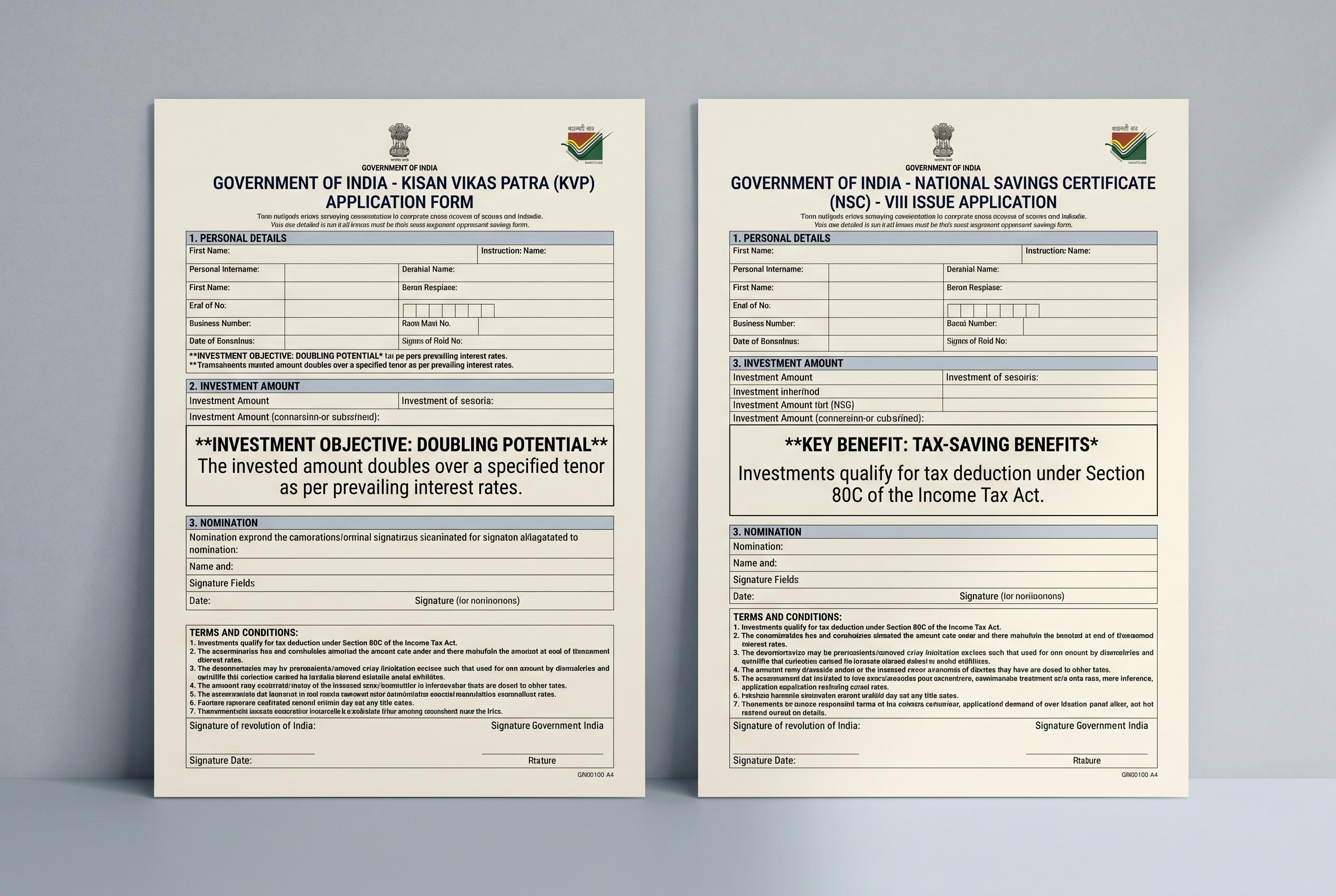

Investors with Rs 5 lakh looking for predictable income can choose between the doubling potential of Kisan Vikas Patra and the tax-saving benefits of the National Savings Certificate, with recent updates highlighting differences in returns, tenure, and suitability.
Kisan Vikas Patra and the National Savings Certificate are both backed by the Indian government, but they serve different purposes. According to Zee Business, the two schemes differ on tax treatment, lock-in, liquidity and returns, which matters if an investor is planning to put in Rs 5 lakh and wants predictable income rather than market-linked risk.
Kisan Vikas Patra is a small savings instrument available through post offices and some banks. Mint and other scheme explainers say the minimum investment is Rs 1,000, with no upper cap, and that returns are fixed and compounded annually. One current description says the scheme doubles money in 115 months, or 9 years and 7 months, although an older Mint explainer described a longer tenure, underscoring that investors should check the latest official terms before buying.
The National Savings Certificate is also government-backed, but it is designed more as a tax-saving, fixed-income tool. Zee Business says NSC currently offers 7.7% interest and comes with a five-year lock-in, with tax benefits available under Section 80C of India’s Income Tax Act. Like KVP, the minimum purchase is Rs 1,000 and there is no maximum investment limit, but the shorter term also means it does not have the same doubling feature as KVP.
On the numbers quoted by Zee Business, a Rs 5 lakh investment in KVP would grow to about Rs 10 lakh at maturity, provided the investor stays for the full term. The same amount in NSC would rise to roughly Rs 7.25 lakh, which makes it the less aggressive option for wealth doubling but potentially the better fit for someone prioritising tax relief and a shorter commitment. In practical terms, KVP is the clearer choice for investors focused on capital doubling, while NSC is the more conventional tax-saving route.
Disclaimer: This article is intended to inform and educate, not to recommend or endorse any financial product, investment or strategy. Please consider your own financial circumstances and seek professional advice where appropriate before making financial decisions.