

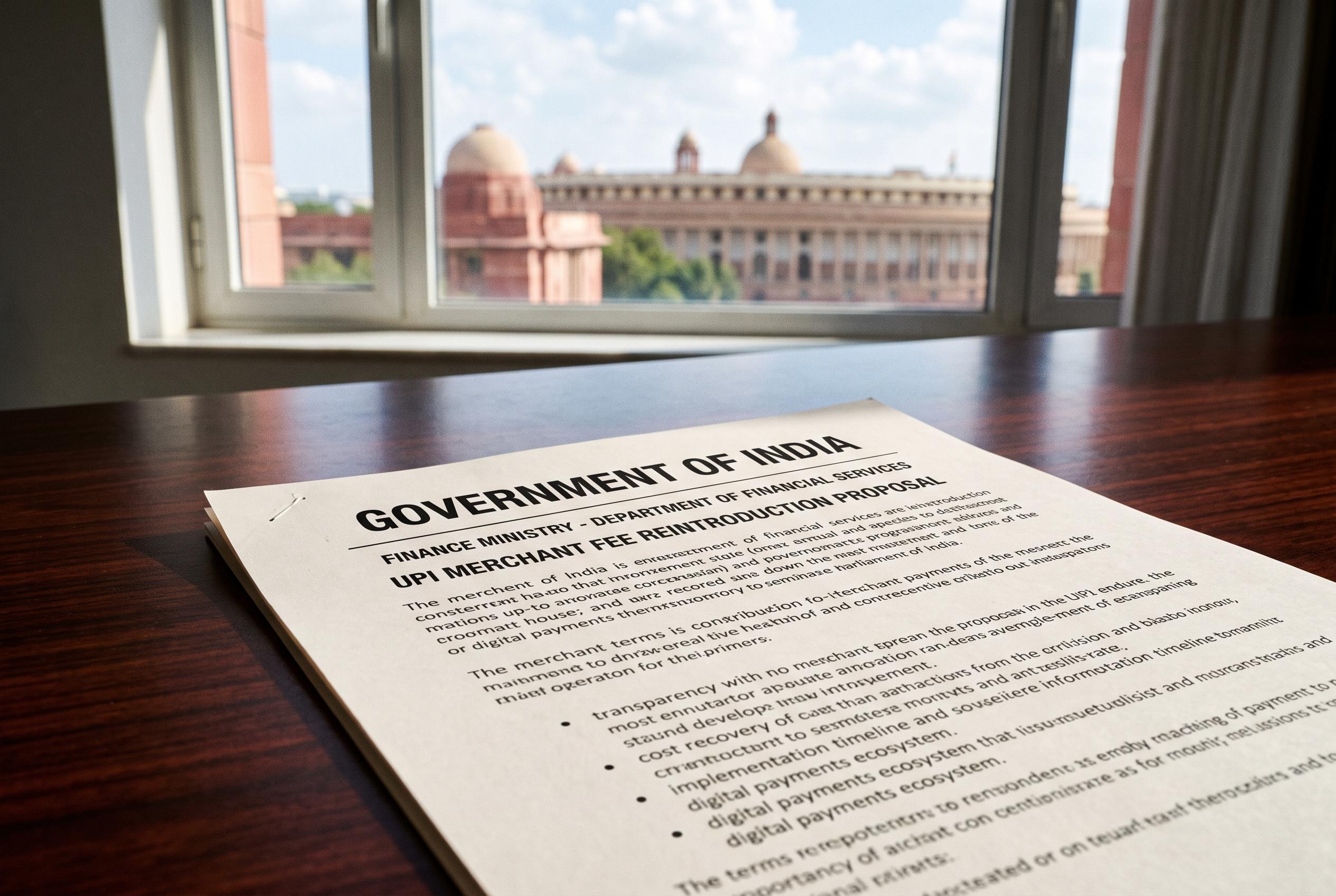

As India considers reintroducing merchant fees on its flagship UPI system, the move risks stirring domestic political and international trade tensions, with implications for the future of its digital infrastructure and US-India economic relations.
India’s debate over whether to reintroduce merchant fees on UPI has become larger than a question of payment plumbing. What began as a discussion about who should bear the cost of running the country’s instant payments network has also drawn attention in Washington, where American card networks have long bristled at a system that leaves them at a commercial disadvantage. The government says any change would be about sustainability, not politics, but the timing has fuelled speculation that the issue may carry a wider trade dimension.
UPI has been one of India’s most successful digital public infrastructure projects, but it is not free to operate. The Economic Times reported that each transaction costs about ₹2 to process, with banks and fintech firms absorbing much of that burden under the current zero-MDR regime. Reuters has previously noted the system’s scale, and UPI continues to handle billions of transactions a month, making the long-term financing model increasingly important as volumes grow.
That is why the government’s position matters. The Finance Ministry has denied that it plans to levy merchant discount rate charges on UPI transactions, calling recent speculation false and misleading, while also reiterating its commitment to digital payments. At the same time, Reserve Bank of India Governor Sanjay Malhotra has argued that the ecosystem needs a durable funding structure, saying in effect that the costs of maintaining the network cannot be ignored forever.
The geopolitics are what complicate the picture. News18 and trade-policy analysts have pointed out that the United States has long had concerns about India’s payments framework, especially because UPI’s free merchant model leaves little room for card companies such as Visa and Mastercard to compete on the same terms. If merchant fees were ever restored, even selectively, that would make India’s market look more like the card-based payment systems familiar to American firms. But there is no clear evidence that New Delhi is acting under US pressure.
There is also a domestic political risk. Data cited by the Economic Times suggests that the overwhelming majority of UPI transactions are low-value, and any move to charge merchants would be framed carefully to avoid hitting ordinary users. Finance Minister Nirmala Sitharaman has said merchant discount rate applies to merchants, not customers, but the political sensitivity is obvious: UPI’s popularity rests heavily on the promise of frictionless, zero-cost payments.
For now, the dispute is less about whether UPI works than about who pays for its success. One camp says merchants, banks and payment firms should share more of the load if the system is to remain viable. The other argues that introducing fees could undermine a model that helped drive mass adoption in the first place. However the government eventually resolves it, the decision will shape not only India’s digital payments policy but also its posture in an increasingly fraught economic relationship with the United States.
Disclaimer: This article is intended to inform and educate, not to recommend or endorse any financial product, investment or strategy. Please consider your own financial circumstances and seek professional advice where appropriate before making financial decisions.



