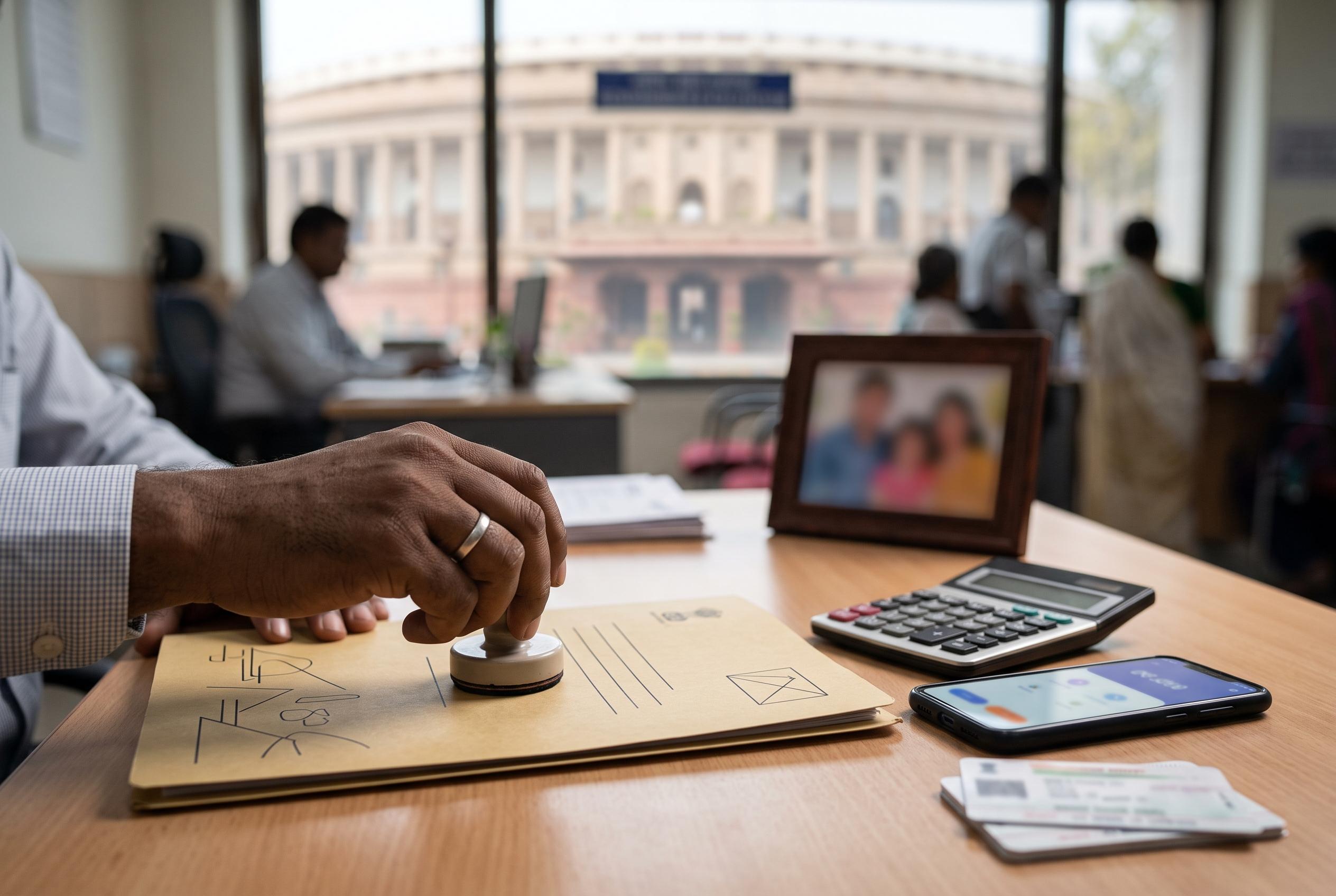

The Indian government is revising pension policies to better reflect evolving social realities, introducing new family pension rules, support measures, and digital reforms to improve accessibility for retirees and their families.
The government will keep revisiting pension rules as social conditions change, Union Minister of State for Personnel, Public Grievances and Pensions Jitendra Singh said on Monday, framing the latest reforms as part of a wider push to make the system more responsive to families, retirees and older citizens.
Speaking at the 9th National Anubhav Awards ceremony and the 60th pre-retirement counselling workshop in New Delhi, Singh said pension policy could not remain static when family structures, social expectations and the needs of senior citizens were shifting. He said the Department of Pension and Pensioners’ Welfare was open to feedback from pensioners and other stakeholders as it continues to adjust procedures and entitlements.
Among the reforms Singh highlighted were changes to family pension rules for divorced and separated daughters, along with provisions that in certain cases allow women government employees to nominate their children for family pension ahead of their husbands. The minister has previously pointed to similar measures as part of an effort to align pension rules with present-day social realities, according to official statements issued in March 2025.
Singh also underlined earlier changes to support families of government employees who die in service. Under Central Government pension rules, the enhanced family pension is payable at 50% of the last salary drawn for 10 years in eligible cases. The government amended Rule 54 of the Central Civil Services (Pension) Rules in 2019 to extend that protection to families where a government servant dies within seven years of joining service, removing a rule that had left some households without adequate support at a vulnerable moment.
The department has also been trying to streamline the process itself. Singh said pension forms and procedures have been simplified to cut paperwork, while digital life certificates and face authentication are being used to reduce the burden on elderly pensioners. The event also saw the release of the Handbook on Pension Mitra and guidelines for the Nationwide Digital Life Certificate Campaign 5, reflecting the government’s broader effort to move pension services online and make them easier to access.
In a separate reform announced in February 2021, Singh said the upper ceiling for family pensions was raised from ₹45,000 to ₹1,25,000 a month, a move the Department of Pension and Pensioners’ Welfare said was intended to provide stronger financial security to the families of deceased government employees. The wider message from Monday’s event was that pension policy will continue to be revised not just for administrative efficiency, but to reflect the changing size, shape and needs of India’s ageing population.
Disclaimer: This article is intended to inform and educate, not to recommend or endorse any financial product, investment or strategy. Please consider your own financial circumstances and seek professional advice where appropriate before making financial decisions.