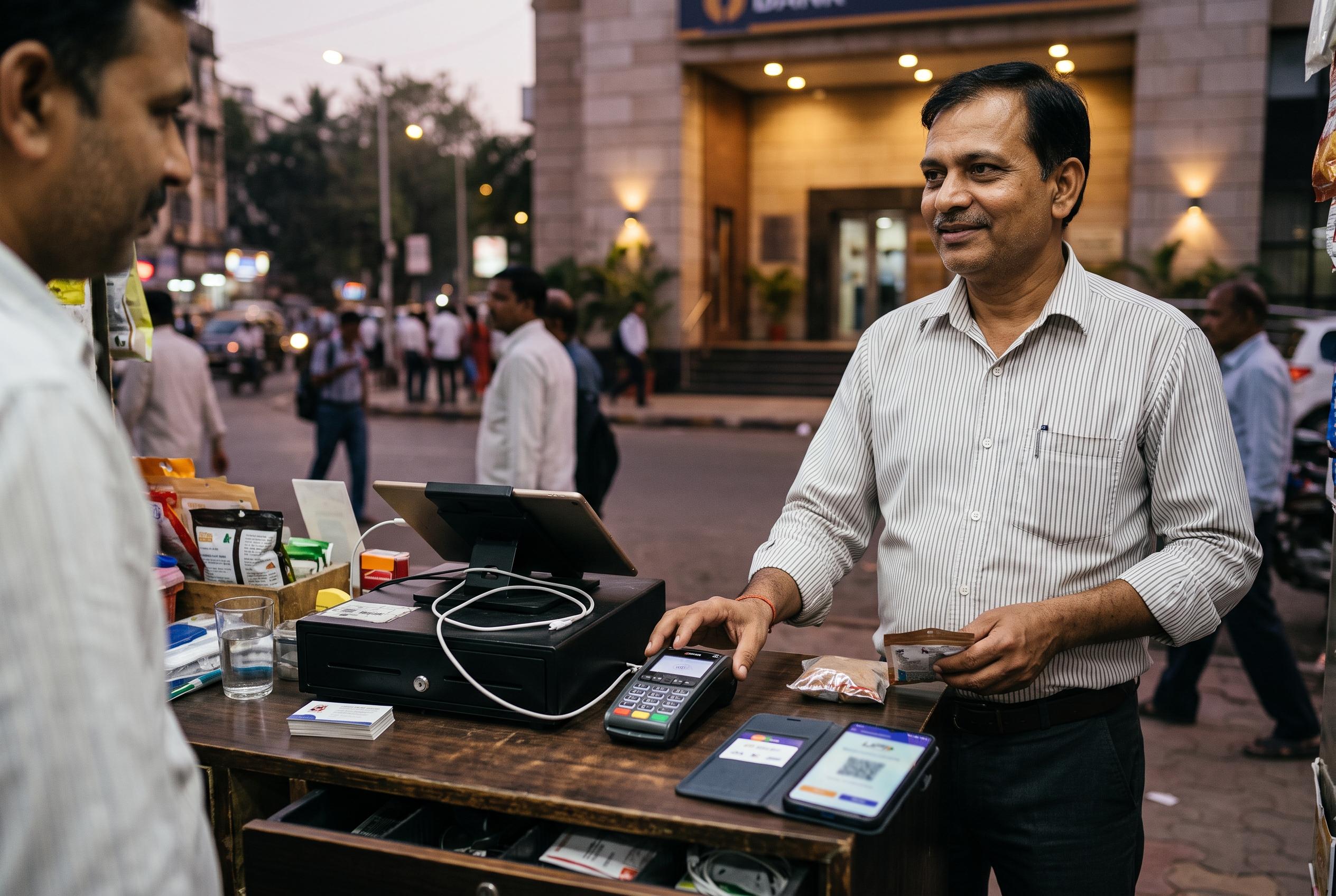

The Finance Ministry plans to collaborate with banks and trader groups to ensure that the upcoming changes to the merchant discount rate (MDR) for high-value UPI transactions do not lead to higher costs for consumers, amid ongoing discussions and monitoring measures.
The Finance Ministry is preparing to work with the Indian Banks’ Association, trader groups and other stakeholders to make sure merchants do not shift the cost of the new merchant discount rate, or MDR, on to customers when the revised UPI rules take effect on 15 October.
A senior Finance Ministry official told The Hindu BusinessLine that the government’s immediate aim is to prevent the charge from ending up in consumer bills. The ministry also plans an outreach drive to clear confusion around the new framework and secure support from trader bodies, including the Confederation of All India Traders, ahead of the rollout.
The issue has drawn attention because the new MDR structure is designed to apply only to certain higher-value UPI merchant payments. Business Standard reported that the levy will be 0.4 per cent for transactions above ₹2,000, subject to a cap of ₹300 for payments over ₹75,000, while small merchants using UPI up to a monthly threshold of ₹100,000 will remain exempt. Government sources told multiple publications that officials want banks and payment channels to monitor merchants so the fee is not quietly passed through as higher prices.
According to the ministry official quoted by BusinessLine, the government is still working through the funding gap that would remain even under the proposed rate structure. Industry estimates suggest that the wider cost of running UPI infrastructure , including servers, bandwidth, fraud detection and bank technical support , is around ₹20,000 crore a year. The official said the proposed MDR level would not be enough on its own to cover those costs, adding that the government would have to decide how to bridge the shortfall.
The official also stressed that MDR is not a tax, cess or surcharge, and that no part of it goes into the government’s account. Instead, the fee stays inside the payments ecosystem, where it is meant to support the network that keeps UPI running. In parallel, reports from other outlets said Finance Minister Nirmala Sitharaman is expected to meet CAIT representatives soon, while the GST Council may review the 18 per cent GST applied to MDR. Government sources have also indicated that compliance may be monitored on a daily basis once the system is in place.
Disclaimer: This article is intended to inform and educate, not to recommend or endorse any financial product, investment or strategy. Please consider your own financial circumstances and seek professional advice where appropriate before making financial decisions.