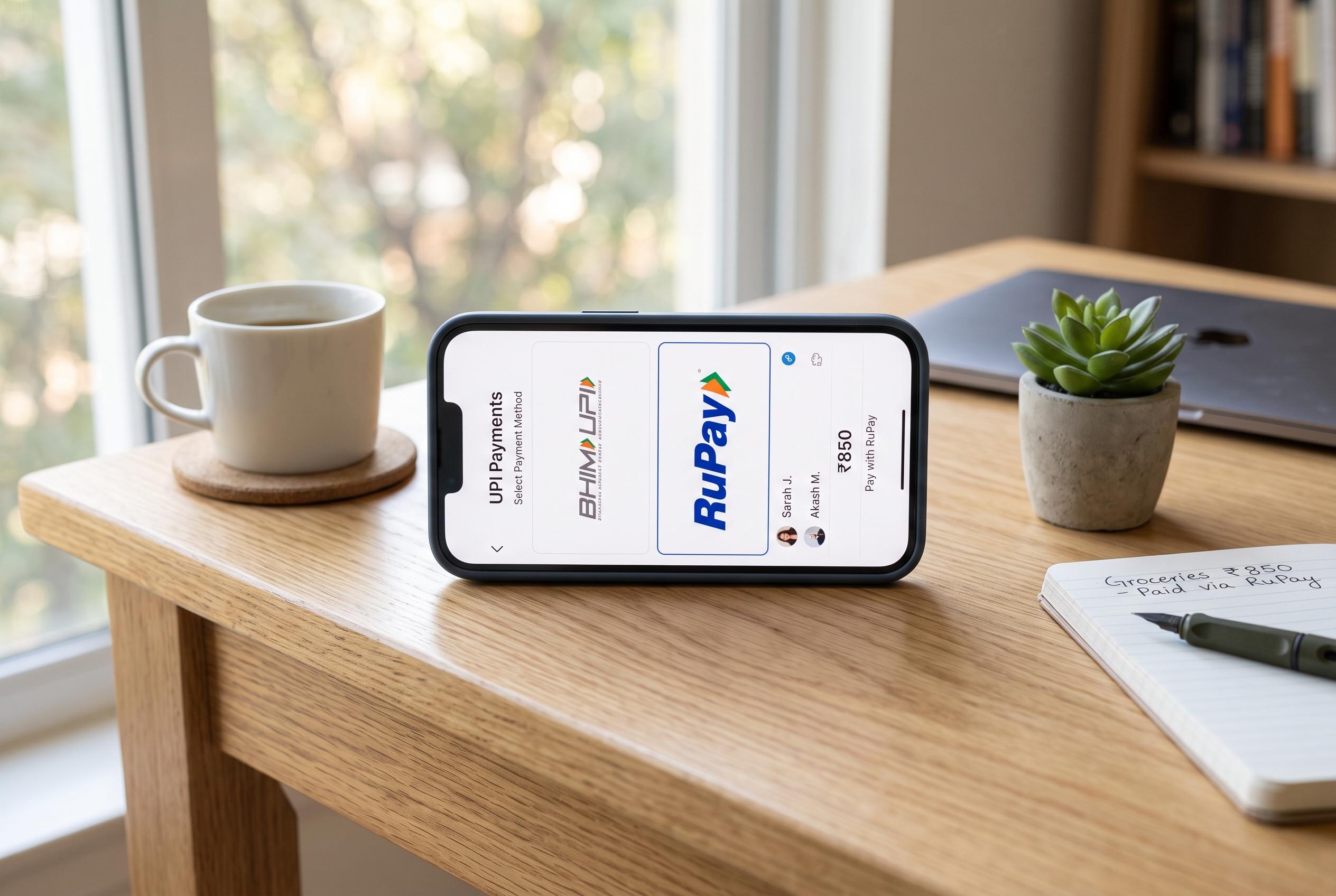

India is contemplating a policy shift that could introduce fees on its popular UPI and RuPay payment systems, amid ongoing trade negotiations with the United States and concerns over a perceived digital payments trade barrier.
As India and the United States work towards a trade agreement, New Delhi is also weighing a change to its payments law that could allow banks and payment system providers to levy fees on UPI and RuPay debit card transactions. The move has drawn attention because UPI, India’s fast-growing instant payment system, has become popular partly because it is free for users, while the Trump administration has repeatedly pressed trading partners to give American payments firms a more level playing field.
The proposal matters because it touches a policy area where India’s digital system has become a global outlier. UPI, launched in 2016, has steadily shifted consumer behaviour away from cards and towards instant bank-to-bank transfers with no merchant discount rate, or MDR, at point of sale. That has reduced the fee pool that card networks and payment processors typically rely on, according to the Global Trade Initiative, which says UPI and RuPay have also gained from state support and early integration with credit-card transactions. Visa and Mastercard have long viewed that shift as a direct commercial threat.
Washington has already flagged India’s digital payments regime as a trade barrier. In March, the United States Trade Representative said India’s policies favour domestic players and highlighted concerns that American electronic payment services suppliers cannot take part in the UPI ecosystem on equal terms, including in credit transactions through UPI. The office also pointed to NPCI’s 30% market-share cap for third-party UPI apps, a limit that has been deferred until December 2026. By the end of 2025, USTR said, two US-owned payment apps processed more than 80% of all UPI transactions, referring to PhonePe and Google Pay.
India has already made concessions in other digital areas under tariff pressure. Last year, it scrapped the 6% equalisation levy, often called the Google tax, after the US argued that digital services taxes unfairly hit American technology companies. During the previous Union Budget, the government also offered a tax holiday for foreign firms setting up data centres in India until 2047, a move that was widely read as responsive to US concerns. Finance Minister Nirmala Sitharaman has said the latest payments amendment is not yet final and argued that MDR would apply to merchants rather than end users.
The debate is not limited to India. The US trade office has taken aim at other countries with domestic instant-payment systems or local payment champions, including Brazil, Indonesia, Vietnam, Türkiye and several Gulf states. Brazil’s Pix system, launched in 2020, has become a particular point of comparison because it resembles UPI in speed and low cost, and the US has complained that the Brazilian central bank gives it preferential treatment. In India, however, the issue has become tied to a wider political and commercial argument: whether a successful public digital payments platform should remain free, or whether it should be opened to fees that could reshape the balance between domestic policy goals and foreign payment networks.
Disclaimer: This article is intended to inform and educate, not to recommend or endorse any financial product, investment or strategy. Please consider your own financial circumstances and seek professional advice where appropriate before making financial decisions.