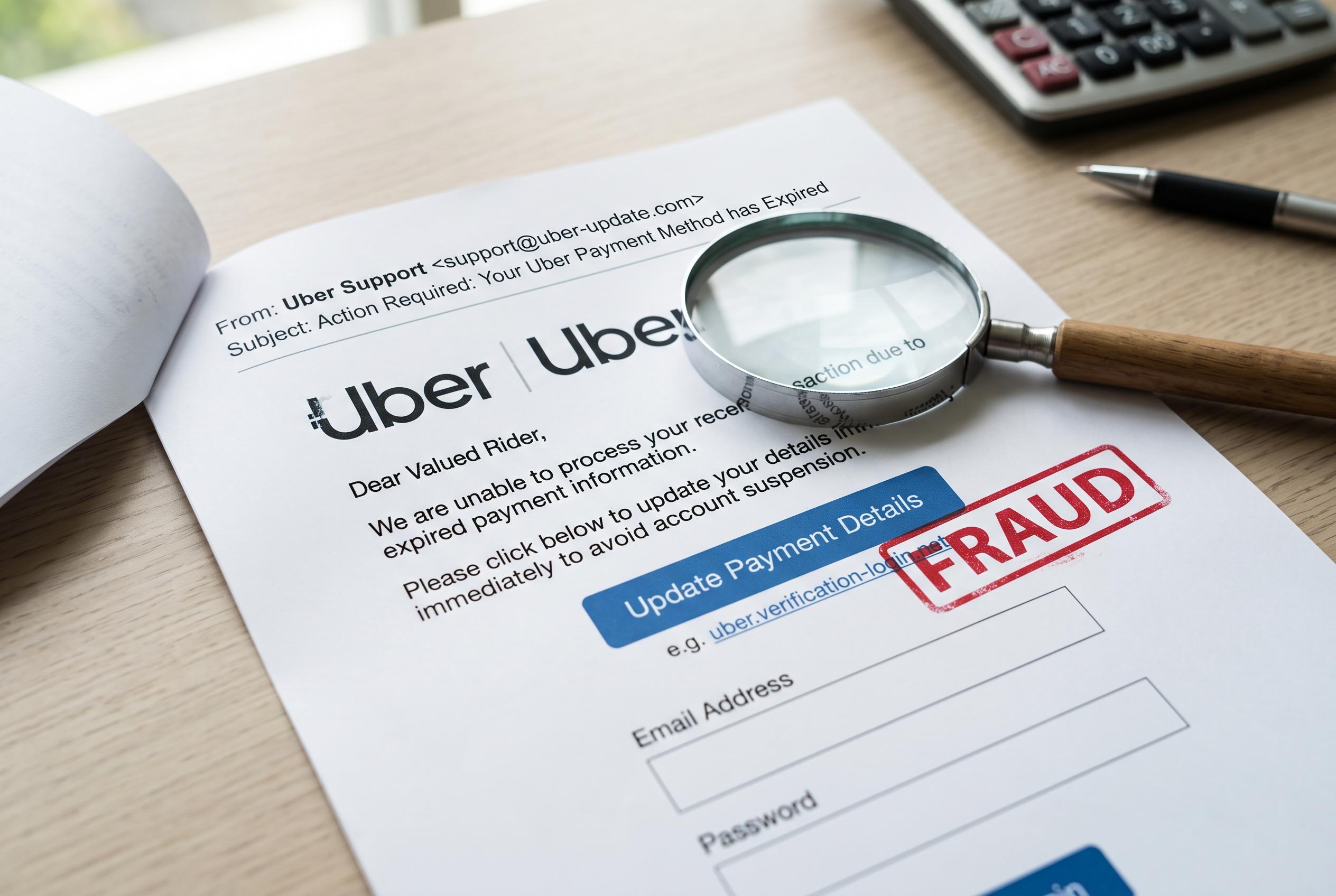

A rising phishing campaign targets Uber users with convincing emails warning of payment expiry and account suspension, prompting recipients to enter sensitive data on fake login pages. Experts warn vigilance and verification through official channels are crucial to avoid fraud.
Uber users are being targeted by a phishing campaign built around a simple warning: your payment method has expired and your account has been disabled. According to Android Headlines and a report cited by AppleInsider, the emails are designed to push recipients into clicking a link and entering card details on a fake login page, where the information can then be stolen. Uber’s own help guidance says the company does not ask for sensitive information such as passwords, verification codes or banking details by email, text or phone.
The messages can look polished enough to fool hurried users. Some include Uber branding, a business address or registration details, while others try to create urgency by saying the account has been suspended until payment information is updated. Uber says users should treat unsolicited requests for private information as suspicious and verify anything doubtful through its official Help Center, while Microsoft’s security advice on fake-order scams warns that these kinds of messages are meant to provoke immediate action before the recipient thinks twice.
Security checks can help spot the fraud. Uber says legitimate messages should come from the company’s official @uber.com domain, and users should inspect web addresses carefully before typing in any details. Uber also recommends checking that URLs in the browser match official Uber domains, while third-party security guides say the safest option is often to type the website address directly into the browser rather than follow a link in an email.
The same basic warning applies beyond Uber. Microsoft and McAfee both say phishing campaigns commonly impersonate trusted brands and use fake problems, such as cancelled orders or blocked accounts, to steal personal data. The practical defence is consistent: do not click links in unexpected messages, do not share payment details and go straight to the company’s official app or website if something looks wrong.
Disclaimer: This article is intended to inform and educate, not to recommend or endorse any financial product, investment or strategy. Please consider your own financial circumstances and seek professional advice where appropriate before making financial decisions.