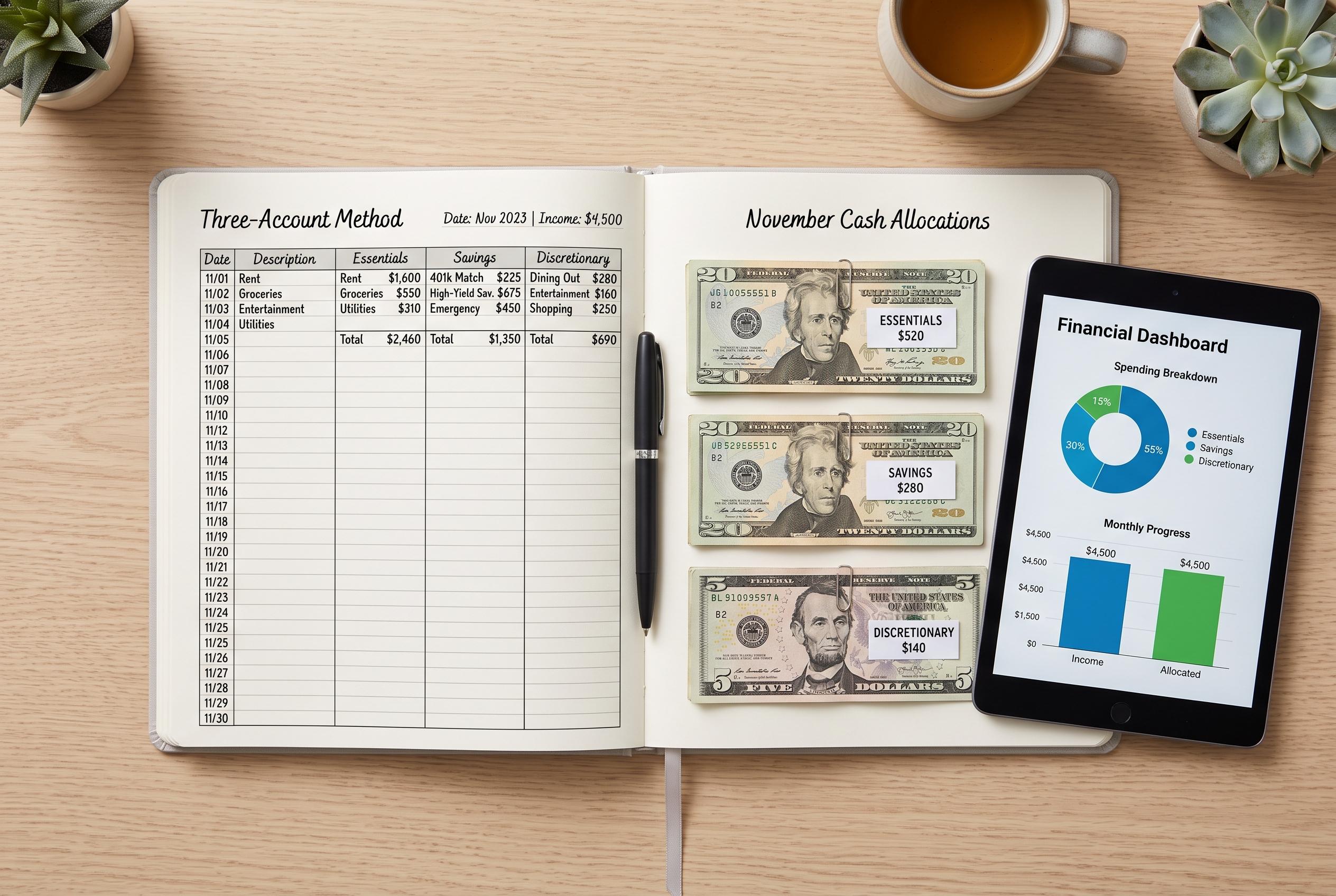

The three-account system, which allocates funds for essentials, savings, and discretionary spending, offers a straightforward way to improve household financial discipline and reduce stress, with experts endorsing its adaptable approach amid changing budgets.
The appeal of the three-account method is straightforward: it gives every dollar a job. Instead of leaving all income in a single current account and hoping discipline will do the rest, the system divides money into three separate places for day-to-day bills, savings and discretionary spending. Financial educators say that clarity can make household budgeting easier to manage and can help prevent money set aside for essentials from being spent elsewhere.
In its simplest form, the first account covers fixed costs such as rent, food, transport, utilities and education. The second is reserved for savings, including emergency funds and longer-term goals, with some experts advising that this transfer happen as soon as pay arrives. The third account is for variable spending, from leisure and travel to planned purchases and home maintenance. That structure, according to banking guidance from Centier Bank and other personal finance providers, is intended to reduce mental strain by making each category visible and separate.
Some versions of the approach also assign rough percentages to each pot. A budgeting guide from Freenance suggests directing 50% to 60% of income towards operating costs, 20% to 30% to savings and 10% to 20% to fun spending. Other organisations, including Monefy and Plan and Multiply, present closely related frameworks built around needs, wants and future goals. The exact split can vary with income and household obligations, but the core principle remains the same: save first, spend with limits and review the numbers regularly.
Supporters say the method works because it is simple enough to stick with. Budget3, which offers a free budgeting tool based on the same idea, says separating money into distinct accounts can help stop overspending and automate transfers. Personal One, which explains the three-account system, says the initial setup may take a couple of hours but can save far more time and stress each month. The approach is not a guarantee of wealth, but for families looking for a practical way to organise cash flow, it offers a clear and adaptable framework.
Disclaimer: This article is intended to inform and educate, not to recommend or endorse any financial product, investment or strategy. Please consider your own financial circumstances and seek professional advice where appropriate before making financial decisions.