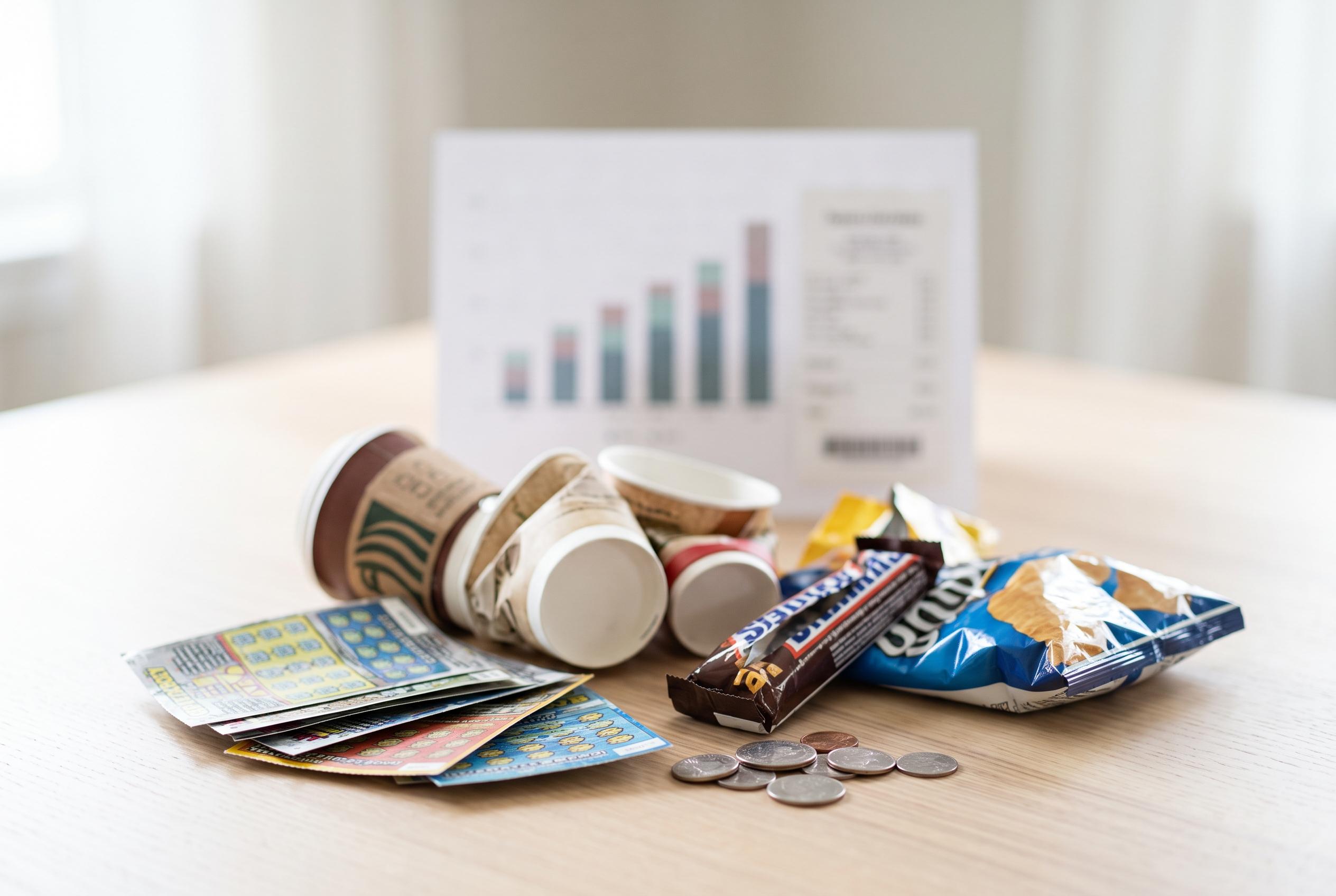

Small, frequent purchases such as impulse buys, lottery tickets, and convenience items may seem insignificant but can accumulate to cause serious financial strain. Experts highlight how consumer habits often leak away savings and increase costs without adding value to everyday life.
Small, repeated purchases often do more damage to a budget than a single large splurge. Financial advisers regularly point out that money tends to leak away through convenience spending, impulse buys and products that offer little real value in return. The lesson is less about denying every comfort than about recognising which habits quietly drain cash without improving day-to-day life.
Lottery tickets sit near the top of that list. Powerball itself says the odds of hitting the jackpot are one in 292.2 million, an illustration of how little financial sense it makes to treat gambling as a wealth-building strategy. Food delivery is another costly habit: LendingTree has found that American consumers spend nearly $2,000 a year on delivery services, a figure that can easily crowd out savings or debt repayment.
The same logic applies to a range of routine purchases that are often marketed as necessities. New phones, premium fuel for vehicles that do not require it, bottled water and disposable cleaning products all tend to cost far more than their practical alternatives. Reusable containers, filtered tap water, washable cloths and standard-grade petrol can usually do the same job for less, while avoiding the waste that comes with one-use products.
There is also a strong case for resisting add-ons disguised as upgrades. Store-brand medicines often contain the same active ingredients as name-brand versions, while free cardboard boxes can usually be found at supermarkets or liquor stores. Pre-cut fruit, specialist kitchen gadgets, detox teas, paper plates and disposable hand towels may save time, but they rarely justify the mark-up. The broader point is simple: if a purchase does not materially improve your life, it may be costing you more than it is worth.
Disclaimer: This article is intended to inform and educate, not to recommend or endorse any financial product, investment or strategy. Please consider your own financial circumstances and seek professional advice where appropriate before making financial decisions.