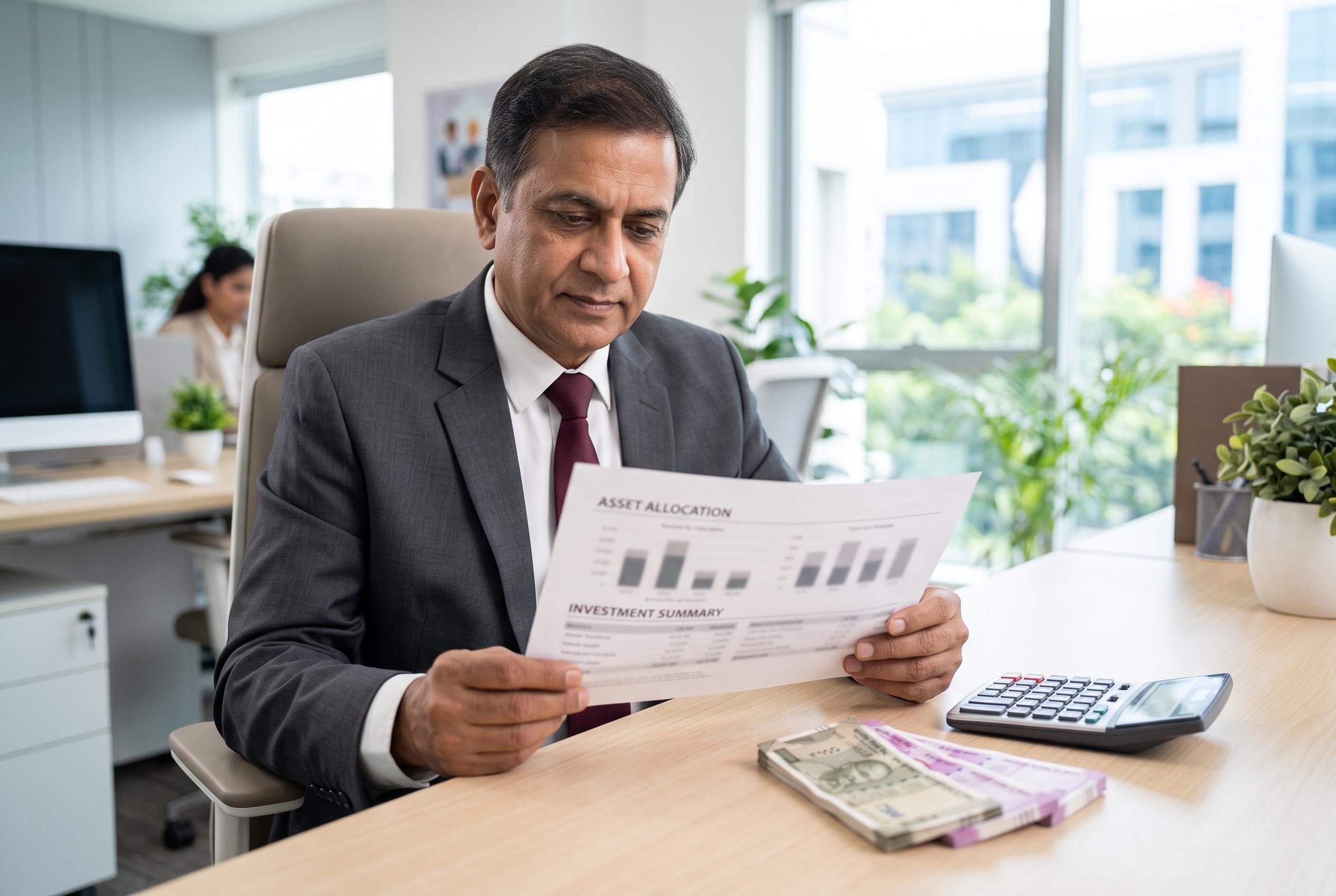

Retirees seeking regular income can now choose non-cumulative FDs with higher interest rates and flexible payouts, though they must carefully consider tax implications and rate fluctuations to meet monthly income goals of ₹10,000.
A fixed deposit can still appeal to savers who value certainty over higher but less predictable returns. For senior citizens in particular, bank FDs remain a familiar way to generate regular income, and the amount needed to produce ₹10,000 a month depends mainly on the interest rate, the payout option and the tax deducted at source, or TDS. InformalNewz says a deposit of about ₹15 lakh could generate that monthly sum at 8% interest, while lower rates require a larger corpus.
The key is choosing a non-cumulative FD, where the bank pays interest at set intervals rather than adding it back to the principal. That structure suits people who need money for day-to-day expenses, because the interest can be credited monthly, quarterly, half-yearly or annually depending on the bank’s terms. The trade-off is that the money does not compound, so the overall return is lower than it would be in a cumulative deposit.
Rate comparisons published by Livemint, Economic Times and Paisabazaar show how sharply the required investment can shift. At about 6%, the corpus rises to roughly ₹20 lakh to generate ₹10,000 a month. At 7%, the amount drops to around ₹17.14 lakh, while 7.25% needs about ₹16.55 lakh. At 7.5%, the figure is close to ₹16 lakh, and at 8% it is roughly ₹15 lakh. Calcscope’s comparison of senior-citizen FD rates suggests some small finance banks have offered as much as 9.5%, while larger lenders and the Post Office Senior Citizens Savings Scheme have also remained competitive.
Even so, the headline rate is only part of the calculation. FD interest is taxable, and banks may deduct TDS if earnings cross the applicable threshold, with the rate generally lower when a PAN is submitted and higher when it is not. That means retirees should compare banks carefully, check the payment frequency and factor in tax before assuming a deposit will deliver exactly ₹10,000 each month.
Disclaimer: This article is intended to inform and educate, not to recommend or endorse any financial product, investment or strategy. Please consider your own financial circumstances and seek professional advice where appropriate before making financial decisions.