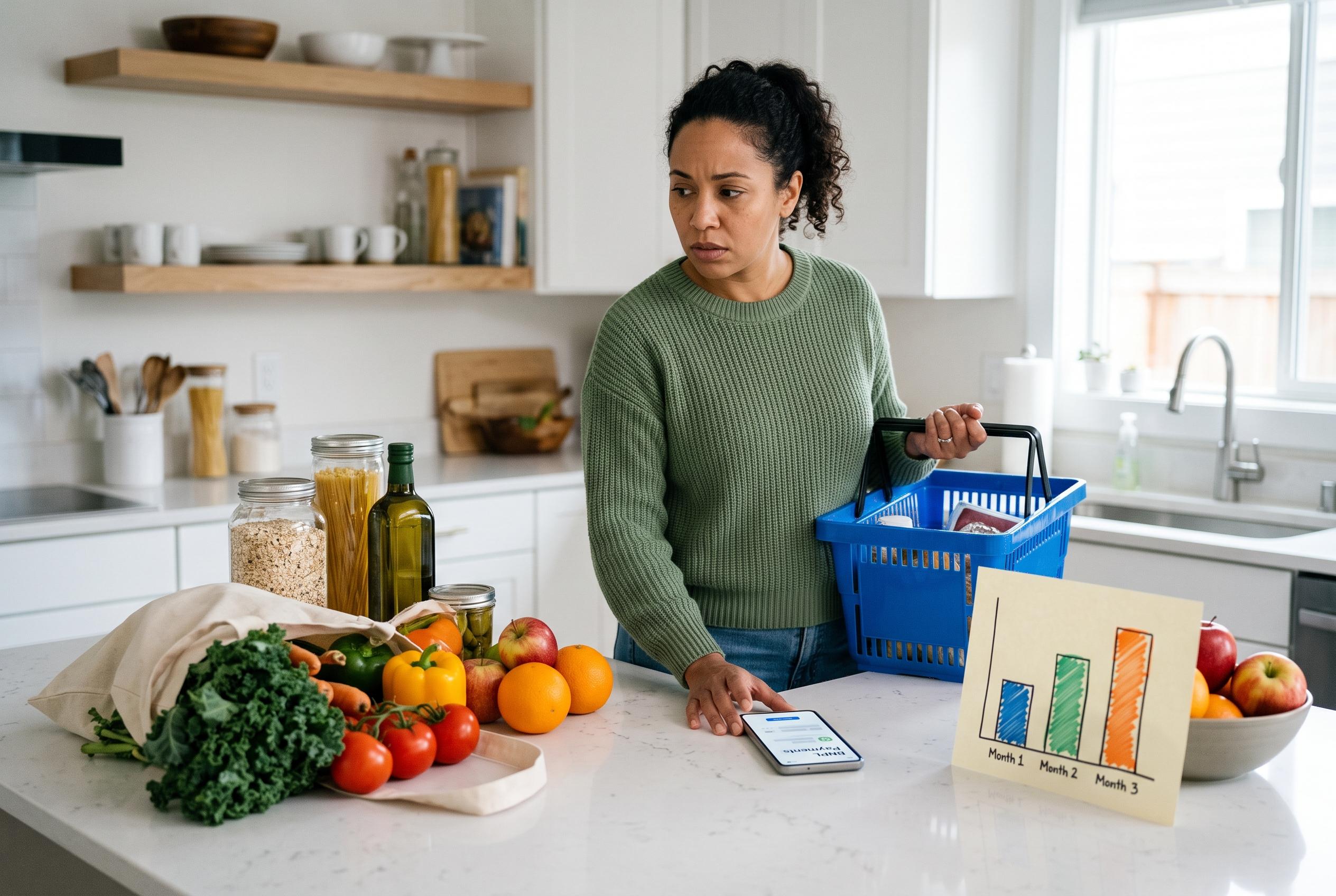

Increasing financial strain is prompting more Americans to rely on buy now, pay later services for everyday essentials like groceries, with rising late payments and debt concerns raising alarms among experts.
Affordability pressures are pushing more Americans to use short-term credit for basic shopping, with buy now, pay later increasingly being used for groceries, according to research from the Urban Institute and LendingTree. Marshall Lux, a visiting fellow at Georgetown University’s McDonough School of Business, said the trend reflects a broader squeeze on household budgets, but added that it is difficult to pin payment stress on any single category of spending. “There’s no doubt that there’s pressure in terms of affordability in this country,” he said. “like everything else, it’s complicated.”
The Urban Institute found that nearly 10% of working-age adults used buy now, pay later to cover grocery bills, and that 34.8% of those users missed at least one BNPL payment. The same study found that many households are leaning on other forms of credit to keep food on the table: 34.9% of adults paid for groceries with a credit card and cleared the balance in full, while 19.6% carried a balance but always made the minimum payment. Another 8.7% did not always manage even that, and 19.6% relied on savings not meant for everyday spending.
LendingTree’s March survey pointed in the same direction. It found that 29% of BNPL users had used the service to buy groceries, up from 14% two years earlier. The survey also found that 47% of users had made a late payment in the past year, while 63% said they were juggling multiple BNPL loans at once. Three in 4 of those borrowers said the loans led them to overspend, with Gen Z users among the most likely to say so.
The data suggest BNPL is shifting from a tool for larger discretionary purchases into a stopgap for ordinary living costs. Urban Institute researchers said lower- and middle-income adults were more likely than higher-income households to struggle with repayments, while a separate May report from the institute found BNPL spending jumped 37-fold between 2019 and 2023, from $2 billion to $75 billion. Earlier LendingTree surveys showed the pattern was already taking hold years ago, with shoppers using BNPL to bridge gaps between paycheques and, increasingly, to buy groceries.
Disclaimer: This article is intended to inform and educate, not to recommend or endorse any financial product, investment or strategy. Please consider your own financial circumstances and seek professional advice where appropriate before making financial decisions.