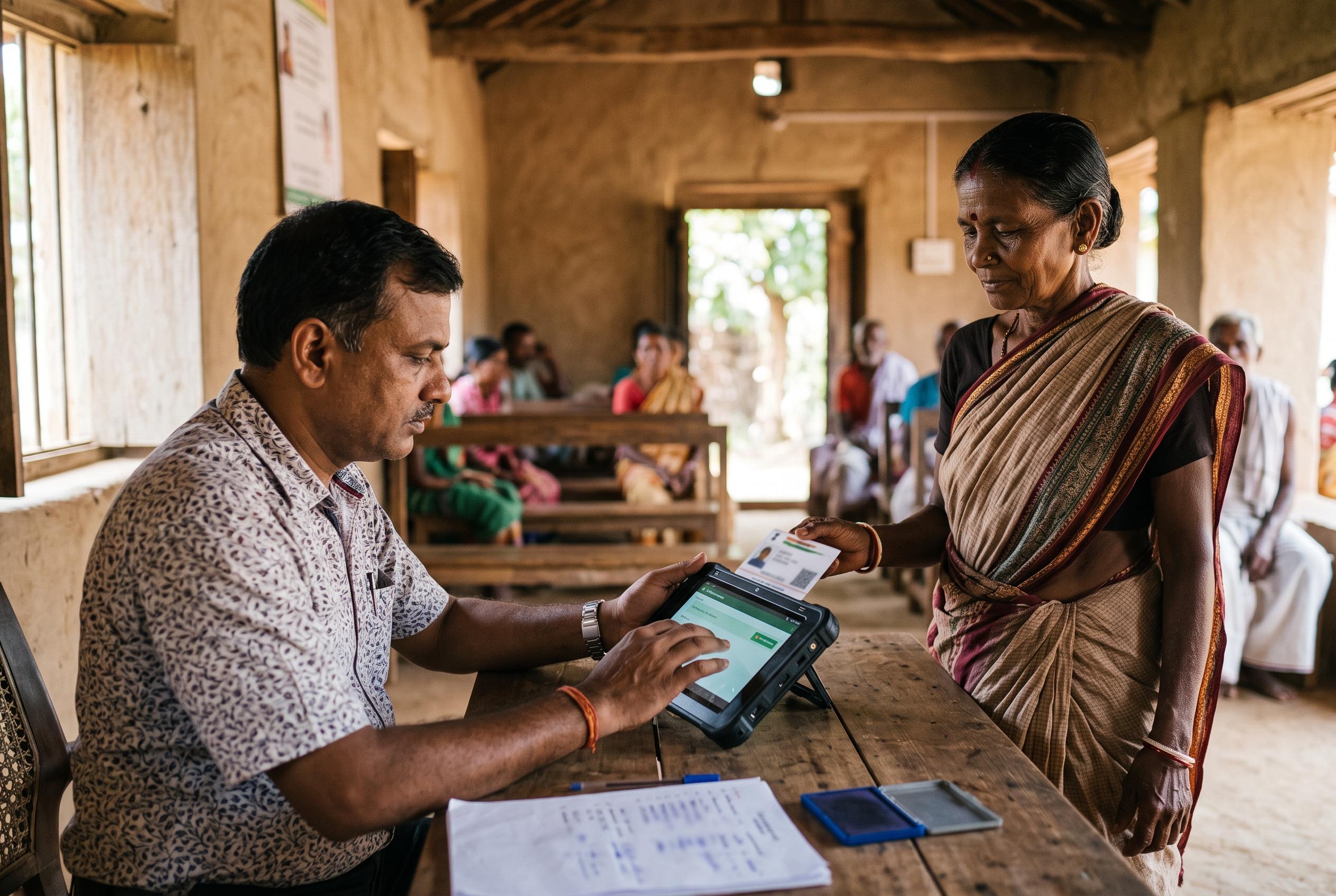

The Odisha government has ordered state departments to link beneficiaries’ bank accounts with Aadhaar to enhance authentication, reduce errors, and prevent diversion of welfare payments amidst evolving national policies on Aadhaar seeding.
Odisha’s finance department has ordered state departments to shift direct benefit transfer payments on to Aadhaar-linked bank accounts, in a move officials say is aimed at reducing leakage and making it harder for payments to be diverted to the wrong recipient. According to the department’s directive, beneficiaries whose Aadhaar numbers are already mapped with the National Payments Corporation of India can be paid through the active linked account, which officials say should cut delays and reduce errors.
The instruction, issued by additional chief secretary Sagarika Hota, follows a decision taken by the Public Accounts Committee at its seventh meeting for 2025-26. Departments have been told to update their payment systems without delay and to report the status of Aadhaar-linked payments for each scheme listed on the DBT Bharat portal. Officials said the change is meant to strengthen authentication, so that mismatches between Aadhaar and bank details can be flagged before money is sent.
The move has immediate implications for welfare schemes across the state, including those run by the housing and urban development, health, education, panchayati raj, agriculture, and women and child development departments. Prameya News reported that more than 335,000 beneficiaries under the National Social Assistance Programme could face disruption if they do not complete Aadhaar-bank linking. That puts pension recipients among the first groups likely to feel the effect of the new compliance drive.
The order also sits against a broader national backdrop in which Aadhaar linkage has been treated differently depending on the purpose. The Reserve Bank of India has previously said Aadhaar seeding for direct benefit transfers is voluntary in the context of the Supreme Court’s interim orders, while also making clear that linkage is mandatory in applicable cases under anti-money-laundering rules and for subsidy-related benefits. In practice, Odisha’s latest step signals a tougher state-level approach to welfare delivery, with the finance department pressing implementing agencies to make Aadhaar-linked transfer the norm rather than the exception.
Disclaimer: This article is intended to inform and educate, not to recommend or endorse any financial product, investment or strategy. Please consider your own financial circumstances and seek professional advice where appropriate before making financial decisions.