

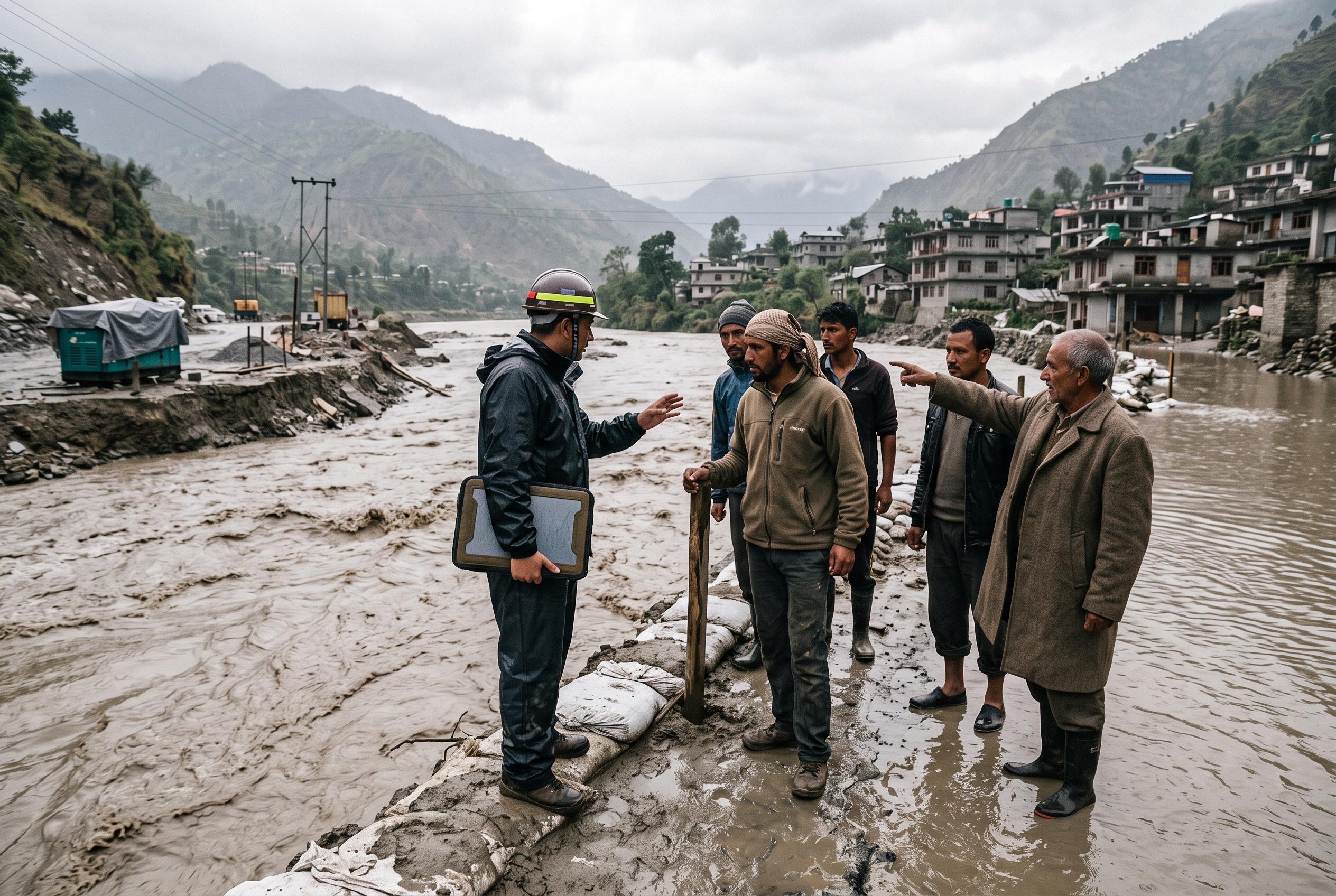

Recent Himalayan and northern Indian floods have exposed critical vulnerabilities in emergency systems, highlighting the urgent need for comprehensive river-basin planning and resilient infrastructure to mitigate future disasters.
The flood scenes in Nepal and northern India over the past 10 days have exposed the same hard truth: when rivers rise suddenly, the first systems to fail are often the ones people depend on most. In Nepal, the flash floods that tore through Himalayan communities on 26 August have left more than 1,000 people dead and thousands missing. In Uttar Pradesh, the Mandakini’s surge through Chitrakoot has forced evacuations, damaged homes and cut road links, while a much wider flood emergency has spread across district after district.
Associated Press reported that Nepal’s disaster agency had counted 1,003 deaths, with 3,916 people missing, including hundreds of foreign nationals, a week after the flooding on the Nepal-China border. China, on the other side of the disaster zone, reported 16 deaths and 546 missing people. Search operations have been slowed by landslides, destroyed roads and remote settlements cut off from help. The same report said about 900 workers were missing and roughly 500 were believed trapped in tunnels across 12 hydropower projects, underlining how a mountain flood can become not only a humanitarian calamity but an infrastructure crisis stretching across borders.
The health consequences are likely to outlast the immediate rescue phase. The World Health Organization said the Government of Nepal had declared 15 municipalities disaster crisis-affected areas for three months after severe flooding along the Bhote Koshi and Trishuli river corridors. Around 10,000 households need immediate relief, according to the agency, while three health posts were fully damaged, one hospital was partly damaged and access to two hospitals was affected. WHO warned that displacement, overcrowding and damaged water and sanitation systems could drive diarrhoeal and respiratory illness, alongside injuries, unsafe food and water, vector-borne disease and acute mental health needs. It has released US$150,000 in emergency funds and sent supplies intended to support nearly 10,000 people for three months.
In Chitrakoot, meanwhile, local reporting shows just how abruptly a river emergency can overwhelm a pilgrimage town. The Times of India said the Mandakini surged to 135.200 metres on 29 August, about 8.5 metres above the danger mark of 126.5 metres, and that more than 30 homes collapsed. The New Indian Express, using official accounts from the Madhya Pradesh side, described the river as nearly 13 metres above danger level at its peak. Those figures are not identical, but both point to a flood well outside routine assumptions. The same report said a major section of the roughly 300-metre bridge linking Ramghat in Nayagaon with Hanuman Dhara on the Madhya Pradesh-Uttar Pradesh border was swept away, severing an important connection through the town.
The damage was not confined to one riverfront shrine or one district. The Indian Express reported that 3.53 lakh people had been affected by floods in 26 districts of Uttar Pradesh, with 17,544 moved to safer places and 4,847 staying in relief shelters. It said there was a flood-like situation in 31 districts, with 22 battling inundation. DD India added that the same spell of rain brought heavy waterlogging to Lakhimpur Kheri and Varanasi. In Varanasi, boats were being used in flooded lanes and cremations at Manikarnika and Harishchandra ghats were shifted to rooftops and bylanes. In Lakhimpur, schools up to Class 8 were closed, while seepage on the Mailani-Nanpara section disrupted train services after the Sharda rose.
The operational picture in Chitrakoot is equally revealing. The Indian Express said 14,000 residents in 36 villages were affected, including 19 villages in Karwi tehsil, 10 in Manikpur and seven in Rajapur. Nearly 500 houses suffered partial damage, with compensation initiated in 205 cases, while families whose homes were completely destroyed were to be accommodated under the Chief Minister’s Housing Scheme. The New Indian Express reported that around 1,000 people had been rescued across the two states, including about 700 on the Madhya Pradesh side and more than 200 in Uttar Pradesh. Quoting Additional DG Jyoti Narayan, the Times of India said: “The Ramghat and adjoining areas were the worst affected.” He added that “Boats are being plied to fetch drinking water, food and daily essentials to flood-hit areas.”
What these accounts show, taken together, is that preparedness cannot be measured only by whether rescue teams arrive. A flood of this kind tests bridges, roads, hospitals, schools, drainage, communications and the ability to keep food, water and medicines moving once normal transport collapses. In Nepal, customs facilities and hydropower infrastructure were damaged alongside homes and markets, according to WHO. In Chitrakoot, road links were broken, religious and commercial areas were submerged and officials had to rely on boats where vehicles could no longer pass. The state can and does mobilise after the event; the harder question is how much vulnerability was built in before the water came.
That matters because both disasters were warnings against treating flood risk as a local inconvenience rather than a systems problem. One came from a possible upstream ice avalanche and sudden surge in a Himalayan river system; the other from prolonged rain in the upper reaches feeding a river that straddles two Indian states. Yet both produced the same consequences: stranded communities, damaged infrastructure, overwhelmed civic routines and a long tail of public-health risk. The lesson is not merely that rescue capacity must improve. It is that governments need river-basin planning, tougher controls on vulnerable construction, resilient roads and bridges, and health services that can keep working when the maps on which daily life depends are suddenly washed away.
Disclaimer: This article is intended to inform and educate, not to recommend or endorse any financial product, investment or strategy. Please consider your own financial circumstances and seek professional advice where appropriate before making financial decisions.



