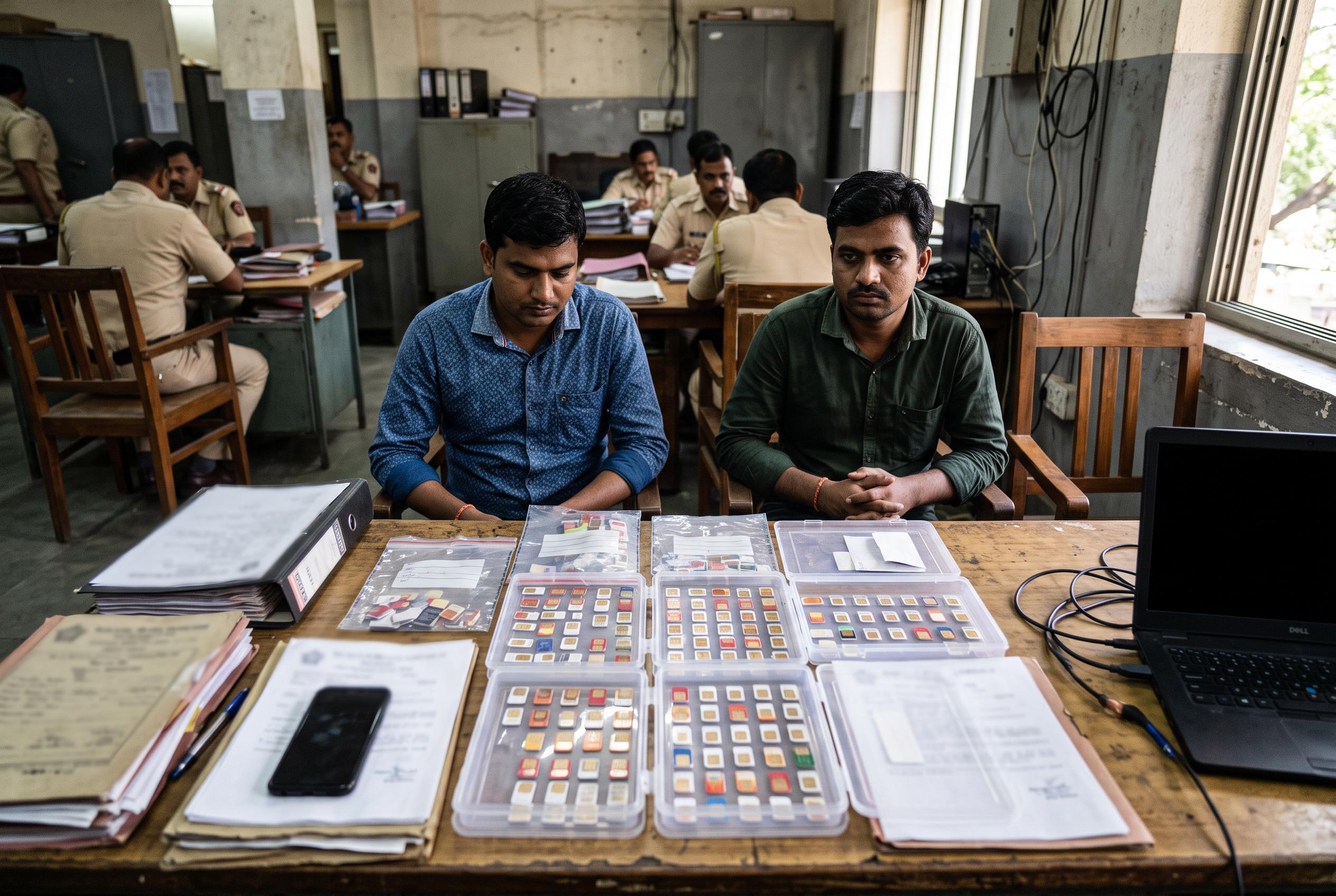

Mumbai police have arrested two men linked to a broader interstate cyber fraud network, seizing 161 SIM cards and uncovering a pattern of impersonation scams targeting companies through WhatsApp and other platforms.
Mumbai police have arrested two men and seized 161 SIM cards in a case that investigators say is part of a wider interstate “fake CEO” cyber fraud network. The South Cyber Police Station of the Mumbai Crime Branch said the accused allegedly tricked a 43-year-old complainant into transferring Rs 48.60 lakh after posing as a company director on WhatsApp.
The accused have been identified as Aamir Chand Mohammad Khan, an Airtel SIM distributor from Siwan in Bihar, and Suraj Kumar Pradeep Kumar Saw, also known as Vishal, from Jharkhand, according to the police account carried by Free Press Journal. Investigators allege Khan misused customer documents and e-KYC details to activate SIM cards without the users’ knowledge, then supplied at least eight of them to Suraj for Rs 6,000. Police said the payment was made through UPI to Khan’s Airtel Payments Bank account.
The case fits a pattern that regulators and police have increasingly warned about. Earlier this year, India’s markets regulator SEBI cautioned companies and investors about “boss scam” frauds, in which criminals impersonate senior executives across WhatsApp, email and other platforms to pressure staff into moving money. In Gujarat, police recently described a much larger cybercrime ring under Operation Mule Hunt 2.0, showing how fake firms, mule accounts and repeated interstate links are being used to move stolen funds.
Mumbai police said technical analysis helped them first arrest Khan on August 14 and then Suraj on August 16. Officers recovered a megaphone, a POCO handset with the Airtel Mitra app used for SIM activation, and other material they believe was used in the operation. The force said it has so far linked the pair to seven similar cases across Maharashtra, Punjab, Haryana, Delhi, West Bengal and Tamil Nadu, and is now trying to establish whether they were part of a broader cybercrime supply chain.
Disclaimer: This article is intended to inform and educate, not to recommend or endorse any financial product, investment or strategy. Please consider your own financial circumstances and seek professional advice where appropriate before making financial decisions.