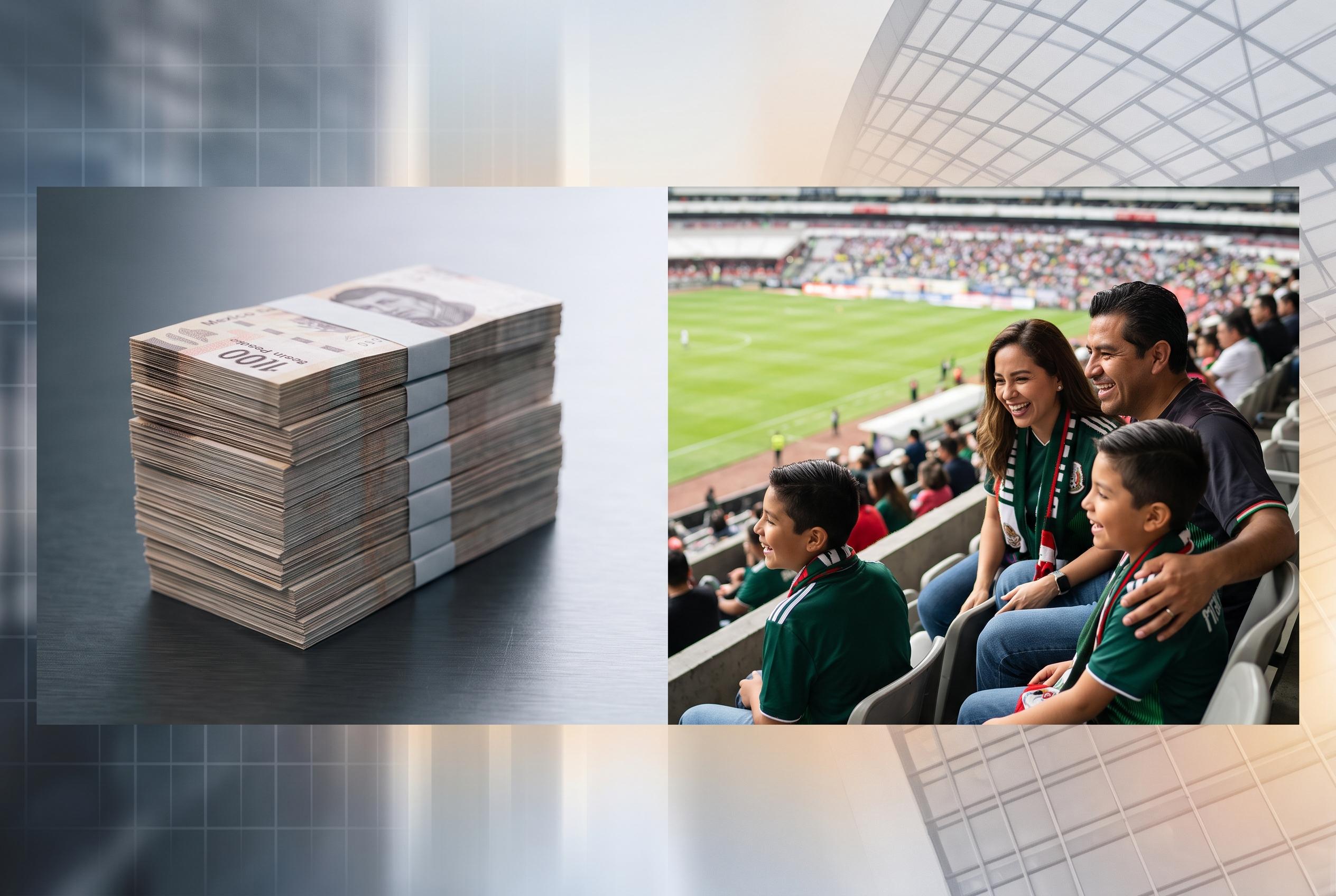

Despite missing initial forecasts, Mexico’s hosting of the World Cup reveals deeper insights into how extraordinary events create lasting value beyond mere dollars, highlighting the importance of careful planning and emotional significance in financial decision-making.
The World Cup has ended, and the bills have arrived. Deloitte estimates that Mexico generated $2.543 billion in economic activity from the tournament, a figure that fell short of earlier expectations after fewer visitors than projected arrived and spending came in below forecasts. On the surface, that can look like a commercial disappointment. But the more interesting question is whether “Was it profitable?” was ever the right way to judge an event of this kind.
Large sporting events are not just celebrations; they are sudden bursts of liquidity. Money floods in, assumptions are made and expectations rise. That is not so different from a family business sale, a major inheritance or a one-off bonus. In each case, the real test comes after the money lands: does it become lasting wealth, or does it simply pass through hands and disappear?
Deloitte’s figures show why forecasts so often miss the mark. The event drew 494,000 tourists, including 296,000 domestic visitors and 198,000 from abroad, while temporary employment reached 101,255 jobs, 10% below earlier projections. Dynamic ticket pricing and the growing pull of digital content also shaped the final numbers. In other words, much of what is counted as “new” money is often redirected spending, not fresh economic creation.
That is the same mistake many people make in personal finance. They confuse gross inflows with real wealth, treat one-time windfalls as if they were permanent, and leave the structure until after the money has already arrived. By then, tax planning, investment vehicles and spending rules are harder and more expensive to fix. The more disciplined order is simple: structure first, then operations, then investing, and only then lifestyle choices.
There is also a factor models rarely capture well: emotion. A country hosting a World Cup does not do so only for the balance sheet, just as a family does not use a windfall only to maximise yield. Identity, memory and shared experience matter. Mexico’s expectations for the tournament were revised down from earlier estimates of more than $3 billion and 5.5 million additional visitors, but the event still carried value that no spreadsheet can fully measure. The same is true when an individual chooses to spend extraordinary money on something deeply meaningful rather than merely financially optimal.
That is why the better lesson is not that extraordinary experiences are too expensive. It is that they should be planned with the same seriousness as any other financial decision. When the structure is in place, the extraordinary stops being reckless and becomes possible. Wealth is not only about what accumulates; it is about what allows a person, or a country, to live the moments that matter.
Disclaimer: This article is intended to inform and educate, not to recommend or endorse any financial product, investment or strategy. Please consider your own financial circumstances and seek professional advice where appropriate before making financial decisions.