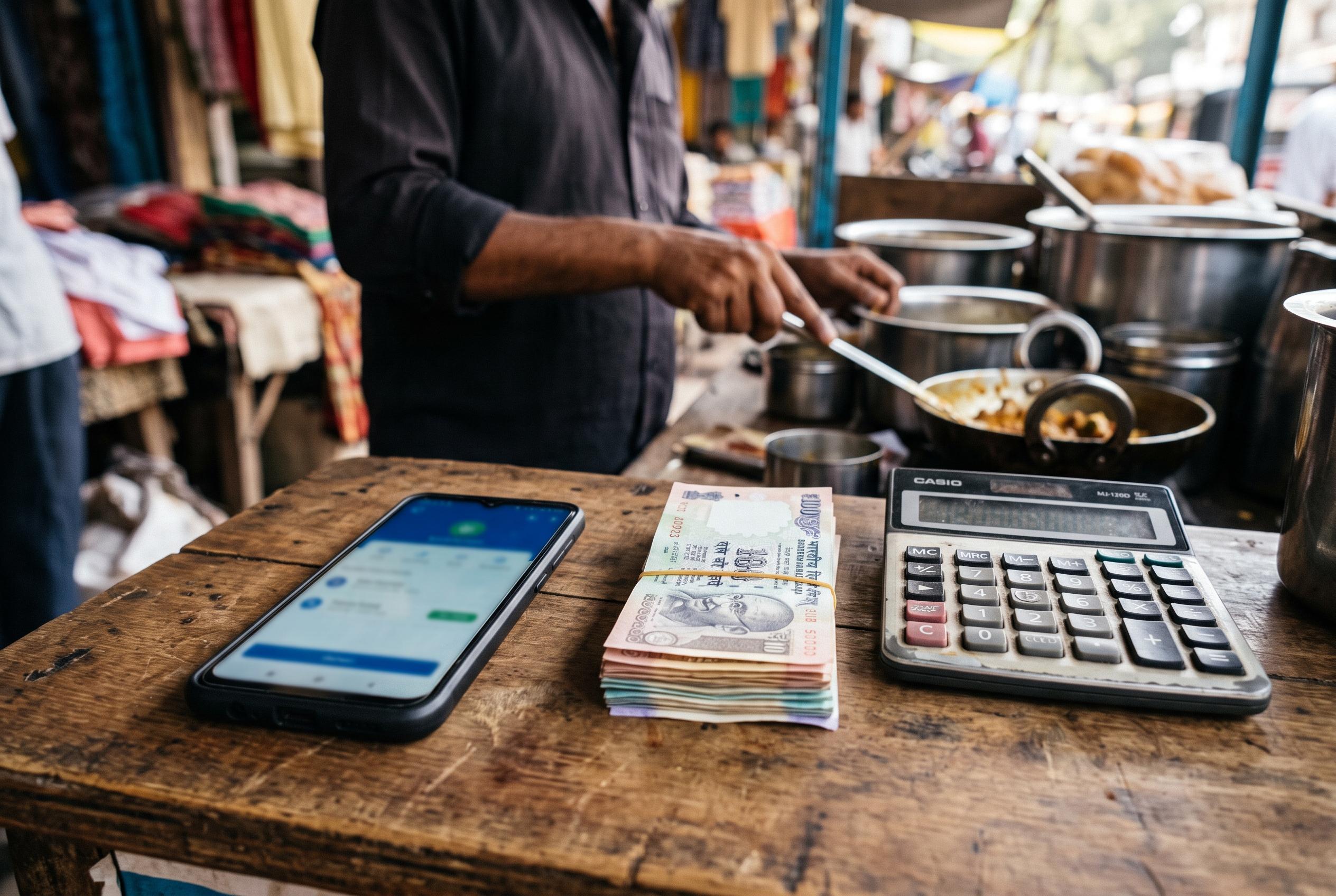

A government-backed study reveals that small merchants are central to India’s rapid UPI adoption, raising questions about the future impact of proposed transaction charges on retail digital payments.
India’s Unified Payments Interface has become the country’s dominant retail payment rail, but the latest government-backed evidence suggests its growth has been powered as much by small traders as by consumers. A study released by the Department of Financial Services in February found that 94% of the small merchants it surveyed were using UPI, underscoring how deeply the system has spread through neighbourhood commerce, from kirana shops to tea stalls and street vendors.
The analysis, conducted with the National Payments Corporation of India, covered more than 10,000 respondents across 15 states and was designed to assess a government incentive scheme aimed at encouraging RuPay debit card use and low-value merchant UPI transactions. It found that 72% of merchants were satisfied with digital payments, pointing to quicker transactions, easier bookkeeping and greater convenience. More than half said sales had risen after adopting digital payments, although the study also noted that incentives played a role in bringing businesses into the system.
That merchant uptake has been matched by rapid expansion in the infrastructure around UPI. Government data and industry estimates show QR-code usage has surged, the number of banks on the platform has climbed sharply, and third-party apps have multiplied, giving consumers and merchants more ways to transact. The official line is that UPI has become the backbone of India’s digital payments ecosystem, with the system processing more than 24,000 crore transactions in the 2025-26 financial year and monthly volumes topping 2,000 crore by August 2025, according to a government press release.
The scale of adoption matters because Parliament has now created a legal basis that could allow charges on some electronic payment transactions in future. The Taxation and Other Laws (Amendment) Bill, 2026, opens the door to reviving the merchant discount rate, or MDR, on digital payments such as UPI. MDR is the fee a merchant pays when a customer uses a digital payment method; UPI currently carries no such charge. Finance Minister Nirmala Sitharaman has said small vendors would be excluded, and consumers would continue to pay nothing, but the government has not yet formally set out the precise merchant definition or threshold for exemption.
That uncertainty makes the small merchant segment especially important. The government’s own data suggests these businesses are not peripheral users of UPI but central to its mass adoption. Earlier industry and official reports have drawn a similar picture, linking the success of the system to low-cost, interoperable QR codes, broad bank participation and the public-good model that helped digital payments become routine in small shops and informal markets.
Disclaimer: This article is intended to inform and educate, not to recommend or endorse any financial product, investment or strategy. Please consider your own financial circumstances and seek professional advice where appropriate before making financial decisions.