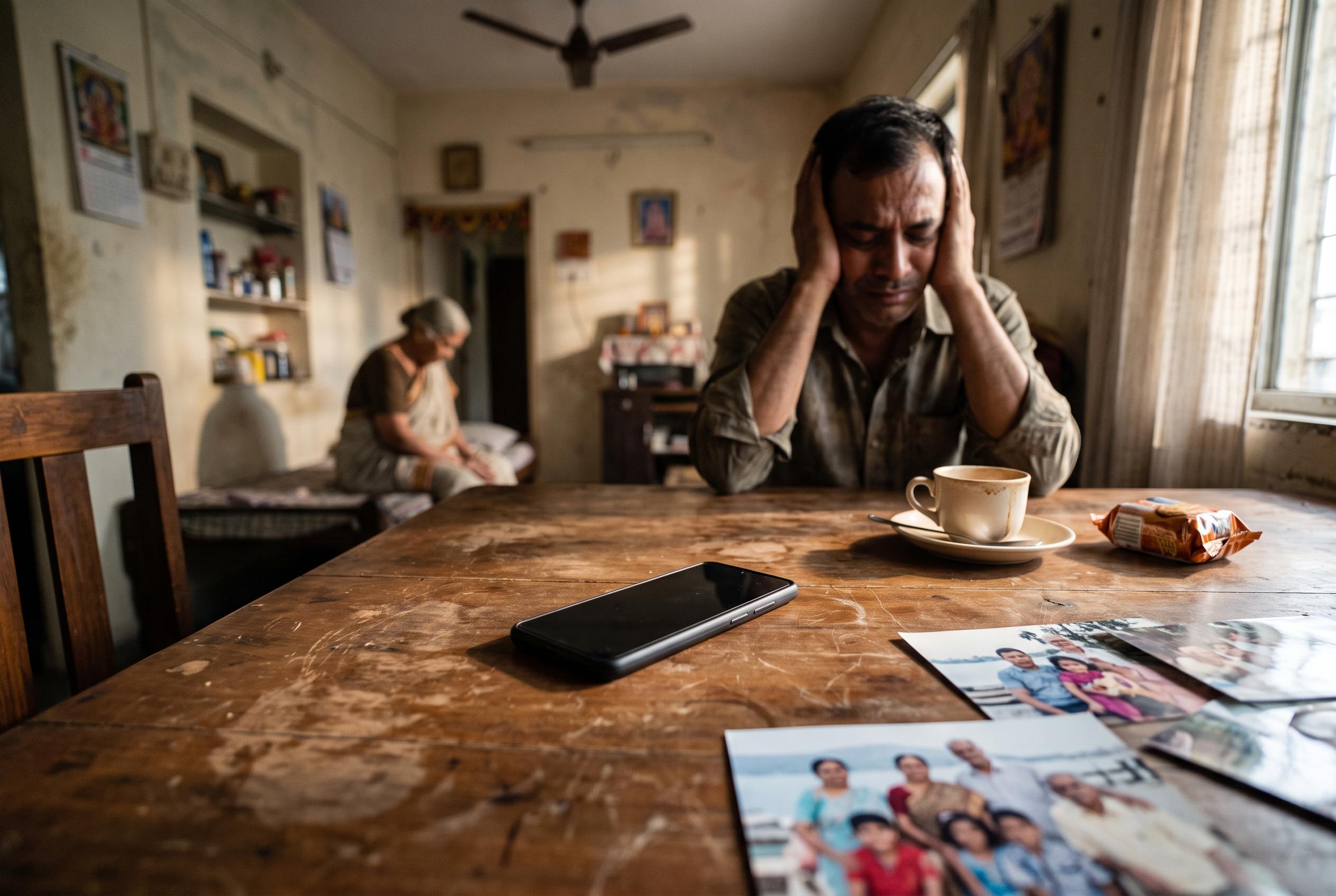

A spate of family suicides across India highlights the devastating human cost of the country’s escalating online betting industry, which persists despite legal crackdowns and increasing awareness.
In a village in southern India, the collapse of one young man’s online betting habit ended in tragedy for an entire family. Harish, 22, began placing wagers during the COVID-19 pandemic and, according to police, built up losses of about 1.8 million rupees and debts to at least 12 people before he, his father and his mother died by suicide in October 2024. The case from Yedapally in Telangana has become a grim symbol of how quickly digital betting can move from a private habit to a household catastrophe.
India’s gambling crisis has widened alongside the country’s vast smartphone economy. Al Jazeera reported that India had about 591 million gamers in 2024, while gaming revenue reached about $3.7bn, with money-based play accounting for most of that income. At the same time, a 2025 report by CUTS International estimated that the largest unauthorised betting sites drew billions of visits from India and that illegal platforms were handling deposits on a scale that far outstrips official oversight. The result is a market that is easy to enter, difficult to police and still lucrative for operators.
The human cost has been mounting in Telangana and beyond. Chief Minister A. Revanth Reddy said online betting led to 1,456 cases and 51 suicides in the state between 2023 and February 2026, while Hyderabad alone recorded losses of Rs 4.35 crore, according to Deccan Chronicle. In other states, the pattern has been similar: NDTV reported that in Andhra Pradesh, the parents of a young gambler died by suicide after trying to cover debts of Rs 2 crore, and it also reported a separate Telangana case in which an 18-year-old died after losing Rs 1 lakh on a betting app.
Experts say the spiral often begins with small stakes and a belief that the next bet can recover what was lost. Manoj Kumar Sharma, a clinical psychology professor at the National Institute of Mental Health and Neurosciences in Bengaluru, told Al Jazeera that early wins can create a strong reward effect, while losses bring guilt and the illusion that the money is still recoverable. That cycle, he said, can make it increasingly difficult for users to stop, especially when loans, shame and family pressure enter the picture.
India responded in 2025 with a sweeping online gaming law that banned money games, whether they were based on chance, skill or a mix of the two, and also barred their advertising and payment support. The law took effect on May 1, 2026, but the offshore market has proved resilient. India’s information ministry has warned celebrities and influencers not to promote betting platforms, and the Advertising Standards Council of India said it flagged thousands of offshore betting ads in 2025. Even so, apps can shift domains, migrate to messaging channels and keep drawing users into new rounds of risk.
For families, the damage is often measured in land, savings and desperation. Harish’s relatives sold property to try to settle what he owed, but it was not enough. Similar stories have emerged across the country, including in Karnataka, where NDTV and The Times of India reported deaths linked to online gambling debts running into tens of lakhs of rupees. In each case, the same lesson repeats: what begins on a phone can end by consuming an entire family.
Disclaimer: This article is intended to inform and educate, not to recommend or endorse any financial product, investment or strategy. Please consider your own financial circumstances and seek professional advice where appropriate before making financial decisions.