

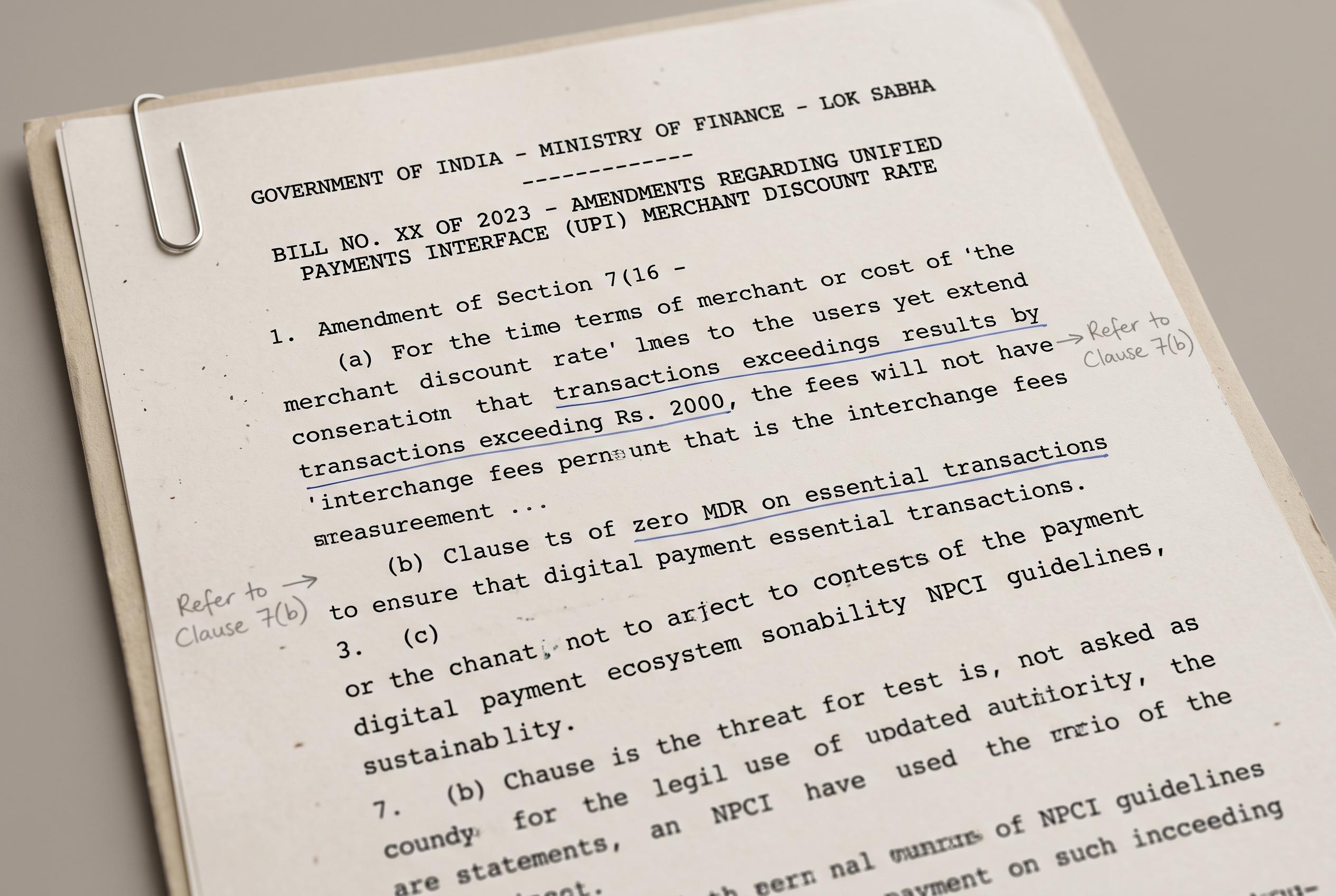

India’s lower house has approved amendments enabling merchants to be charged fees on certain UPI transactions, marking a major change in the country’s rapidly expanding digital payments landscape.
India’s lower house has approved a change to the law governing payment systems that could open the door for merchants to be charged fees on some Unified Payments Interface transactions, marking a significant shift in the economics of the country’s fast-growing digital payments network.
The Lok Sabha passed amendments to the Payment and Settlement Systems Act, 2007, through the Taxation and Other Laws (Amendment) Bill on August 6, 2026, according to the materials provided. The change removes a legal bar that has prevented banks and payment service providers from imposing merchant discount rate charges on certain notified electronic payment methods, including UPI.
The move comes against the backdrop of extraordinary growth in India’s real-time payments system. Government data cited by the Press Information Bureau show that by June 2026 nearly 55.49 crore users had been onboarded to UPI, while transactions in financial year 2025-26 reached 24,162 crore in volume and ₹314 lakh crore in value. UPI is operated by the National Payments Corporation of India under the Payment and Settlement Systems Act.
The proposed charges are expected to be limited to large merchants and higher-value transactions, with the threshold under discussion set at transactions above ₹2,000, according to the report. Small businesses and ordinary consumers are expected to be largely unaffected. The fee would be paid by merchants, not customers, and could fall in the range of 0.3% to 0.5% for qualifying transactions.
The issue has long been contentious because UPI payments to merchants have been zero-MDR since January 2020, with the government using subsidies to help offset the cost of running the network. Industry commentary has argued that those subsidies no longer cover the full expense of infrastructure, fraud prevention and settlement systems. RBI Governor Sanjay Malhotra has also said maintaining a payments network at this scale carries substantial costs, a point that appears to have shaped the latest debate over who should pay: the state, the business or the user.
However, some reports have suggested the government still denies any immediate plan to impose charges on UPI payments, pointing to Section 10A of the Act as the existing prohibition on fees for prescribed digital payment modes. That means the latest parliamentary change may be best understood as creating the legal room for future levies rather than announcing an immediate nationwide charge.
Disclaimer: This article is intended to inform and educate, not to recommend or endorse any financial product, investment or strategy. Please consider your own financial circumstances and seek professional advice where appropriate before making financial decisions.



