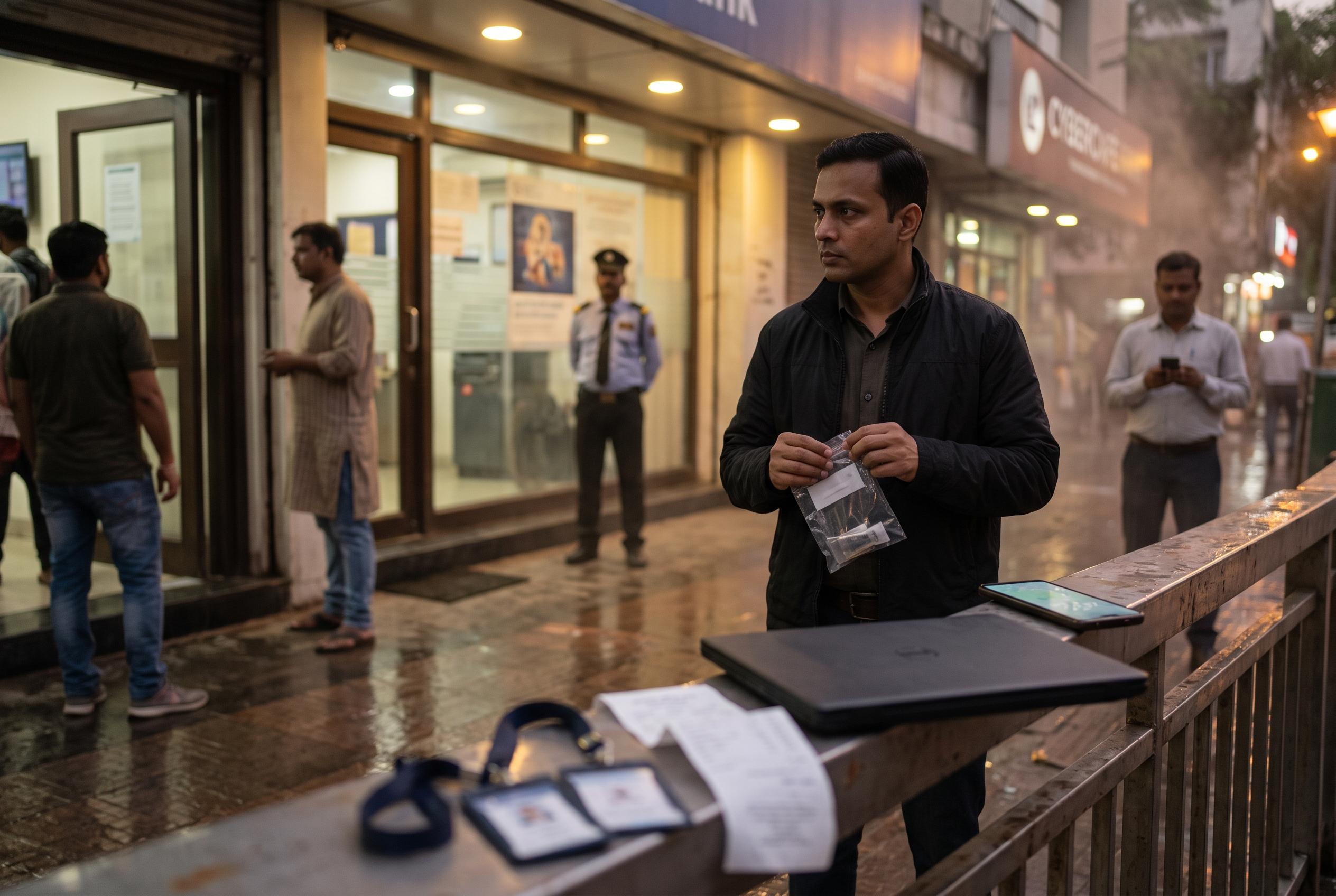

The rise of mule accounts in India, facilitated by rapid digital payments and organised networks, is challenging authorities to curb cybercrime and protect innocent account holders from unwittingly aiding scams.
India is seeing a sharp rise in cases involving so-called mule accounts, the bank accounts that sit between fraudsters and their stolen money. In plain terms, the scam works by routing illicit funds through someone else’s account before the money is moved on again or withdrawn in cash. Recent cases in Patna and Deoria have put the issue back in the spotlight, while a British firm recently shut 240,000 suspicious mule accounts and issued an alert, underlining that the problem is not confined to India.
The phrase “mule” is borrowed from the animal known for carrying loads, and the analogy is apt. In cyber fraud, the account is used to carry dirty money from one place to another, often without the holder fully understanding the scale of the crime. Fraudsters may persuade people to hand over access in return for a commission, or they may trick them into opening accounts in their own names and then take control of the ATM card, cheque book, internet banking credentials and linked SIM card. In some cases, the account holder may not be the real beneficiary at all, only the convenient front line.
The danger for investigators is that mule accounts can hide the real organiser of the crime. When police trace the money, they often reach the account holder first, while the person directing the fraud stays out of sight. That delay can make it harder to recover funds or identify the wider network behind the scam. The Reserve Bank of India has repeatedly warned people not to let third parties use their bank accounts to receive or transfer money, saying such arrangements are often tied to cybercrime. According to the Indian Cyber Crime Coordination Centre, more than 2.73 million suspected money mule accounts had been identified since September 2024.
The scale of the problem is reflected in the kinds of cases now emerging across the country. In Bihar, police uncovered allegations that hundreds of accounts had been opened in a village, while in Surajpur in Chhattisgarh, an account linked to an institution was allegedly used to channel more than 11.3 billion rupees stolen from victims in 21 states. Other reports point to organised networks using not just bank accounts, but CSC wallets and SIM cards as part of a broader laundering system. Business Standard has reported that mule accounts often show tell-tale signs such as rapid fund movement, frequent transactions and an unusually large number of counterparties, all of which make the money trail harder to follow.
Experts and banks say the rapid spread of digital payments has made the model easier to scale. With UPI and mobile banking, money can be moved in seconds, and fraudsters exploit that speed to split large sums into smaller transfers, a tactic sometimes called micro-muling. The lure is often simple: easy money, a fake job offer, a loan promise or help with a government scheme. But the legal exposure is serious. People who allow their accounts to be used for suspicious transfers can face account freezes, criminal cases and damage to their banking record, even if they claim they were only “helping” someone else.
The safest response is to keep bank accounts, ATM cards, passbooks, UPI IDs and SIM cards strictly personal. Any offer that promises cash for receiving and forwarding money should be treated as a red flag. If an unknown credit appears in an account, it should not be withdrawn or passed on; the bank and police should be informed immediately. Authorities also advise checking how many SIMs are registered in your name through the Sanchar Saathi portal and reporting cyber fraud without delay through the national helpline 1930 or the cybercrime portal, because speed can determine whether the money is stopped in time.
Disclaimer: This article is intended to inform and educate, not to recommend or endorse any financial product, investment or strategy. Please consider your own financial circumstances and seek professional advice where appropriate before making financial decisions.