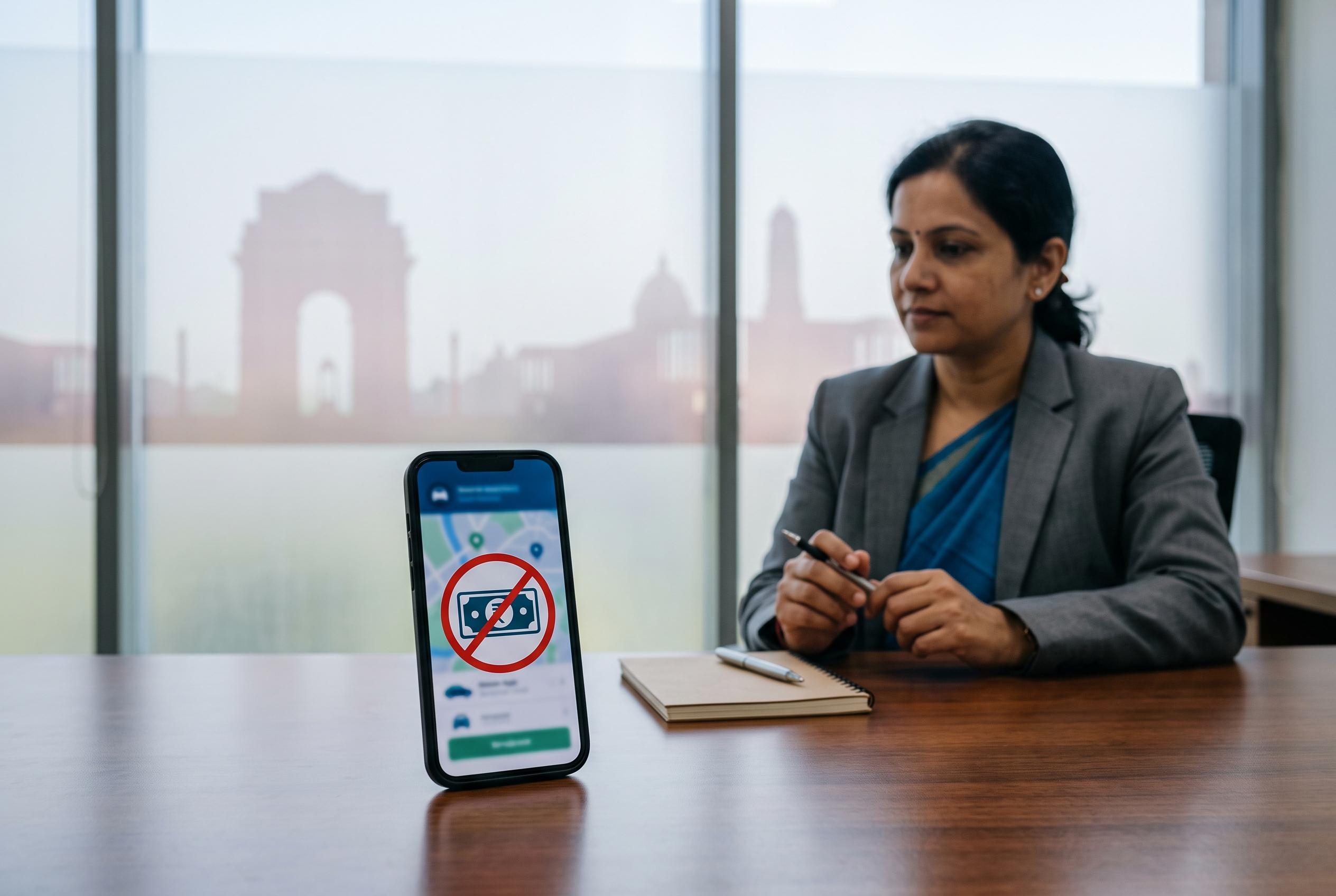

India’s regulatory move to ban advance tipping on platforms like Uber, Ola, and Rapido highlights a push to prevent manipulative app design and promote fair consumer discretion in the gig economy.
India’s consumer watchdog has taken aim at a small but increasingly visible feature on ride-hailing apps: the prompt that asks passengers to tip a driver before a trip has even started. According to reports from Mint and Moneycontrol, the Central Consumer Protection Authority said the practice raised concerns that users could be nudged into paying extra before they had any basis for judging the service.
The issue has now broadened beyond Uber. Reporting in the financial press said the same concern spread across platforms including Ola and Rapido, as regulators examined whether advance tipping amounted to a misleading or manipulative design choice under India’s Consumer Protection Act. The central argument is simple: a tip should reflect the ride that was actually delivered, not an expectation built into the booking screen.
By December 2025, the Ministry of Road Transport and Highways had amended the Aggregator Guidelines to bar “advance tipping” altogether, according to the Financial Express and later reports carried by Mint. Under the revised rules, any voluntary tip must only be shown after the journey ends, bringing the decision back to the point at which the passenger can assess punctuality, driving, courtesy and help with luggage.
For drivers, the change is unlikely to eliminate tips, but it does alter when they can appear in the app. That matters in a gig economy where small extras can supplement earnings. For the platforms, it means redesigning interfaces that have increasingly shaped consumer behaviour through prompts, defaults and other in-app cues that regulators are now scrutinising more closely.
The wider significance goes beyond ride-hailing. India’s move reflects a broader regulatory push to police digital design practices that may steer consumers without clear consent, especially where money is involved. In that sense, the dispute over pre-ride tipping is less about gratuities than about how far platforms can go in framing a customer’s choice before any service has been delivered.
Disclaimer: This article is intended to inform and educate, not to recommend or endorse any financial product, investment or strategy. Please consider your own financial circumstances and seek professional advice where appropriate before making financial decisions.