

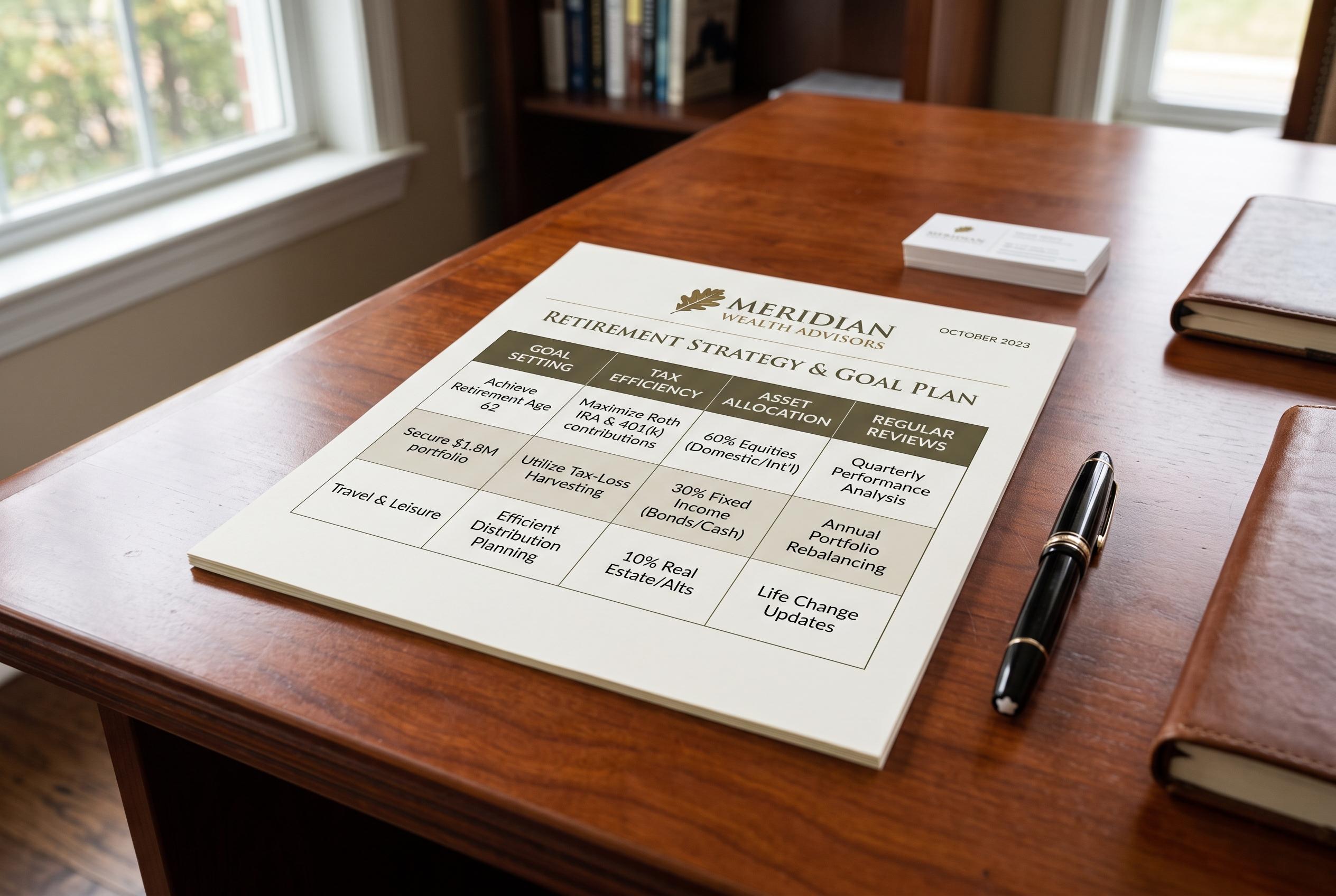

As market fluctuations and healthcare expenses grow, affluent investors are adopting more comprehensive and flexible retirement plans that integrate Goal setting, tax efficiency, asset allocation, and regular reviews to secure their financial future.
Retirement planning works best when it starts with clear goals, a realistic time frame and a sober estimate of how much income will be needed after work ends. Financial Synergies Wealth Advisors argues that high-net-worth investors need more than a simple savings habit; they need a plan that ties spending, tax strategy, asset allocation and estate priorities together. That broader approach matters because retirement costs are shaped not only by daily living expenses but also by health care, inflation, housing choices and how long retirement lasts. Fidelity similarly notes that the amount needed will depend on lifestyle and planned retirement age, and suggests saving at least 15% of income a year, including any employer contribution.
The first practical step is to define what retirement should fund. That means estimating future expenses, deciding when retirement might begin and working out what level of income will preserve a preferred standard of living. Fidelity’s retirement-planning guidance says a solid plan should include predictable income sources, investment growth and flexibility as circumstances change, while also accounting for required minimum distributions and health care costs later in life. For people aiming to stop work early, the challenge is sharper: the savings target is higher and the years of withdrawals are longer.
Once the target is clearer, the next question is where the money will come from. The Financial Synergies article points to familiar tax-advantaged accounts such as 401(k)s, traditional IRAs and Roth IRAs, while emphasising the value of disciplined contributions and employer matching. Fidelity’s planning materials also stress the basics: understand income and expenses, build a budget, set goals and keep debt under control. For affluent households, however, the issue is often not simply whether to save, but how to coordinate taxable and tax-favoured accounts so withdrawals later in life remain as flexible and tax-efficient as possible.
Investment mix matters as much as savings rate. Financial Synergies says retirement portfolios should reflect time horizon and risk tolerance, using a balance of stocks, bonds, mutual funds, exchange-traded funds or target-date funds where appropriate. That emphasis on diversification is consistent with Fidelity’s view that retirement income plans need both growth potential and stability, especially as spending becomes more dependent on the portfolio itself. The point is not to chase returns, but to build an allocation that can survive market swings without forcing poor decisions at the wrong time.
Health care deserves special attention, particularly for people considering early retirement or expecting a long retirement period. Fidelity warns that medical costs can take a large share of retirement spending, and suggests using tax-advantaged accounts such as health savings accounts, where available, as part of the solution. Financial Synergies makes a similar point by noting that long-term spending should include more than routine living costs. For many households, this is where retirement planning becomes less about a savings target and more about a cash-flow model that can absorb shocks.
The article also makes a strong case for regular reviews. Income changes, markets move and family priorities evolve, so contributions and portfolio weightings should not be left untouched for years. Fidelity’s retirement guidance says plans should be adjustable over time, while its spending-in-retirement material stresses the need to review essential and discretionary expenses as life changes. For investors with larger balance sheets, annual check-ins can also help with estate planning, charitable giving and rebalancing decisions that keep the wider wealth picture aligned.
The broad message is simple: retirement readiness is not built by one account, one rule or one lucky market cycle. It comes from setting a clear goal, saving consistently, using tax-efficient accounts, investing with discipline and revisiting the plan often enough to keep it realistic. For high-net-worth investors, the best version of that process is coordinated, deliberate and built around the life they actually want to fund.
Disclaimer: This article is intended to inform and educate, not to recommend or endorse any financial product, investment or strategy. Please consider your own financial circumstances and seek professional advice where appropriate before making financial decisions.



