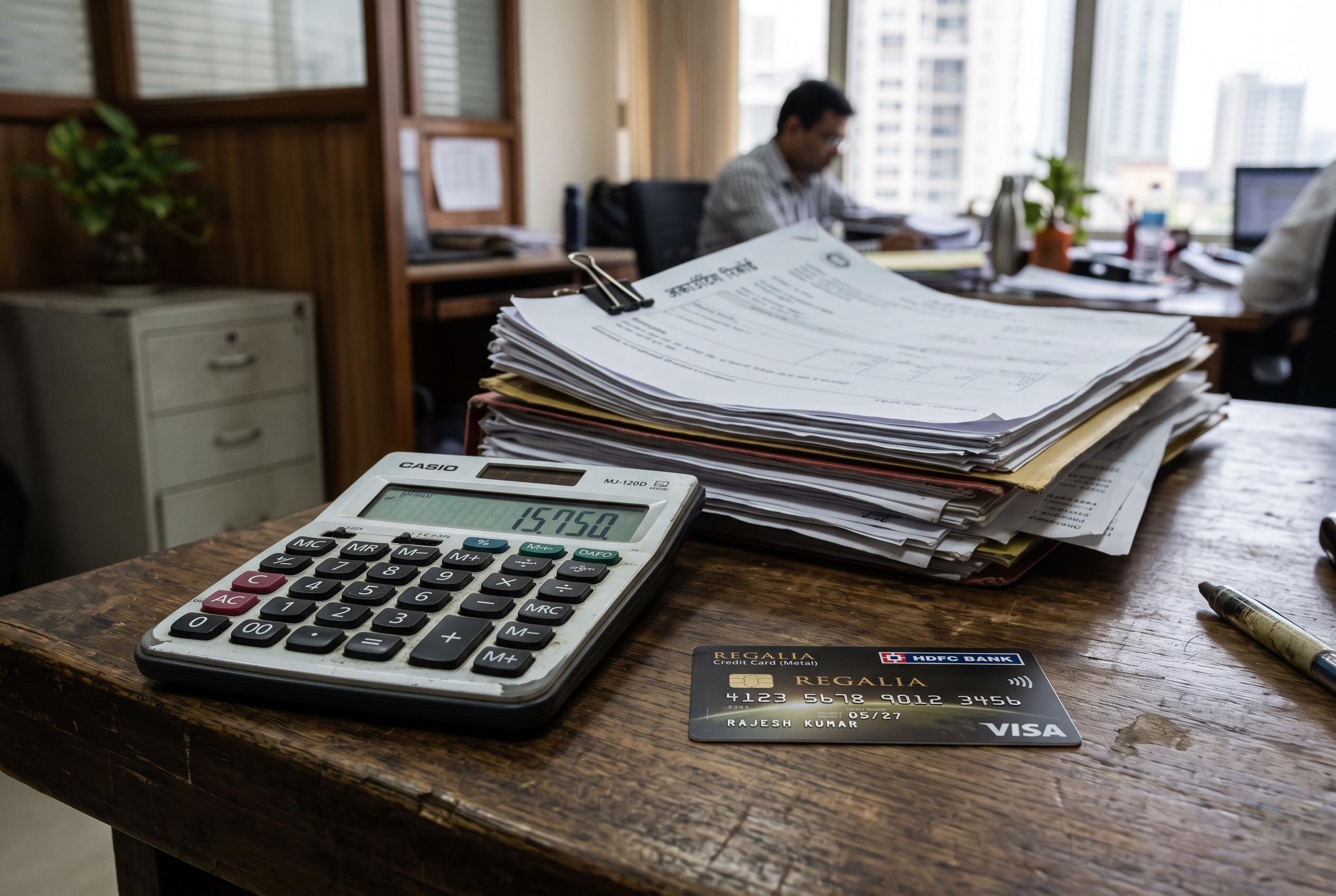

In India, credit card APRs exceeding 36% make minimum payments a costly gamble, risking rapid debt growth and impaired credit health. Experts recommend full payment or strategic financial planning to prevent debt spirals.
Paying only the minimum due on a credit card can look manageable in the moment, but it often leaves cardholders exposed to steep interest charges that quickly swell a small balance into a much larger one. Informalnewz.com said this is especially important in India, where credit card APRs are typically far higher than on most other common forms of borrowing.
APR, or annual percentage rate, is the yearly cost of borrowing on an outstanding card balance. According to guides from OnePaisa, Paisabazaar and Mint, Indian credit cards generally charge about 3% to 3.75% a month, which works out at roughly 36% to 48% a year. That makes card debt far more expensive than many personal loans, and one of the costliest forms of consumer credit available to households.
The real danger begins when a customer pays only the minimum amount due rather than the full statement balance. That keeps the account from going delinquent, but it also ends the interest-free grace period on new spending and allows interest to build on the unpaid portion. Because card interest is compounded, the cost is charged not just on the principal but also on previously added interest. Mint and Paisabazaar note that late fees, GST and other charges can add to the burden, while persistent minimum payments can also hurt credit health by pushing up utilisation rates.
In practical terms, a balance that starts at ₹50,000 can grow sharply over time if it is left to revolve month after month, especially when new purchases are added on top. The simplest protection is to pay the full bill by the due date wherever possible. If the debt has already become difficult to manage, OnePaisa and Paisabazaar say a lower-cost personal loan or a balance transfer facility may be worth considering, provided the terms are clearly understood and the repayment plan is realistic.
Disclaimer: This article is intended to inform and educate, not to recommend or endorse any financial product, investment or strategy. Please consider your own financial circumstances and seek professional advice where appropriate before making financial decisions.