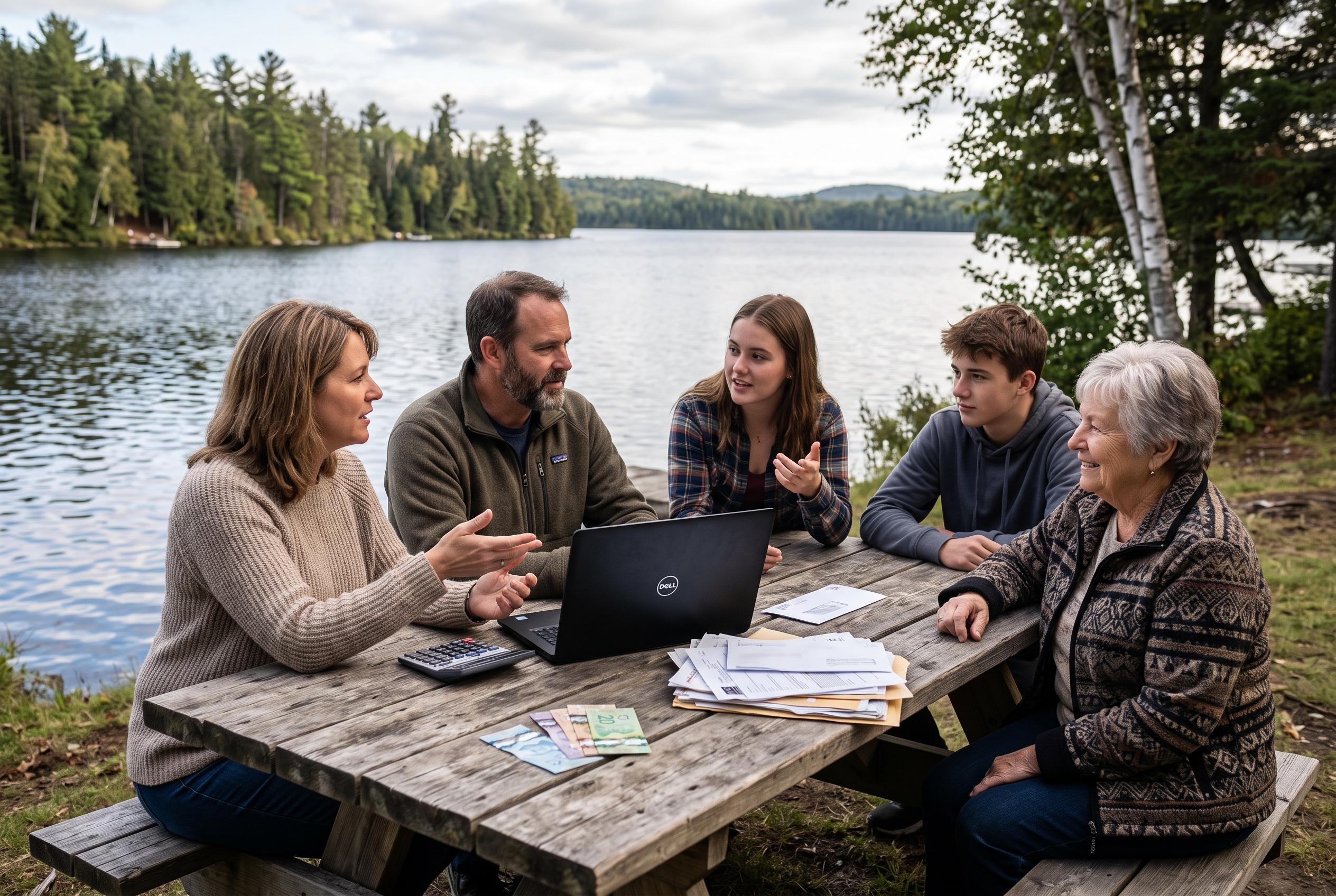

As property values soar and ownership transfers become more complex, Canadian families are prioritising open dialogues over legalities to preserve cherished lakeside retreats and the memories they hold for generations.
For many Canadian families, the summer property is less an asset than a kind of shared biography. It is where children learned to swim, where grandparents told stories by the water and where cousins built the rituals that later defined the family itself. That emotional weight is why decisions about the cabin, cottage or lake house tend to become more than estate planning. They become a test of what the family wants to preserve.
The challenge is that these properties were often bought decades ago, when waterfront land was far cheaper and few owners anticipated the value they would later hold. As families expand and the original owners age, the central question changes from who enjoys the place today to what should happen to it next. According to several Canadian estate-planning advisories, that question is rarely just about title or tax. It is about whether the property still serves the people attached to it and whether the family is prepared for the obligations that come with keeping it.
That is why advisers increasingly urge families to begin with a conversation, not a legal structure. The first step is to decide what the property means to the owners themselves and what role they hope it will play in the future. Some want the cottage to stay in the family for generations. Others care more about passing on the traditions than preserving a specific building. Still others conclude that no one should be pressured into inheriting a place they do not truly want. The point, according to the guidance, is to make an intentional choice rather than assume the best outcome will emerge on its own.
Families are also encouraged to involve the next generation while the current owners are still healthy enough to lead the discussion. That can mean speaking first with children, grandchildren and other relatives one by one before bringing everyone together. The aim is to surface practical issues early: who will use the property, how repairs and insurance will be paid for, who will coordinate maintenance and how disputes will be handled. Advisory firms say those questions are easier to address around a kitchen table than after a death, when emotions and expectations are harder to manage.
Ownership itself carries more responsibility than most heirs expect. A shared recreational property can require ongoing spending on taxes, insurance, septic systems, docks and roof repairs, as well as decisions about renovations and scheduling. Canadian tax advisers also warn that a transfer can trigger capital gains tax, probate costs and other estate issues, while some notes on cottage succession add concerns about protecting the property from creditor claims and family disputes. In that sense, a family cottage can function more like a small business than a holiday home.
There is no single correct answer. Some families succeed in keeping the cabin together, often by setting clear rules in writing and agreeing in advance on how decisions will be made. Others decide to sell, because doing so preserves relationships and avoids years of conflict. In some cases, one heir buys out the others. In others, the family realises that the memories matter more than the real estate. What endures, advisers say, is not the building itself but the conversations that help a family decide what is worth keeping.
Disclaimer: This article is intended to inform and educate, not to recommend or endorse any financial product, investment or strategy. Please consider your own financial circumstances and seek professional advice where appropriate before making financial decisions.