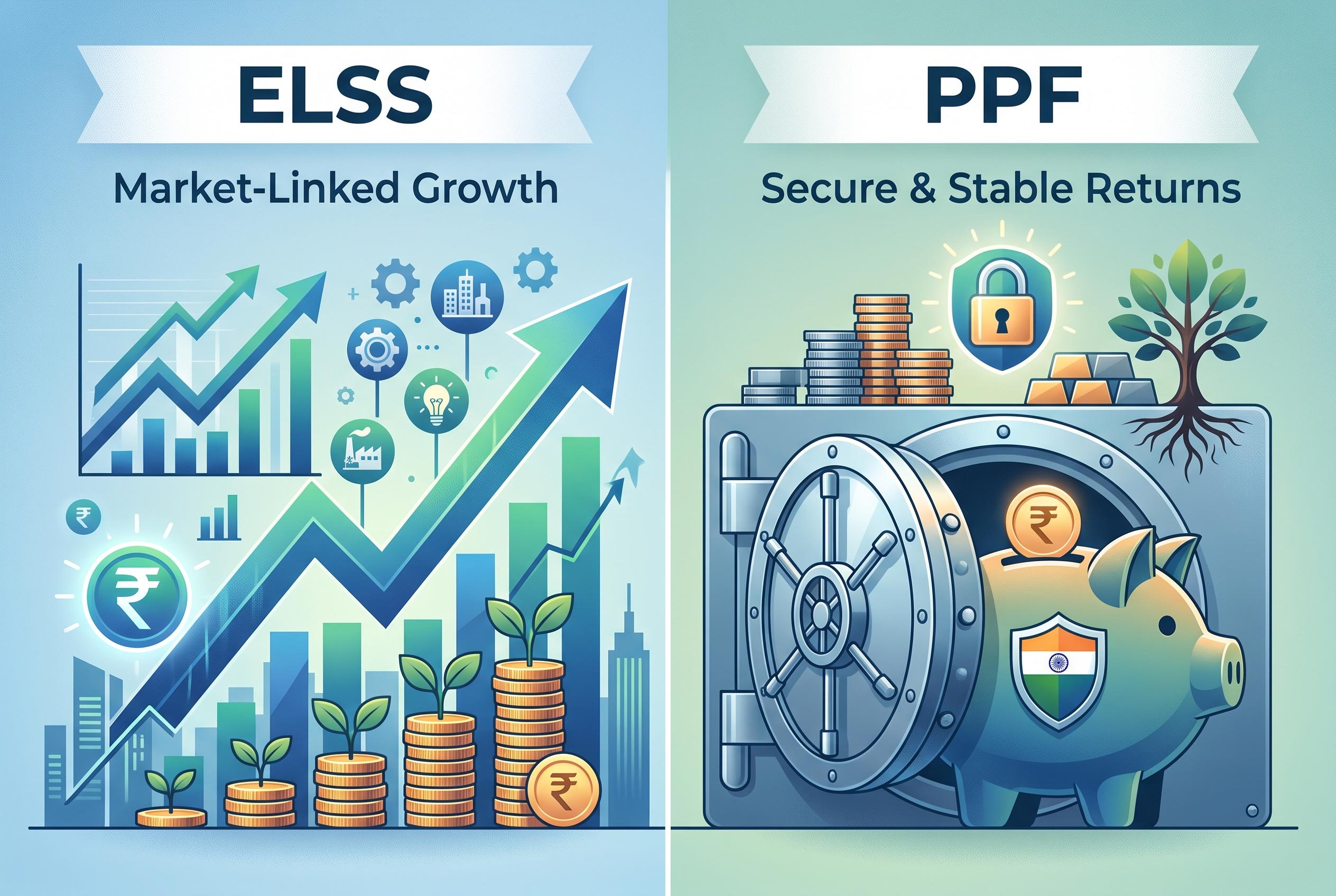

Indian investors face a strategic choice between two popular tax-saving options: the market-linked ELSS and the government-backed PPF, each catering to different risk appetites and financial goals amidst evolving regulations.
For Indian investors looking to reduce tax liability while building long-term savings, ELSS and PPF remain two of the most widely used options under the old tax regime. The two routes sit at opposite ends of the risk spectrum: ELSS, or Equity Linked Savings Scheme, is tied to the stock market, while the Public Provident Fund is a government-backed savings plan with a fixed return set by the state. Both can be used for deductions under Section 80C, but they suit very different kinds of savers.
ELSS is a mutual fund that invests mainly in equities and equity-linked instruments, which means returns can rise and fall with market conditions. According to investment guides from INDmoney and other market platforms, the scheme carries a minimum lock-in of 3 years, and that lock-in applies separately to each SIP instalment. That shorter commitment can make ELSS attractive to investors who want tax savings without giving up access to their money for a decade or more, but the trade-off is volatility and no assured return.
PPF, by contrast, is designed for conservative savers. It currently offers 7.1% annual interest, according to the material reviewed, with contributions allowed from as little as ₹500 a year up to ₹1.5 lakh. The account runs for 15 years, making it far less flexible than ELSS but also far more predictable. Several comparison guides note that PPF has historically appealed to people who want capital protection first and growth second, since the scheme is not exposed to market swings.
The tax treatment also differs. Under the old regime, both products fall within the ₹1.5 lakh Section 80C limit, though that ceiling also covers other eligible investments and expenses. PPF enjoys exempt status at contribution, accrual and withdrawal, while ELSS gains are taxed under equity mutual fund rules. As of the latest rules cited in the source material, long-term capital gains above ₹1.25 lakh a year are taxed at 12.5%, while gains up to that threshold remain exempt.
In practical terms, the choice comes down to risk appetite, time horizon and the need for liquidity. ELSS may suit investors who can tolerate market swings in exchange for the possibility of higher long-term returns. PPF is better for those who prefer certainty and are comfortable locking money away for 15 years. For many households, the smarter answer may not be one or the other, but a mix of both depending on goals and cash-flow needs.
Disclaimer: This article is intended to inform and educate, not to recommend or endorse any financial product, investment or strategy. Please consider your own financial circumstances and seek professional advice where appropriate before making financial decisions.