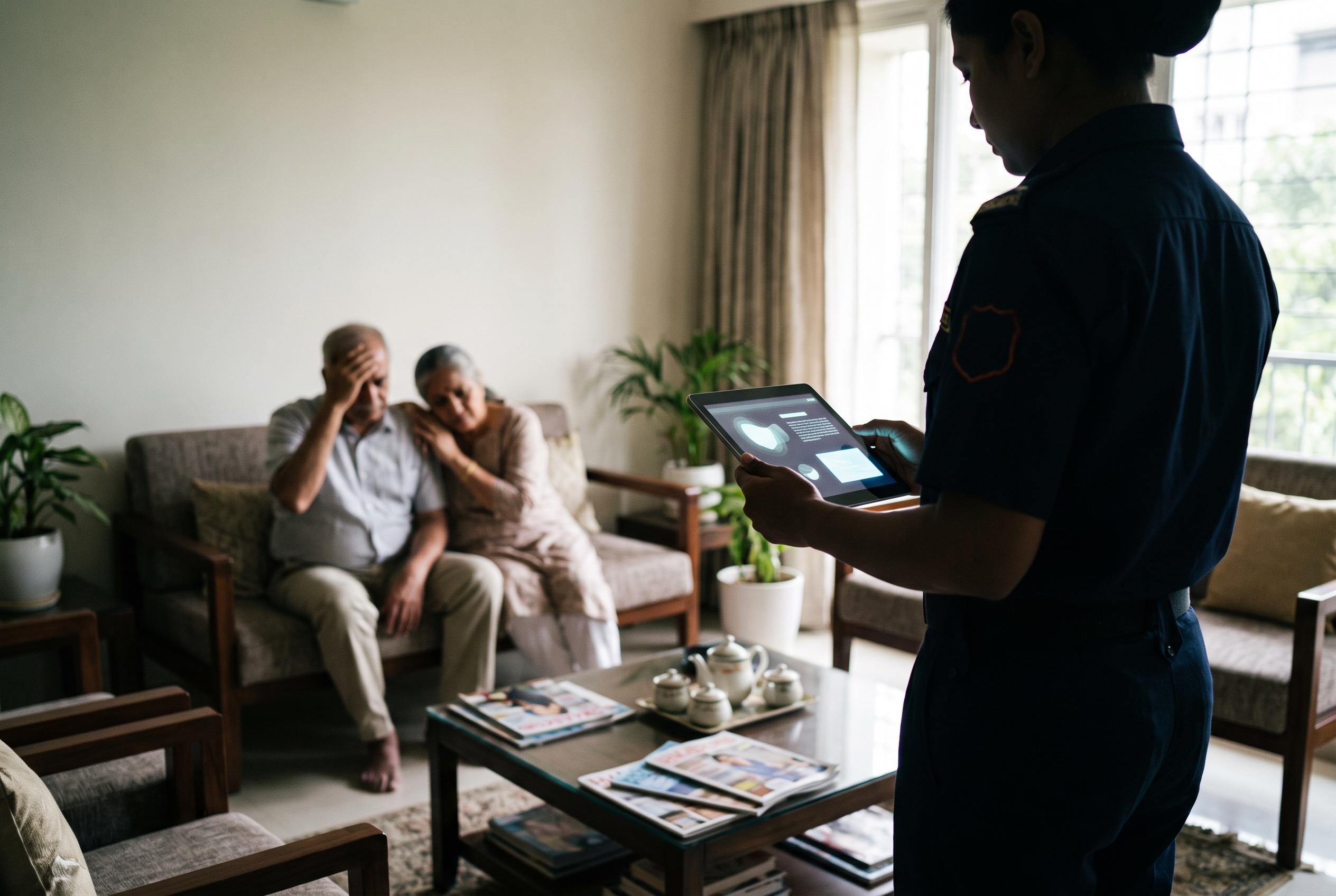

A senior couple in Madhya Pradesh lost ₹22 lakh after being duped by scammers posing as authorities in a sophisticated ‘digital arrest’ scheme, part of a rising trend targeting elderly Indians across the country.
A senior citizen couple in Jabalpur, Madhya Pradesh, was allegedly cheated out of ₹22 lakh after fraudsters kept them in a so-called “digital arrest” for 13 days, posing as Central Bureau of Investigation officers and threatening them with bogus money laundering and drug charges, according to the Free Press Journal. The victim, Prakash Paul Shejwal, filed a complaint with Civil Lines police after the pair realised they had been manipulated into handing over cash from a fixed deposit.
The fraud began on July 22, when the scammers contacted the couple and claimed their names were linked to serious criminal cases, the report said. To add credibility, they sent a forged letter said to be from the Anti-Terrorism Squad and warned the pair not to tell anyone. They then pushed them to break a fixed deposit and transfer about ₹21 lakh to accounts they controlled, later following up with fake receipts that appeared to come from the Enforcement Directorate and the Reserve Bank of India.
The case fits a wider pattern of “digital arrest” scams that Indian authorities have been warning about for months. The Ministry of Home Affairs has said cyber criminals commonly impersonate police, the CBI, the Narcotics Control Bureau, the RBI and the Enforcement Directorate, using threats and fake documents to extort money through calls or video chats. In a separate case reported by India Today, an 87-year-old retired executive in Pune lost ₹3.46 crore in a similar scheme, while Moneycontrol reported that Karnataka police recently arrested six people over a ₹24 crore fraud targeting a 74-year-old woman. Police in Jabalpur have registered a case and are trying to trace the suspects.
Disclaimer: This article is intended to inform and educate, not to recommend or endorse any financial product, investment or strategy. Please consider your own financial circumstances and seek professional advice where appropriate before making financial decisions.