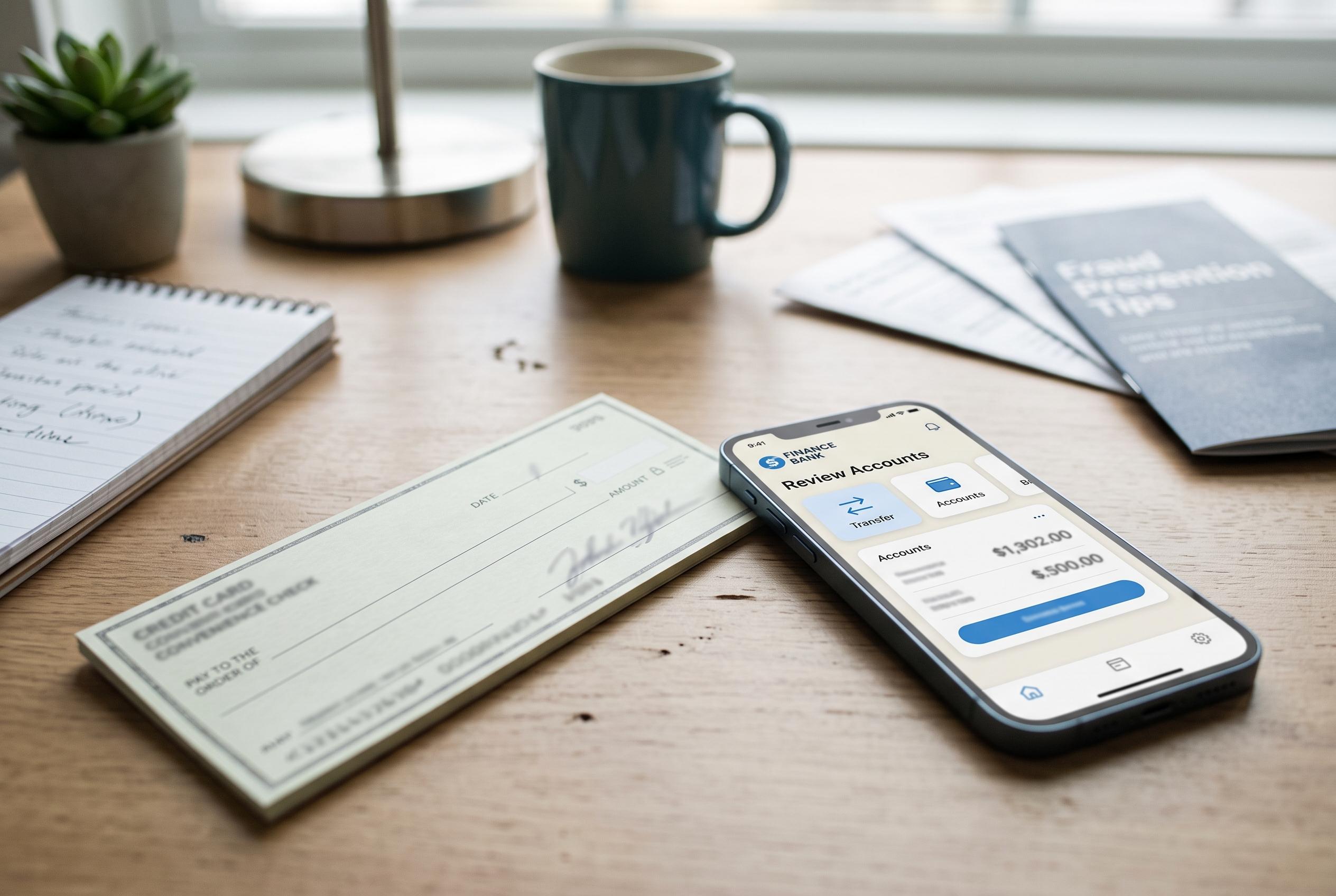

While offering quick access to cash, credit card convenience checks carry high fees and risks that can harm credit scores and consumer protections, making them a costly last resort for borrowers.
A credit card convenience check can look like easy money, but it is really a short-term borrowing tool with sharp edges. Issuers mail these paper checks so cardholders can draw on their credit line without using the card itself, yet the transaction usually counts as a cash advance rather than an ordinary purchase. That means interest can start the moment the check clears, with no grace period, and fees of about 3% to 5% are common. In practice, a convenience check is less a perk than a costly form of credit that needs careful handling.
The appeal is obvious in limited situations. NerdWallet says convenience checks may be used for balance transfers, purchases or cash advances, while Forbes Advisor notes they can help when a merchant or landlord does not take credit cards. Even so, they are best treated as a last resort. If a card issuer offers a promotional 0% rate, the maths may work for a balance transfer, but only if the interest saved outweighs the upfront fee and the offer is not tied to deferred interest.
The risks are what make these checks easy to misuse. LegalClarity and Credit Karma both point out that cash advance interest is usually higher than standard card borrowing and begins immediately. Forbes Advisor also warns that the checks can reduce consumer protections, since they do not offer the same dispute rights as a card purchase. For that reason, a convenience check used to pay a contractor, landlord or other non-card-accepting vendor can create more problems than it solves if the transaction goes wrong.
There is also a credit score angle. SoFi and Forbes Advisor note that writing a large check can push up credit utilisation, the share of available credit already in use. Because utilisation is a major factor in credit scoring, a sudden jump can drag down a score even if the balance is paid later. That makes convenience checks particularly unhelpful for anyone trying to improve credit health or keep balances low.
Unused checks should not be tossed in the bin. Lexington Law and other consumer finance guides say they should be voided and shredded because they can be used fraudulently if stolen. The safest approach is simple: read the card terms first, compare the fee and interest against every alternative, and assume a convenience check is expensive unless the numbers clearly prove otherwise.
Disclaimer: This article is intended to inform and educate, not to recommend or endorse any financial product, investment or strategy. Please consider your own financial circumstances and seek professional advice where appropriate before making financial decisions.