

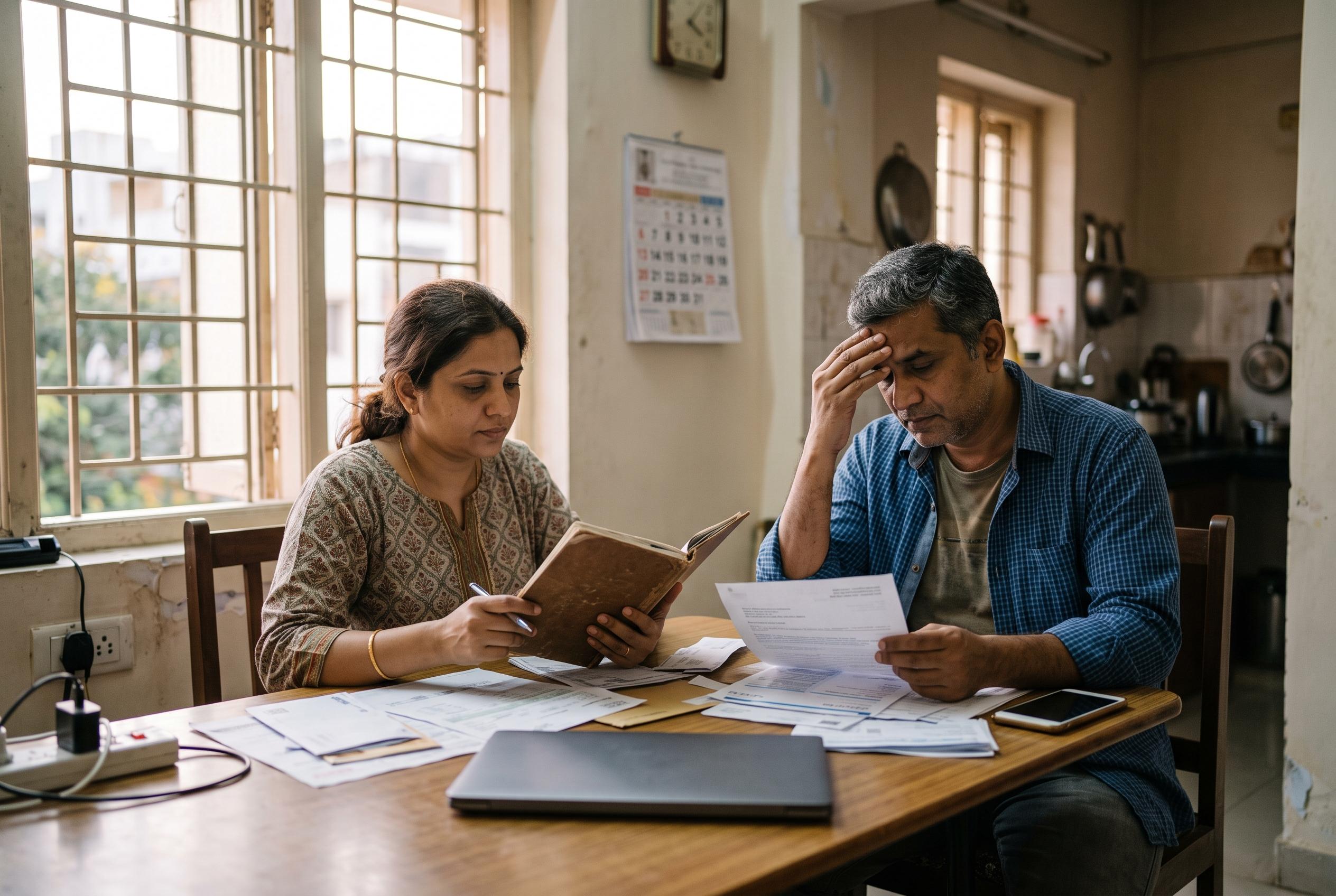

A survey reveals that 60% of households are now repaying EMIs that match or surpass their monthly income, prompting concerns over long-term financial stability and rising loan-related complaints.
A survey of borrowers has found that many households are already stretched to the point where monthly instalments are matching, or even exceeding, their family income, raising concerns that short-term borrowing is sliding into a longer-term debt trap.
Data from debt and loan resolution platform Expert Panel show that 60% of borrowers have EMIs that are close to or above their total monthly household income. The same data suggest that 40% are keeping up with existing repayments by taking fresh loans or using credit cards, a pattern that points to growing strain rather than stabilisation.
The main trigger for borrowing was medical emergencies, which accounted for 26% of cases. Another 22% of borrowers took loans for family or personal expenses such as weddings and education, while 18% borrowed for business needs or after losing a job. Household and day-to-day expenses made up a further 15%, underlining how often debt is being used to cover essentials rather than optional spending.
When repayments broke down, job loss or lower pay was the most common reason, cited in 31% of cases. High EMI burdens relative to income accounted for 28%, while multiple loans or over-borrowing made up 19%. The pressure does not stop at finances: Expert Panel said 39% of borrowers reported recovery calls or abusive language, 28% faced repeated calls from several lenders and 20% received legal notices. The firm also said the Reserve Bank of India’s Integrated Ombudsman Scheme received 85,281 loan-related complaints in FY24, up 42.7% from a year earlier. Anurag Mehra, director at Expert Panel, said: “Festive spending is often driven by emotion, social expectations and the desire to make the occasion special, but a loan converts that one-time expense into a recurring financial commitment.”
Disclaimer: This article is intended to inform and educate, not to recommend or endorse any financial product, investment or strategy. Please consider your own financial circumstances and seek professional advice where appropriate before making financial decisions.



