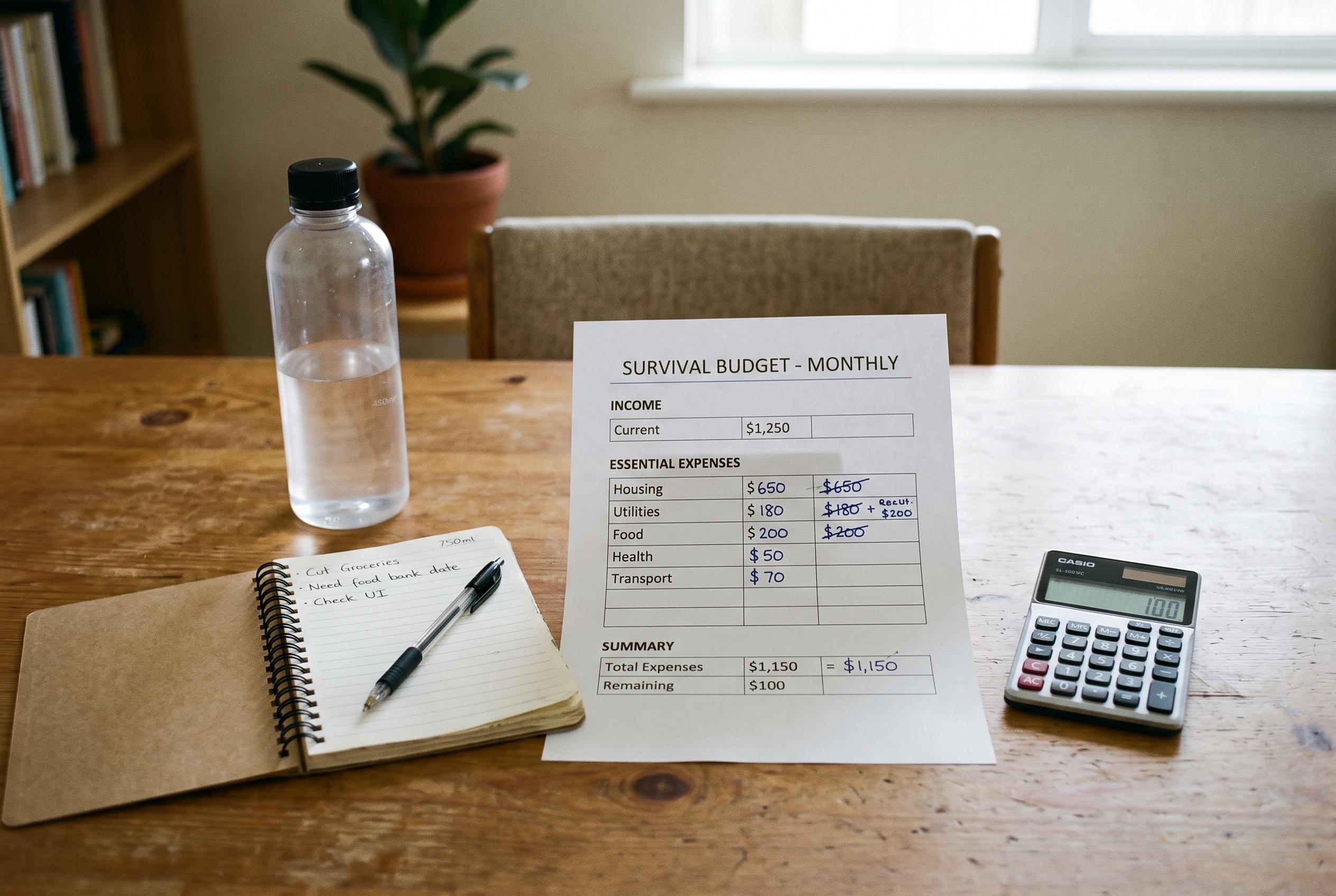

A bare-bones budget strips household expenses down to essentials to help navigate sudden financial shocks. Experts highlight its benefits and limitations, emphasising its role as a temporary survival tool rather than a long-term solution.
A bare-bones budget is the financial equivalent of stripping life back to essentials. It covers only the costs needed to keep a household functioning: housing, food, transport, utilities, insurance and the minimum required debt payments. In practice, that means pausing most discretionary spending and treating the arrangement as a short-term tool rather than a permanent way to live. Fidelity and NerdWallet both describe budgeting as a framework that should balance essentials, savings and non-essential spending, but a bare-bones version pushes almost everything except survival costs to one side.
People usually turn to this kind of budget when circumstances have changed sharply. High-interest debt is one common trigger, because every extra month of repayment can mean more interest and less progress. Job loss is another, especially if there is little or no emergency savings to absorb the shock. A bare-bones approach can also help when someone is chasing a major goal, such as building a house deposit or reaching a savings target quickly, although advisers say it is best used for a limited period because the pressure of living on the minimum can become hard to sustain.
Building one begins with a full inventory of spending. That means tracing fixed bills such as rent, utilities and phone service, alongside variable expenses such as groceries, fuel and periodic insurance payments. The next step is to cut or reduce whatever is non-essential, then examine even the necessities for savings opportunities. That might mean cooking at home more often, switching to cheaper grocery brands, car-sharing, using public transport or trimming subscription services. The key point is not whether a cost is ideal in the long run, but whether it can be reduced enough to keep the household afloat for now.
Once the unavoidable costs are tallied, the result becomes the bare-bones number. Financial planners often call that a survival figure, and it can be used to estimate how long savings will last during a stretch of unemployment or other hardship. Bankrate notes that many Americans have little or no emergency savings, which makes that calculation especially useful. If cash reserves are limited, knowing the minimum monthly burn rate can help people prioritise rent, food and other essentials before money runs out.
The budget should not be treated as static. Prices change, bills rise and household needs shift, so the numbers need regular review. A temporary austerity plan may later be relaxed, but the process can still leave a lasting mark by forcing a clearer view of what matters most. Some people emerge from it with a stronger emergency fund, a faster debt repayment plan or a leaner, more intentional spending pattern than before.
Disclaimer: This article is intended to inform and educate, not to recommend or endorse any financial product, investment or strategy. Please consider your own financial circumstances and seek professional advice where appropriate before making financial decisions.