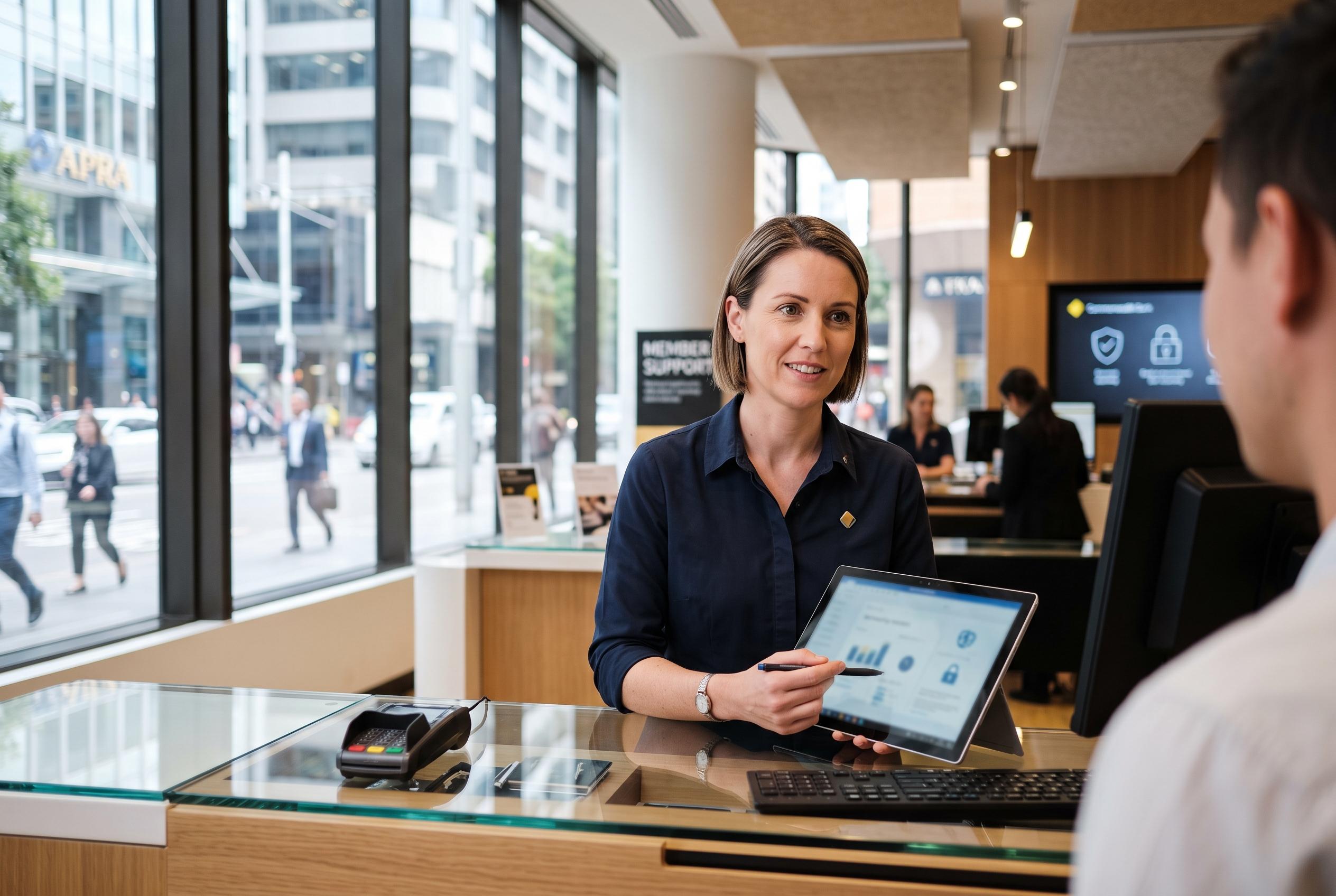

Bank tellers in Australia are encountering a new wave of scams where victims are guided through rehearsed cover stories by live fraudsters, prompting banks to adapt their security measures amid rising losses and beyond.
Bank staff in Australia are increasingly confronting a new form of scam victim: customers who arrive with a rehearsed cover story and live instructions from fraudsters feeding them answers in real time, according to ANZ and industry figures. What once looked like obvious fraud has become more sophisticated, with scammers now coaching people to explain away unusual withdrawals or transfers when they are questioned at the counter.
ANZ teller Vicki said one recent case involved an elderly woman who claimed she needed cash to buy a car, but could not name the make or model. The woman repeatedly said she needed the money “today”, prompting staff to slow the interaction and ask more questions. Vicki said it became clear a scammer had persuaded her that the bank would take her money unless she withdrew it first, and had supplied the car story as a ready-made explanation if anyone challenged her.
Ben Verhoef, ANZ’s scams portfolio lead, said criminals are increasingly using scripts and pressure tactics to push victims into repeating set responses, even after a bank’s fraud controls flag a transaction. ANZ says customers are also coming into branches with headphones on or phones concealed in their clothing so they can receive instructions during the visit. The bank said in August that it had cut customer scam losses by 15% between October 2024 and June 2025, while also preventing or recovering more than $100m in scam-related funds.
The wider Australian picture remains severe. The Australian Competition and Consumer Commission said Australians reported losing more than $2bn to scams in 2025, up 7.8% from the year before, even though losses were still below the 2022 peak of $3.1bn. The Australian Financial Complaints Authority said scam complaints rose 12% over the latest financial year, while the Australian Communications and Media Authority reported that scams accounted for 7.4% of complaints in the April to June quarter of 2025. Older Australians remain especially exposed: people over 65 make up about 17% of the population but account for 26.5% of total losses.
Against that backdrop, Fortinet’s Michael Murphy is calling for a cyber security ratings system that would give consumers a clearer picture of how well banks, telcos, energy companies, healthcare providers and other trusted businesses protect data and services. He argued that public rankings, based on measures such as two-factor authentication, subcontracting and the location of data and call centres, would create market pressure for stronger defences. The push comes as ANZ continues to face scrutiny over broader conduct, with the bank later agreeing to a record A$240m fine to settle multiple misconduct investigations, a reminder that trust remains central to financial services.
Disclaimer: This article is intended to inform and educate, not to recommend or endorse any financial product, investment or strategy. Please consider your own financial circumstances and seek professional advice where appropriate before making financial decisions.