

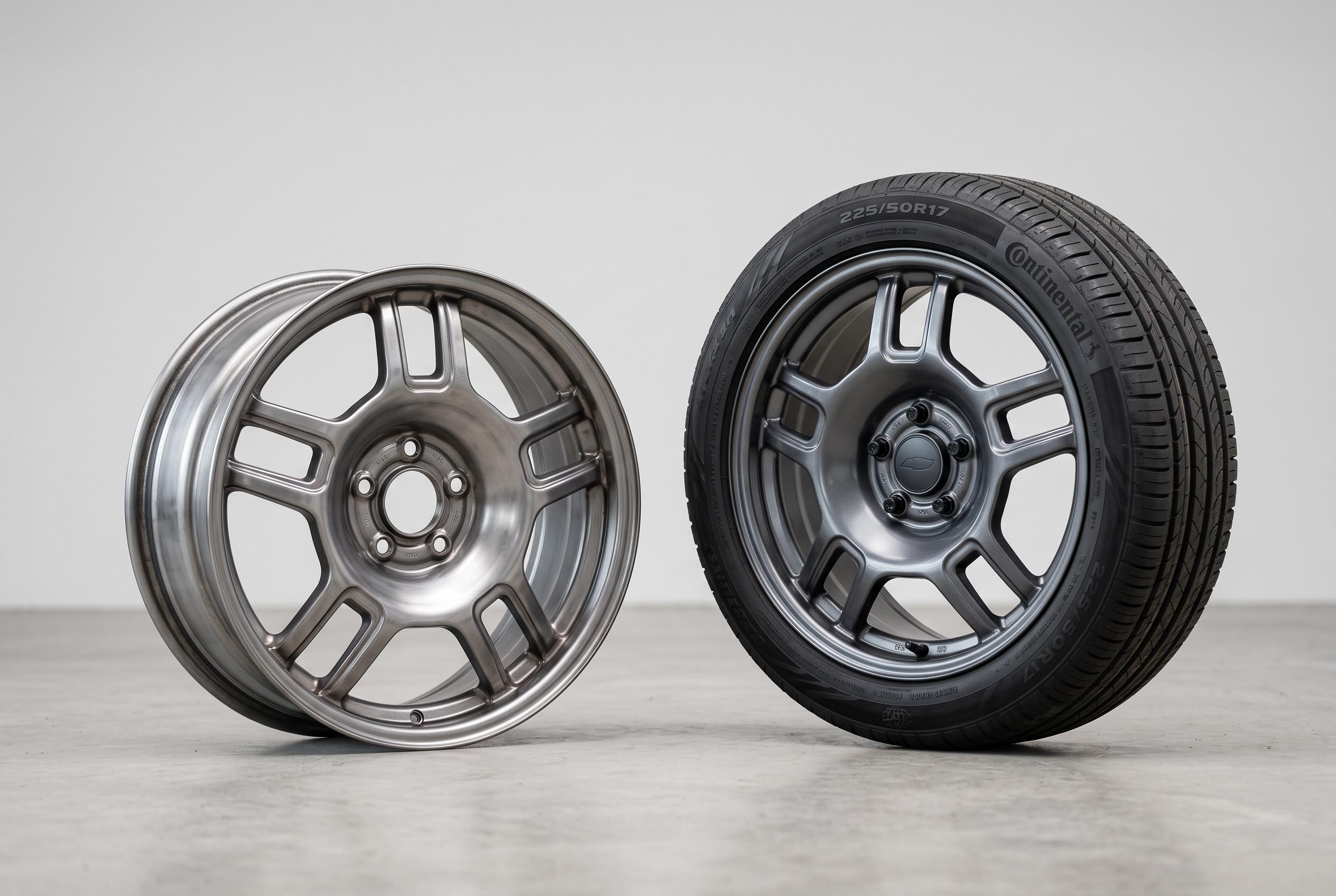

While Steel Strips Wheels outperforms Wheels India in net profit, the latter’s faster profit growth reflects strategic shifts and incremental returns, underscoring the importance of capital efficiency.
At first glance, Wheels India and Steel Strips Wheels look like close rivals. Both are group companies tied to the auto components trade and both generated a little more than ₹5,100 crore in revenue in FY26. But the profit figures tell a different story: Steel Strips Wheels, or SSWL, earned ₹202 crore in net profit, while Wheels India made ₹139 crore. Despite that gap, Wheels India’s profit has grown much faster over the past four years, rising at an annual rate of 17.2%, while SSWL’s profit has been broadly flat, according to Value Research.
The explanation lies in how the two companies have chosen to deploy capital. SSWL has stayed closer to its core wheel business and moved up the value chain with products such as alloy wheels and aluminium knuckles. That shift helped lift profitability, with EBITDA per wheel increasing from ₹262 in the June quarter of 2025 to ₹314 a year later, according to the article. Wheels India took a broader route, adding hydraulic cylinders, windmill components, fabricated structures and air suspension systems, making it look more like a diversified engineering company than a pure wheel maker.
That strategic split is visible in margins and returns. SSWL’s operating margin was 10.1% in FY26, ahead of Wheels India’s 7.9%. But FY22 was unusually strong for SSWL, when exports and alloy-wheel sales pushed margins to 13.1%. Since then, exports have dropped sharply, while new plants have added costs before fully contributing revenue. Wheels India, by contrast, started from a weaker base in FY22, when its operating margin was just 7.1%, so much of its later improvement came from operational recovery rather than unusually favourable conditions.
The more telling measure is incremental profit. Between FY22 and FY26, each additional ₹100 of revenue produced about ₹10 of extra operating profit at Wheels India, compared with about ₹3.50 at SSWL. That is why Wheels India’s profit growth has outpaced SSWL’s even though its overall margin remains lower. According to the analysis, the company’s automotive wheels division drove most of the improvement, with operating profit up 23% in FY26, while the newer industrial businesses managed only 15%.
The diversification push has not yet delivered the kind of returns that would justify the capital being poured into it. Wheels India’s newer businesses contributed just 17% of segment revenue in FY26 but absorbed 58% of capital spending and 38% of capital employed. Their return on capital was 6.2%, far below nearly 26% for the automotive business. Even so, the group’s overall return on equity improved from 9% in FY23 to 15.5% in FY26, while SSWL’s slipped to 12.3%. Both companies are still investing aggressively: SSWL plans about ₹600 crore of capex in FY27, mainly for a new alloy-wheel and knuckle plant in Bhuj, while Wheels India expects to spend ₹400 crore to ₹450 crore. The broader lesson, as Value Research argues, is that profit growth matters less than whether each new rupee invested earns an attractive return.
Disclaimer: This article is intended to inform and educate, not to recommend or endorse any financial product, investment or strategy. Please consider your own financial circumstances and seek professional advice where appropriate before making financial decisions.



