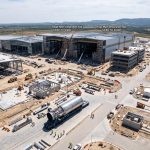

VNET Group reports robust quarterly growth driven by its artificial intelligence data centre push, but rising costs and declining cash flow highlight the financial pressures of its rapid expansion strategy.
VNET Group has posted another quarter of brisk growth from its push into artificial intelligence data centres, but the results also underscored how expensive that build-out remains. In the second quarter to 30 June, the China-based operator said net revenue rose 14.2% year on year to RMB2.78 billion, while adjusted EBITDA climbed 25.4% to RMB918.3 million, according to its unaudited results. Yet the market’s immediate reaction was cautious: the company’s ADSs fell sharply after the announcement, suggesting investors are still weighing strong demand against the cost of expansion.
Wholesale services remain the main engine of growth. Revenue from that segment rose 29.3% to RMB1.10 billion, or 39.8% of group sales, as wholesale capacity in service increased 49.4% to 1,007 megawatts and customer-utilised capacity reached 744 megawatts, StreetInsider reported. VNET also said it won a 345-megawatt order from a leading cloud provider, taking year-to-date wholesale wins to 862 megawatts. The company added about 1.4 gigawatts of land bank capacity in the quarter, lifting its total strategic capacity reserve to more than 4 gigawatts.
The company’s challenge is turning that contracted demand into cash quickly enough to justify the spending. VNET said its commitment rate stood at 96.3%, but overall wholesale utilisation slipped to 73.9% from 75.9% a year earlier, indicating that part of its expanded footprint is still ramping. Operating cash flow fell to RMB218.1 million from RMB366.6 million, while cash, restricted cash and short-term investments totalled RMB7.21 billion against RMB4.18 billion of short-term debt and RMB19.24 billion of long-term debt, including convertible notes, according to the earnings release and StreetInsider’s breakdown.
Management is still pressing ahead. VNET kept its full-year guidance unchanged, forecasting 2026 revenue of RMB11.5 billion to RMB11.8 billion and adjusted EBITDA of RMB3.55 billion to RMB3.75 billion, with capital spending expected at RMB10 billion to RMB12 billion. The company also signed a strategic cooperation agreement with Contemporary Amperex Technology Co., Limited on 18 August to develop an integrated compute-energy ecosystem combining large-scale computing infrastructure with zero-carbon energy technology. That partnership may strengthen VNET’s energy and supply-chain position, but the central question remains whether demand growth can outrun financing pressure before heavy capital needs start to crimp shareholder returns.
Disclaimer: This article is intended to inform and educate, not to recommend or endorse any financial product, investment or strategy. Please consider your own financial circumstances and seek professional advice where appropriate before making financial decisions.