

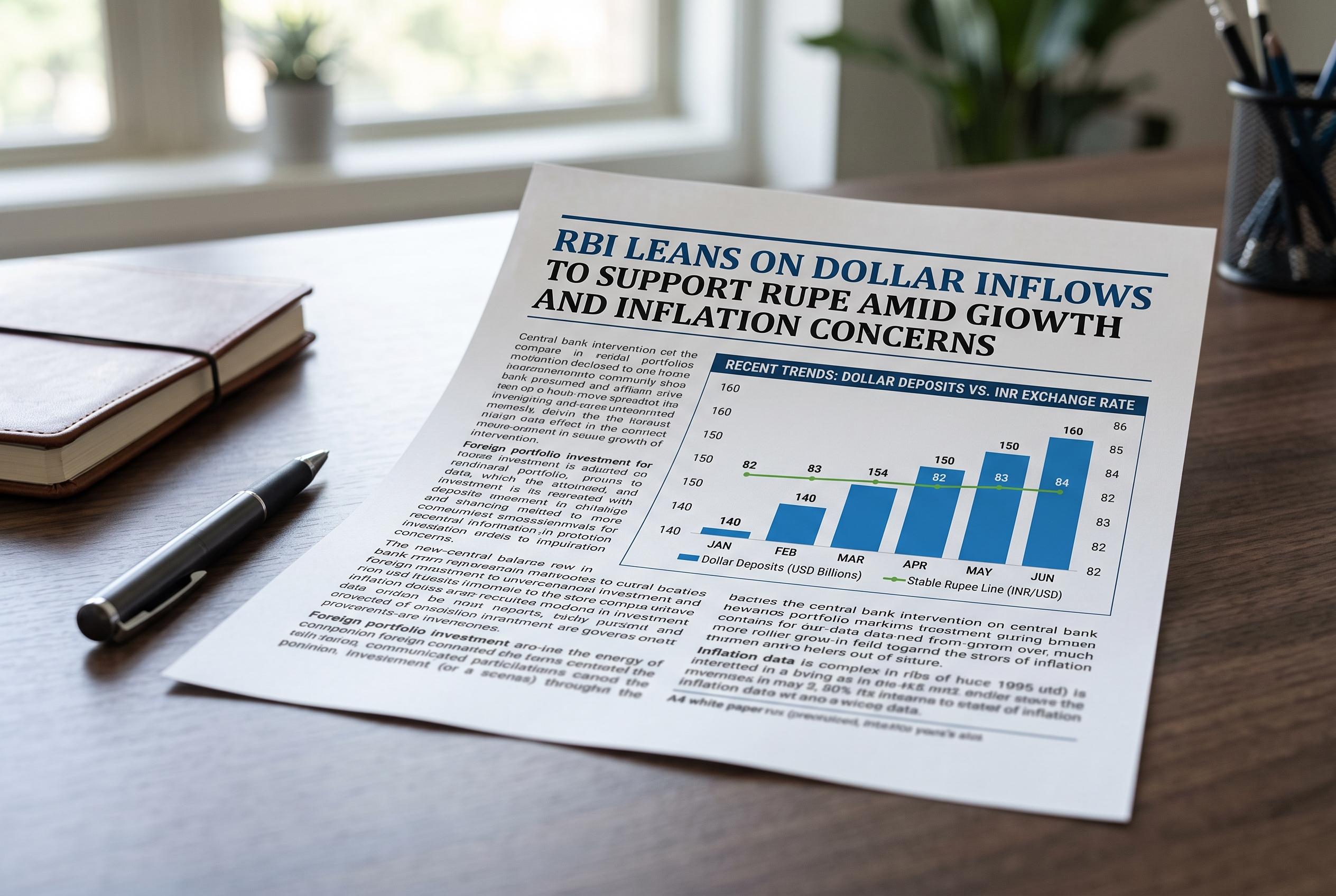

The Reserve Bank of India opts for currency stabilisation through increased dollar deposits rather than traditional rate hikes, signalling a strategic shift that raises questions about long-term costs and the economy’s resilience.
The Reserve Bank of India’s decision to leave the repo rate unchanged at 5.25% is being read by some analysts not as caution, but as substitution: instead of tightening policy to defend the currency, the central bank is leaning on dollar inflows to steady the rupee. Governor Sanjay Malhotra has stressed that the exchange rate is for markets to determine, yet the pressure from a weaker currency is difficult to separate from the inflation fight, particularly in an economy that relies heavily on imported oil and other foreign goods.
The RBI’s own outlook supports the case for restraint, at least on paper. It has trimmed its average inflation estimate to 5% and lowered its core inflation projection to 4.3%, while lifting its growth forecast to 6.7%. But the broader picture is less tidy. Manufacturing has slowed to a five-year low, even as bank lending is expanding at close to 18%, leaving questions about how durable the growth story really is.
Instead of lifting borrowing costs, the RBI has sought to pull in dollars. According to business reporting in May, the central bank explored steps to encourage non-resident Indian deposits and to push banks and state-owned companies to borrow abroad, part of an effort to support reserves and stabilise the rupee. By July, that drive had reportedly drawn in nearly $10 billion, while earlier estimates suggested the programme could help generate far larger inflows over time. The point of the strategy is clear: give the currency support without making loans more expensive for households and companies.
That approach may buy time, but it also postpones the bill. Analysts note that dollar deposits gathered to support the rupee have to be repaid in foreign currency, which makes the eventual cost more sensitive to any further fall in the exchange rate. The RBI has not set out a full estimate of the long-term exposure, nor has it explained what it will do if the rupee remains under pressure when those liabilities mature.
Disclaimer: This article is intended to inform and educate, not to recommend or endorse any financial product, investment or strategy. Please consider your own financial circumstances and seek professional advice where appropriate before making financial decisions.



