

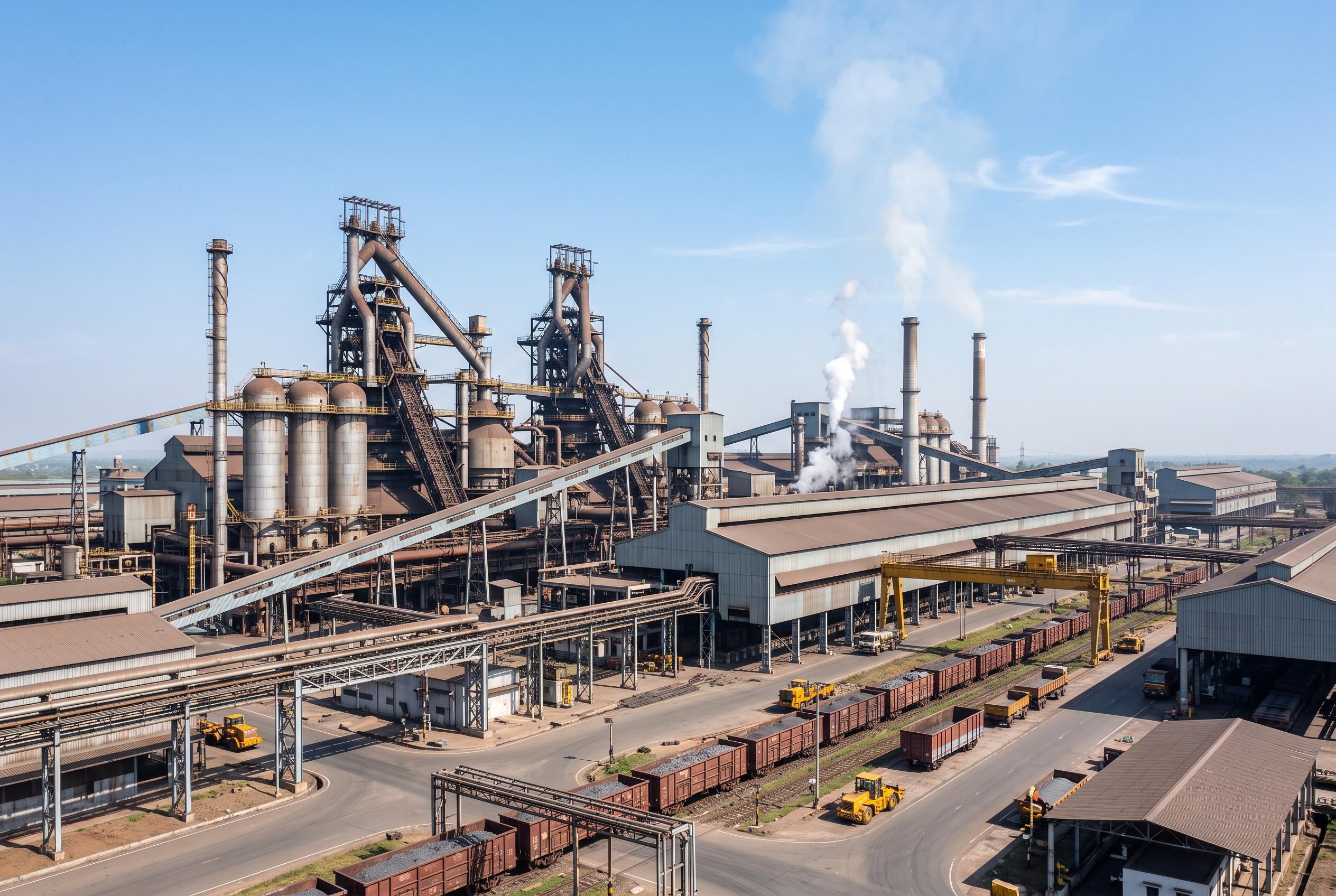

India’s primary steel producers are expected to maintain stable operating profits in the current fiscal year, supported by higher domestic prices, import safeguards, and resilient local demand, even as raw material costs increase significantly.
India’s primary steel makers are set to keep operating profitability broadly steady this financial year even as costs climb, with higher domestic prices, import protection and firm local demand helping to offset pressure from raw materials and logistics, according to Crisil Ratings.
The agency said earnings before interest, tax, depreciation and amortisation, or EBITDA, should hold at ₹10,500 to ₹11,000 a tonne in the current fiscal year, roughly in line with the past decade’s average. That would come despite an estimated ₹2,000-a-tonne rise in production costs to ₹53,000-₹54,000 a tonne, driven mainly by dearer coking coal, higher freight and shipping expenses, along with firmer power and fuel costs.
Crisil’s outlook is based on eight major producers, including JSW Steel, Tata Steel, Steel Authority of India, Jindal Steel, ArcelorMittal Nippon Steel India, NMDC Steel, ESL Steel and Evonith Steel, which together made up about half of India’s steel output last financial year. The ratings agency said coking coal, which accounts for nearly 40 per cent of steel production costs, is likely to become 5 to 7 per cent more expensive amid supply risks in key exporting regions and persistent global demand.
Those pressures are expected to be absorbed by a 6 to 8 per cent rise in domestic steel prices, supported by stronger global benchmarks, a 11.5 per cent safeguard duty on certain flat steel imports and healthy demand at home. Crisil director Ankit Hakhu said in the agency’s statement that these factors should offset rising costs and keep profitability stable. The company also expects domestic steel demand to grow 5 to 7 per cent this fiscal, helped by infrastructure spending and demand from the automotive, engineering and construction sectors.
The backdrop has improved over the past year as India’s steel industry has argued that safeguard duties are necessary to counter low-cost imports and global oversupply. Crisil had earlier estimated that the duty would provide margin relief of ₹1,000-₹1,300 a tonne in fiscal 2026, and industry reporting in recent months showed domestic steelmakers lifting prices after the duties were imposed and then extended. By March 2026, domestic prices had climbed sharply from December quarter levels, underscoring the degree to which policy support and strong demand have bolstered the market.
Crisil said the favourable demand outlook should also keep capital spending elevated, with primary steel makers expected to invest ₹75,000-₹80,000 crore this fiscal, up from about ₹70,000 crore a year earlier. Most of that spending is likely to go towards capacity additions, value-added products and backward integration such as captive mines and power plants. Nearly three-fourths of the planned outlay is expected to come from internal accruals, with the rest funded by debt, which should allow leverage to improve slightly. Crisil said net debt to EBITDA may ease to about 2.6 times by the end of the fiscal year from 2.8 times a year earlier, though it warned that the conflict in West Asia remains a risk because any escalation could disrupt supply chains and lift input and logistics costs further.
Disclaimer: This article is intended to inform and educate, not to recommend or endorse any financial product, investment or strategy. Please consider your own financial circumstances and seek professional advice where appropriate before making financial decisions.



