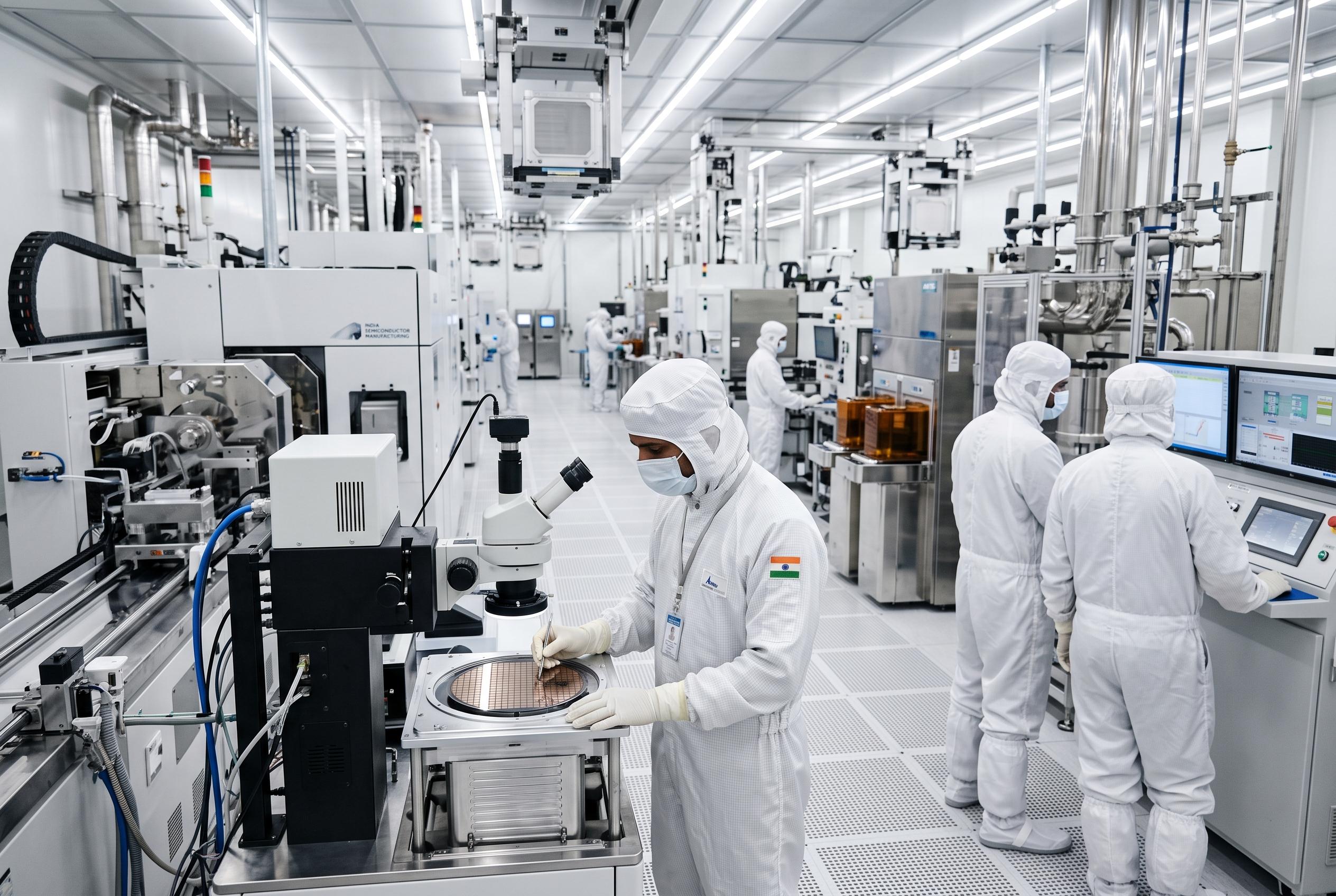

More than $1bn has flowed into 620 Indian semiconductor startups over five years, as acquisitions and factory projects signal a shift from policy ambition to a developing chip ecosystem.
India’s semiconductor sector is beginning to look less like a policy aspiration and more like an investable industry. Over the past five years, 620 startups have been founded in the space and they have together raised more than $1bn, according to Business Standard. The pace of dealmaking has also picked up sharply, with seven acquisitions announced in 2026 alone, a sign that both overseas chipmakers and domestic groups now see real value in India’s design talent, manufacturing plans and supply-chain ambitions.
The change has been visible since the launch of the ₹76,000-crore India Semiconductor Mission in 2021, which helped draw $25.1m into local startups that year. Funding has since climbed in waves, with startup investment rising to $153.7m in 2023, easing to $113.7m in 2024, then jumping to $474m in 2025 before another $228.7m flowed in by early October this year, according to the figures cited by Business Standard. The same report said the number of first-time investors in the sector rose from 12 in 2021 to 80 in 2024, suggesting the market is broadening as well as deepening.
Much of that momentum is still concentrated in design and specialised hardware software, but the composition of funding is changing fast. Business Standard said seed-stage investment reached $33.4m in 2025, while early-stage funding rose to $79.4m and late-stage investment more than tripled to $361m. Rajan Anandan, managing director of Peak XV Partners, told the newspaper that India is seeing the emergence of a large semiconductor startup base because of its engineering talent, capital availability and domestic demand for locally made products such as CCTV systems and biometric devices.
The industry is also entering a more mature mergers-and-acquisitions phase. Among 3,557 companies tracked in the semiconductor and related sectors, 68 have been bought at a median price of $33.7m, Business Standard reported. It said 27 deals have been announced in the past five years, with the median deal size rising to $125m, while one of the largest transactions was Standex’s $261.9m purchase of Vadodara-based Narayan Powertech in 2024. Other deals point to the same pattern: Renesas acquired Bengaluru-based Steradian Semiconductors in 2022, and Infineon announced the purchase of C2i Semiconductors in 2026 to strengthen its power-systems business for artificial intelligence data centres.
That M&A activity sits alongside a larger build-out of manufacturing infrastructure. Tom’s Hardware reported that ASML has signed a memorandum of understanding with Tata Electronics for equipment to be deployed at India’s first commercial semiconductor fabrication plant in Dholera, Gujarat, a project aimed at producing power management chips, display drivers and microcontrollers. India Briefing also reported that Rajasthan opened its first semiconductor plant in Bhiwadi on 15 May 2026, marking the state’s entry into the chip sector and bringing the country’s total to 13 semiconductor units. Together, those projects suggest India’s semiconductor story is shifting from isolated startup bets towards a broader ecosystem that includes fabrication, packaging, equipment and specialised industrial services.
Analysts quoted by Business Standard said the next phase may be even more significant than the first. Sateesh Andra, managing partner at Endiya Partners, said government support and manufacturing incentives are improving the ecosystem’s visibility, while more engineers with global experience are launching deep-tech ventures. The bigger question now is whether India can convert that growing interest into ownership of core intellectual property, not just design services. If the current funding, acquisition and factory build-out trends hold, the answer may be that the country is moving closer to that goal than it has ever been.
Disclaimer: This article is intended to inform and educate, not to recommend or endorse any financial product, investment or strategy. Please consider your own financial circumstances and seek professional advice where appropriate before making financial decisions.