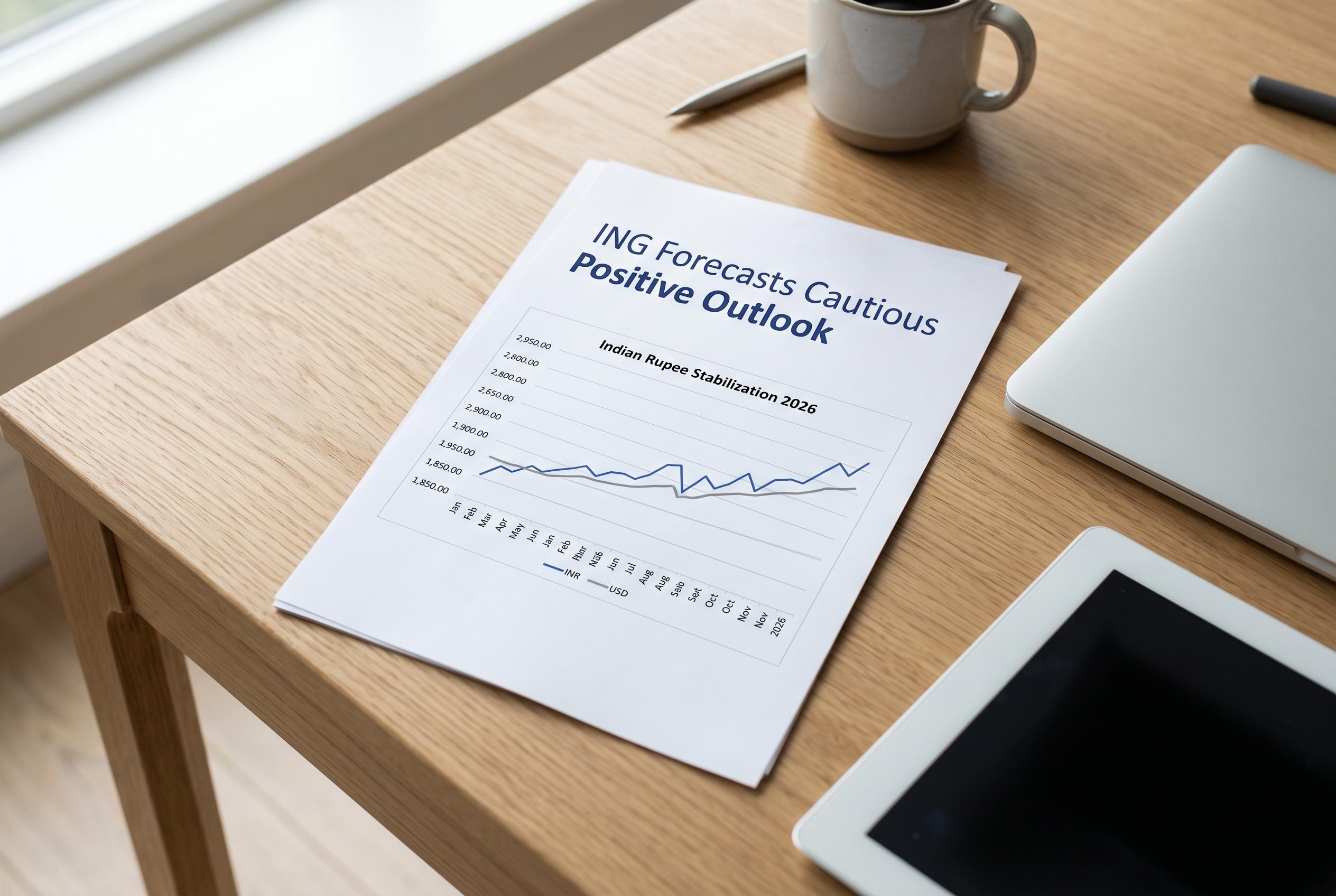

ING forecasts a cautious but positive outlook for the Indian rupee, supported by continued foreign investment but challenged by global risk factors and rising oil costs, with a gradual stabilisation expected by 2026.
ING expects the Indian rupee to gain some support from continued foreign inflows, even as the currency remains vulnerable to swings in global risk appetite, oil prices and US dollar strength. The bank’s latest view suggests that overseas investment into Indian assets could help cushion the rupee against external pressure in the months ahead.
The logic is straightforward. When foreign investors buy Indian equities or debt, they must first convert their money into rupees, which can lift demand for the currency. ING has pointed to India’s effort to attract long-term capital, including its inclusion in major global bond indices, as a potential source of steadier inflows that could help offset some of the damage caused by a stronger dollar and higher global rates.
That optimism sits alongside a more cautious assessment of the rupee’s recent performance. In a note cited by Invezz in May, ING said weak capital inflows and high oil prices were leaving the currency exposed, with the Reserve Bank of India intervening in both onshore and offshore markets as USD/INR hovered near record highs. ING’s own research platform has also argued that the recent slide in the rupee reflects not just energy costs, but a deeper problem of chronically soft inflows.
The oil shock has mattered because India imports much of its crude, so higher prices tend to widen the country’s external financing needs. ING analysts have said fuel subsidies and diversified energy sourcing have softened the blow to inflation and growth, but shifted more of the adjustment onto the currency. They also said the rupee’s weakness reflects a balance-of-payments strain that will not ease quickly unless capital inflows recover.
Still, ING sees reasons for gradual stabilisation later in 2026. FXStreet reported that the bank expects improved real effective exchange rate readings and India’s foreign exchange reserves to provide some support, while policy steps by the Reserve Bank of India, including efforts to encourage foreign currency deposits, may help over time. Investing.com reported that ING has projected USD/INR at 95.50 by the end of 2026, although it said the risks lean towards a slow stabilisation rather than a sharp rebound in the rupee.
Disclaimer: This article is intended to inform and educate, not to recommend or endorse any financial product, investment or strategy. Please consider your own financial circumstances and seek professional advice where appropriate before making financial decisions.