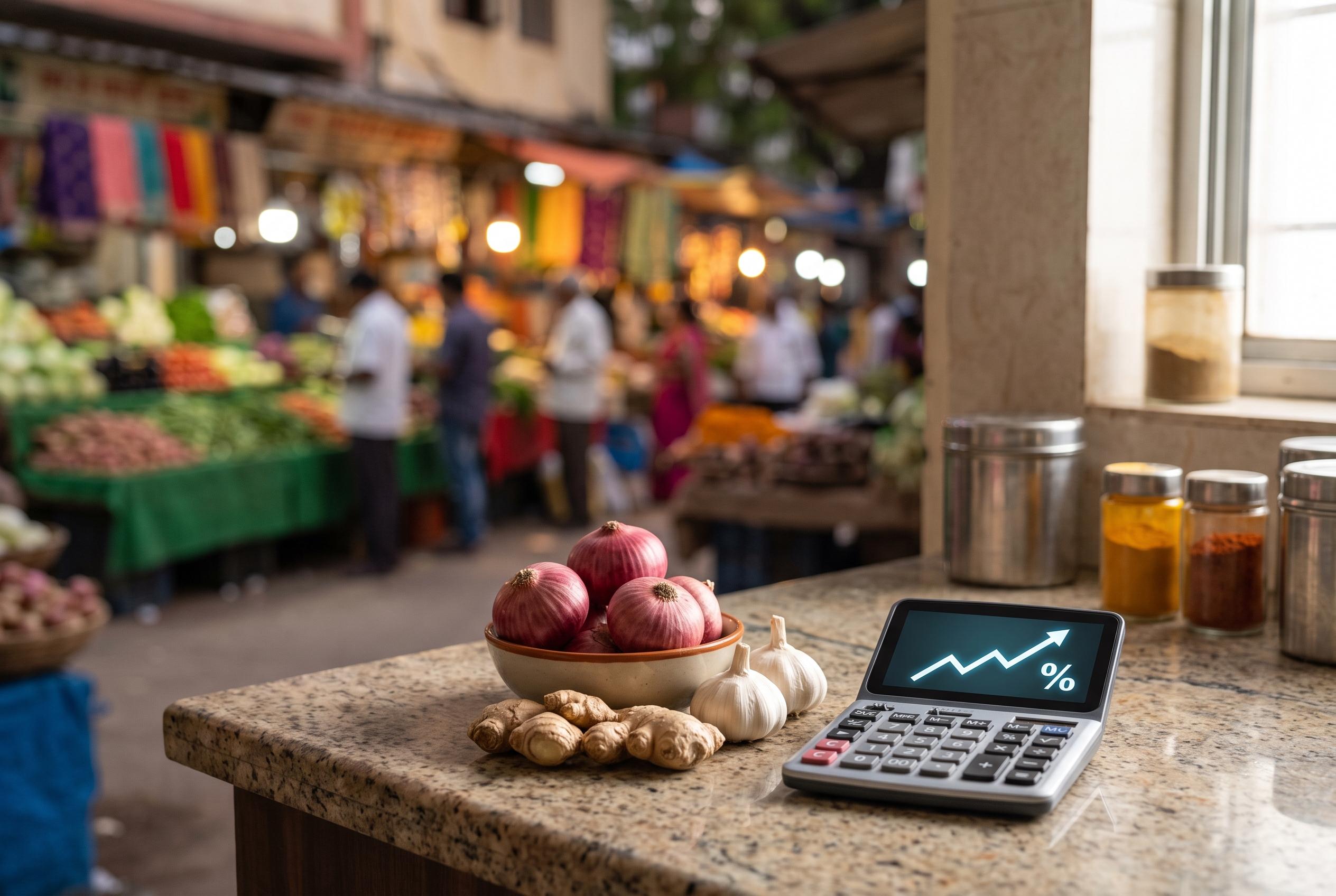

India’s retail inflation increased to 4.45 per cent in July, driven by sharp rises in kitchen essentials such as onions, ginger, and garlic, highlighting ongoing inflationary pressures amid regional variations.
India’s retail inflation edged up to 4.45 per cent in July, driven by sharp increases in kitchen essentials such as onion, ginger and garlic, according to government data released by the National Statistics Office. The figure was above the Reserve Bank of India’s 4 per cent midpoint target for a second straight month and marked the highest reading in the new consumer price index series, which uses 2024 as its base year and began in January.
Food inflation climbed to 5.52 per cent in July from 5.32 per cent in June, even as some vegetables moved the other way. The NSO said inflation in onions surged to 22.54 per cent from 4.73 per cent a month earlier, while ginger prices jumped 83.62 per cent. Garlic also became noticeably dearer, although inflation in potatoes, ladyfinger, peas and tomatoes turned negative.
The latest numbers follow June’s 4.38 per cent reading, which had already pushed inflation above the central bank’s target. Reuters reported then that higher food prices, uneven monsoon conditions and dearer fuel were among the main pressures. Reserve Bank Governor Sanjay Malhotra has said recent inflation has been driven largely by food and fuel, with only limited evidence that price rises are spreading more broadly through the economy. He has also signalled that headline inflation is likely to climb further in the near term before easing later.
The gap between rural and urban price pressures remained wide in July. The NSO said rural inflation stood at 4.84 per cent, compared with 3.96 per cent in cities, while Telangana recorded the highest state-level rate at 6.32 per cent and Mizoram the lowest at 1.84 per cent. Economists quoted by Crisil and India Ratings warned that the relief may be temporary, citing higher edible oil costs, the fading effect of goods and services tax cuts, rising transport expenses and risks from geopolitics and weather, including possible strain from El Niño conditions.
Disclaimer: This article is intended to inform and educate, not to recommend or endorse any financial product, investment or strategy. Please consider your own financial circumstances and seek professional advice where appropriate before making financial decisions.