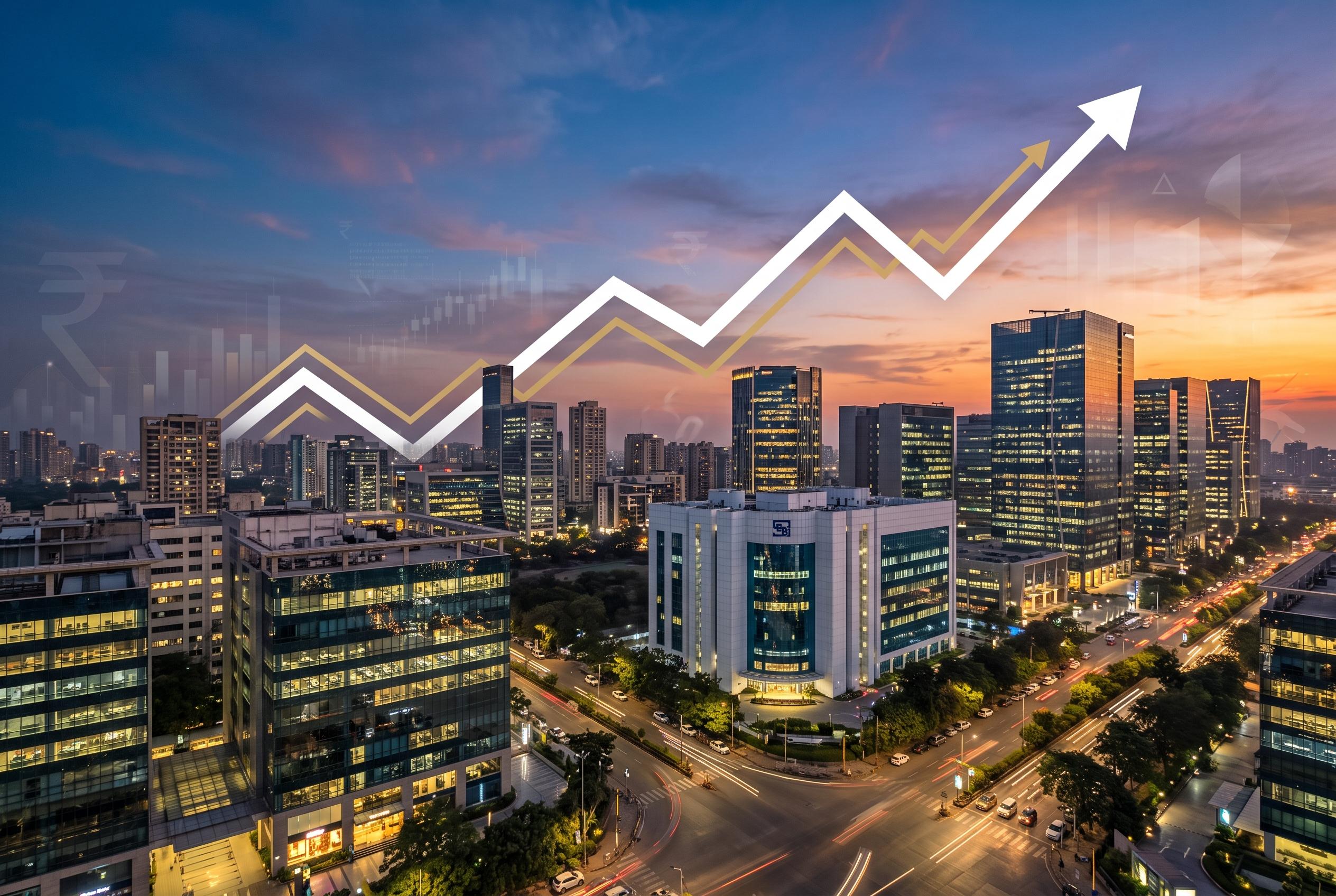

As global investors reassess AI-related investments, India is gaining renewed interest with a stabilising market and stronger fundamentals, marking a notable shift in emerging market dynamics.
India is starting to look like a cleaner diversification play just as global money continues to crowd into artificial intelligence-linked markets, according to a report by Elara Capital. The brokerage said the latest flow data suggest the AI trade remains popular, but increasingly congested, with returns no longer moving as decisively as they did earlier in the year.
Elara said global emerging market funds pulled in $4 billion in the latest week, their strongest intake in six months, as the benchmark rebounded from its 200-day moving average. South Korea drew another $3.5 billion of foreign inflows and Taiwan took in $1.8 billion, its best showing in 23 weeks, while global industrial funds, another route into the AI theme, recorded $1.3 billion of inflows. Moneycontrol reported that industrial fund flows turned negative on a rolling four-week basis for the first time since the AI rally gathered pace in May 2025, underscoring how selective investors have become.
Even so, the appetite for AI-related exposure has not vanished. Reuters has not independently verified the figures, but Elara said the broader correction has yet to trigger widespread redemptions, which means the durability of crowded positions remains a key risk. That matters for India because the country has benefited from a gradual rebalancing away from markets more tightly tied to the AI boom.
India-focused long-only funds have faced redemptions since July 2025, but Elara said the pace of withdrawals has eased in recent weeks. Since mid-June, those funds have outperformed their emerging-market peers by about 10%, their best relative run since February to April 2025. HSBC strategists Prerna Garg, Herald van der Linde and Yogesh Aggarwal argued in a separate report that most of the AI-rotation selling in India has already happened and that more than 80% of active global emerging-market funds are still underweight the country.
That underweight position could matter. HSBC estimated that a move back to neutral could generate about $25 billion of inflows, while foreign investors had already bought $3.6 billion of Indian equities since mid-June as the market began to outperform the wider region. HSBC said Indian shares have risen about 6% over that period, while South Korea has been roughly four times more volatile this year, a gap that has helped restore India’s appeal as investors reassess risk.
The case for India is also being supported by domestic money. HSBC said systematic investment plan contributions remain strong and mutual fund equity inflows improved in June, with much of the money going into small-cap and mid-cap funds. The bank also pointed to sturdier fundamentals, including stronger-than-expected first-quarter earnings across a majority of reporting companies, accelerating credit growth and resilient vehicle demand. It has raised India to neutral in its Asian equity strategy, though valuation remains the main brake: India still trades at the richest multiples in the region, even if its premium to emerging markets has eased.
By contrast, the AI-linked markets continue to offer faster earnings growth. HSBC said consensus forecasts point to earnings per share growth of about 14% for India in 2026 and 17% in 2027, compared with 25% and 35% for South Korea and Taiwan. That leaves investors weighing India’s steadier profile against the stronger earnings momentum elsewhere. Elara also noted that gold funds have seen a recent pickup after heavy redemptions, while yen-denominated investments into US funds have strengthened, suggesting global investors are still adding risk even as they rotate within it.
Disclaimer: This article is intended to inform and educate, not to recommend or endorse any financial product, investment or strategy. Please consider your own financial circumstances and seek professional advice where appropriate before making financial decisions.