

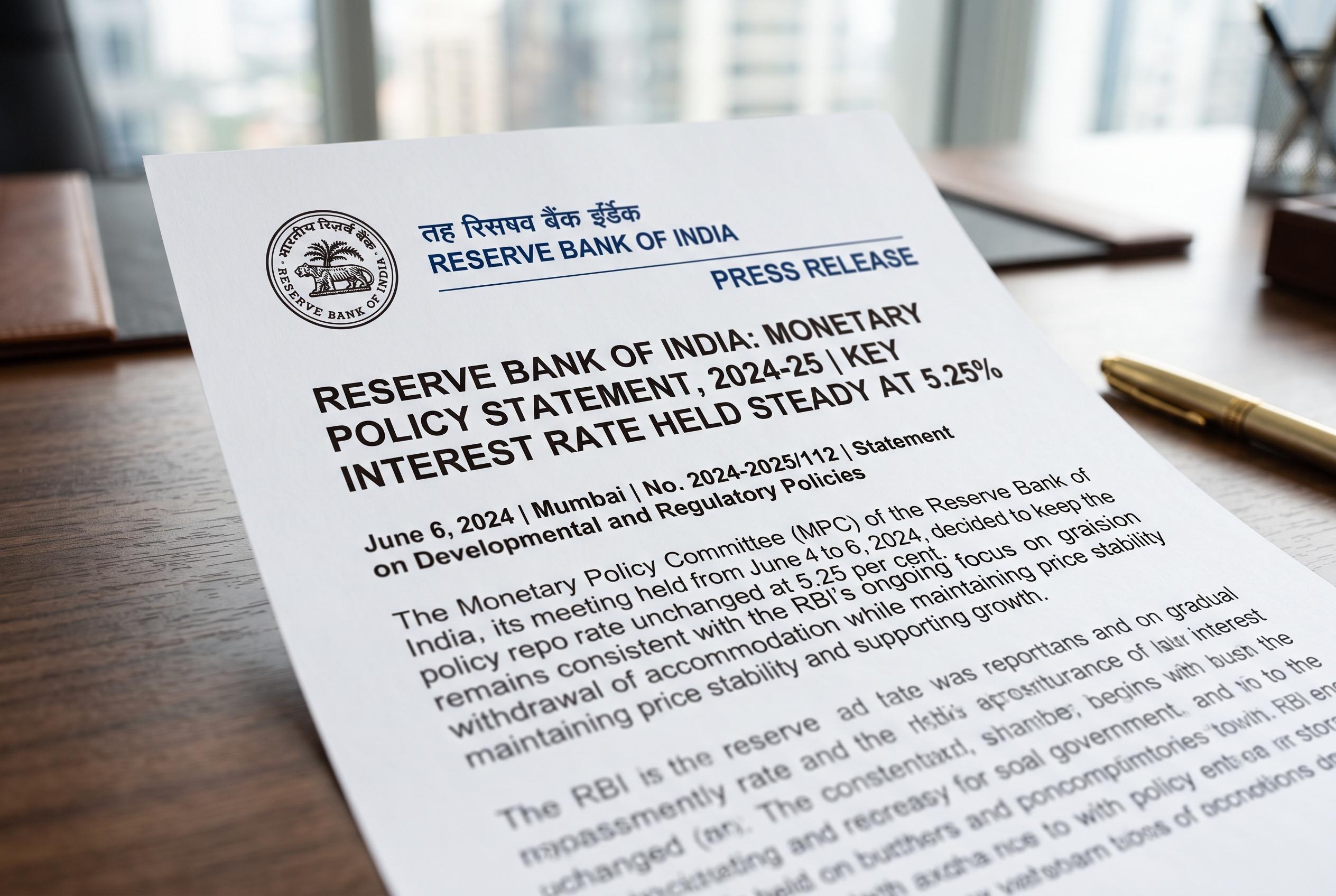

India’s central bank has maintained its key interest rate at 5.25% for the fifth consecutive meeting despite rising inflation and global economic uncertainties, signalling cautious optimism amidst external pressures and domestic challenges.
India’s central bank left its key interest rate unchanged at 5.25% on Wednesday, extending a holding pattern that has now lasted five meetings, even as inflation has moved above the Reserve Bank of India’s medium-term target. Economists polled by Reuters had expected no change, and the decision underscored the RBI’s cautious stance as it weighs sticky price pressures against still-supportive growth.
Governor Sanjay Malhotra said headline inflation had moved above target as anticipated, but noted that core inflation, which strips out food and energy, remained moderate. He said core inflation was expected to ease after peaking in the December quarter, but added that policymakers needed clearer evidence on inflation’s path and composition before acting. Malhotra also said any future move would have to take account of the balance between growth and inflation.
The central bank’s caution comes against a difficult external backdrop. Higher oil prices, tied in part to tensions in West Asia, have added to pressure on the rupee and on import costs for an economy that relies heavily on foreign crude. A Reuters report cited earlier warnings from the RBI that prolonged disruption in the US-Iran conflict could hit India through supply chains, commodity prices and financial-market volatility. In June, the bank kept rates steady while acknowledging that the global environment had worsened.
The growth outlook has also become less certain. Malhotra said activity had proved resilient, but that the forecast for the current financial year was clouded by the southwest monsoon, El Niño, geopolitics and trade-policy risks. The RBI has already highlighted the strain from imported inflation and a weaker currency, while HSBC Global Investment Research said inflation could stay above 5% for eight months from October and argued that the bank may need to raise rates later in the year. Markets were largely calm after the decision, with the Nifty 50 flat and 10-year government bond yields slipping slightly.
Disclaimer: This article is intended to inform and educate, not to recommend or endorse any financial product, investment or strategy. Please consider your own financial circumstances and seek professional advice where appropriate before making financial decisions.



