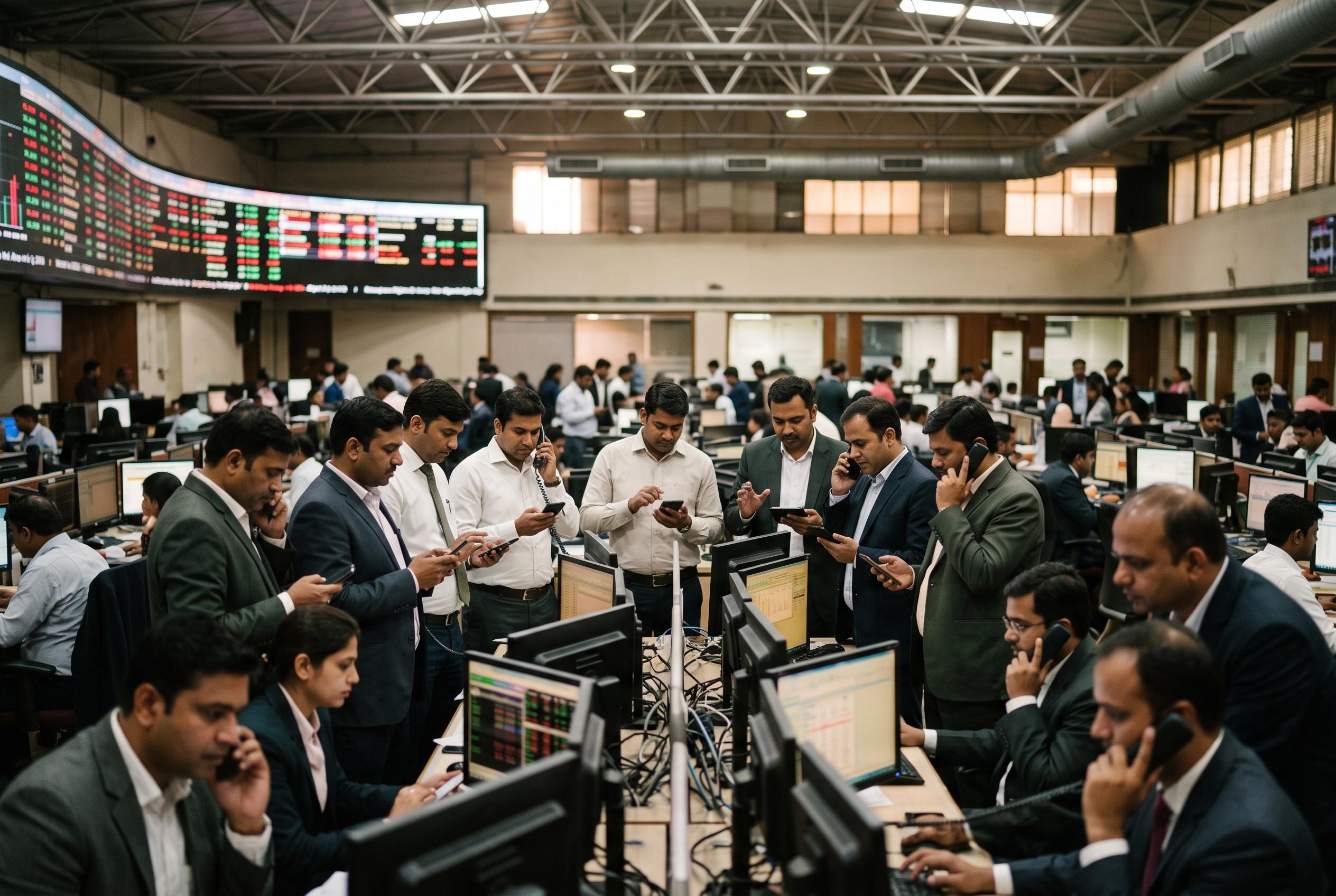

India’s gold derivatives market has expanded significantly, with daily trading surpassing ₹2.2 lakh crore and physical deliveries reaching 175 tonnes since 2003, marking a shift from speculation to risk management and price discovery among diverse market participants.
India’s gold derivatives market has become a far larger and more liquid part of the country’s bullion trade, with average daily turnover now above ₹2.2 lakh crore and physical deliveries through exchanges reaching 175 tonnes since 2003, according to a Business Today report based on an MCX study. The figures point to a market that is no longer confined to speculation, but is increasingly used by jewellers, refiners, importers, investors and financial firms for risk management and price discovery.
The report, Gold Derivatives – Deepening the Market and the Road Ahead in India, says average daily open interest stands at 43 tonnes, suggesting that participation is not just deep but sustained over time. That balance between paper trading and actual delivery is seen as a sign that exchange-traded gold is becoming more closely linked to the physical market.
Options have driven much of the latest expansion. For FY2025-26, gold futures recorded average daily turnover of ₹28,484 crore, while gold options generated average daily notional turnover of ₹1.94 lakh crore, according to the report. Average daily options volume reached 156 tonnes, far above the 23 tonnes seen in futures, highlighting how traders are increasingly using options to manage swings in gold prices.
The report argues that this growth matters because gold is a core asset in India, where household holdings are estimated at about 30,000 tonnes and demand reached 563 tonnes in 2024. It also says Indian benchmark pricing through MCX is gaining importance for domestic participants and could play a bigger role in regional price discovery, particularly given India’s trade links with South Asia and the Gulf.
At the same time, the market still faces limits. The report says broader institutional participation will be essential for the next stage of growth, even as access has widened to mutual funds, alternative investment funds, portfolio managers and foreign portfolio investors. It also points to the need for stronger domestic standards, including India Good Delivery rules, to reduce reliance on international benchmarks and better connect refiners, physical supply and exchange trading.
Disclaimer: This article is intended to inform and educate, not to recommend or endorse any financial product, investment or strategy. Please consider your own financial circumstances and seek professional advice where appropriate before making financial decisions.