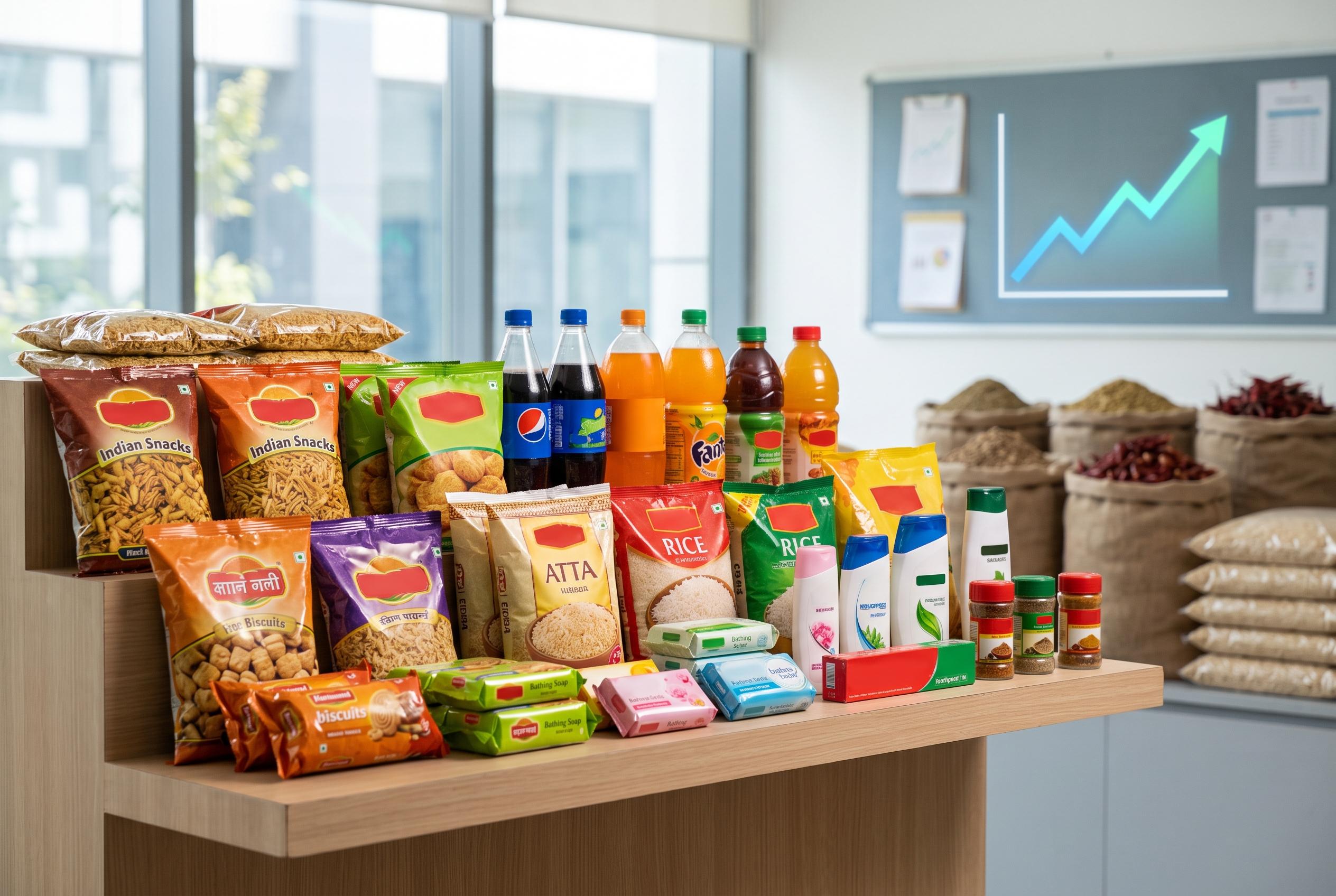

Indian fast-moving consumer goods companies are set to implement selective price increases and smaller pack sizes in the September quarter, navigating rising costs while maintaining demand and growth through strategic pricing amidst geopolitical tensions and inflation pressures.
Price increases are set to return across India’s fast-moving consumer goods sector in the September quarter as companies grapple with higher commodity, packaging and freight costs while still seeing steady demand.
Britannia Industries said it expects to add another 1.5% to 2% in pricing this quarter, largely through smaller pack sizes in its ₹5 and ₹10 biscuit lines. According to the company, the earlier round of pricing in the June quarter also came mainly from shrinkflation, while sugar and palm oil costs remain elevated. Managing director and chief executive Rakshit Hargave said on the company’s earnings call that further pricing was likely and that demand was holding up well.
Other large consumer groups are taking a similarly cautious approach. Hindustan Unilever, which raised prices by 2% to 5% in the first quarter, said it expects sequential inflation of 2% to 5% in the current quarter and will respond with measured price changes as needed. According to Reuters, the company is trying to balance margin protection with volume-led growth. Godrej Consumer Products has also signalled that another round of increases may be needed, though chief executive Sudhir Sitapati has said the timing will depend on how crude-linked costs evolve.
Dabur India is leaning on a mix of selective price actions and cost controls to defend margins. Mohit Malhotra, Dabur’s global chief executive, said on the company’s earnings call that inflation was pushing up revenue growth more than volume growth and that profit growth needed to outpace the top line. Market reports have also noted that Dabur has already taken price increases in parts of its portfolio as it faces broad-based input inflation.
The pressure points are familiar: crude oil volatility, palm oil, edible oils, packaging and logistics. Reports from LiveMint and other business publications say the conflict in West Asia has added fresh strain to crude-linked inputs and freight costs, while analysts cited by NDTV Profit estimate steep increases in several raw materials. Tata Consumer Products has said it remains ready to adjust pricing if necessary, but is wary of moving too aggressively before the full inflation picture is clear.
Even so, the sector is not sounding defensive. Companies say consumption trends remain resilient, helped by premium products and stronger revenue growth, though Nestle India has warned that overall consumption could soften if geopolitical tensions and erratic monsoons worsen. For now, the pattern across the industry is one of calibrated price rises, smaller packs and a close watch on how much inflation consumers will tolerate.
Disclaimer: This article is intended to inform and educate, not to recommend or endorse any financial product, investment or strategy. Please consider your own financial circumstances and seek professional advice where appropriate before making financial decisions.