

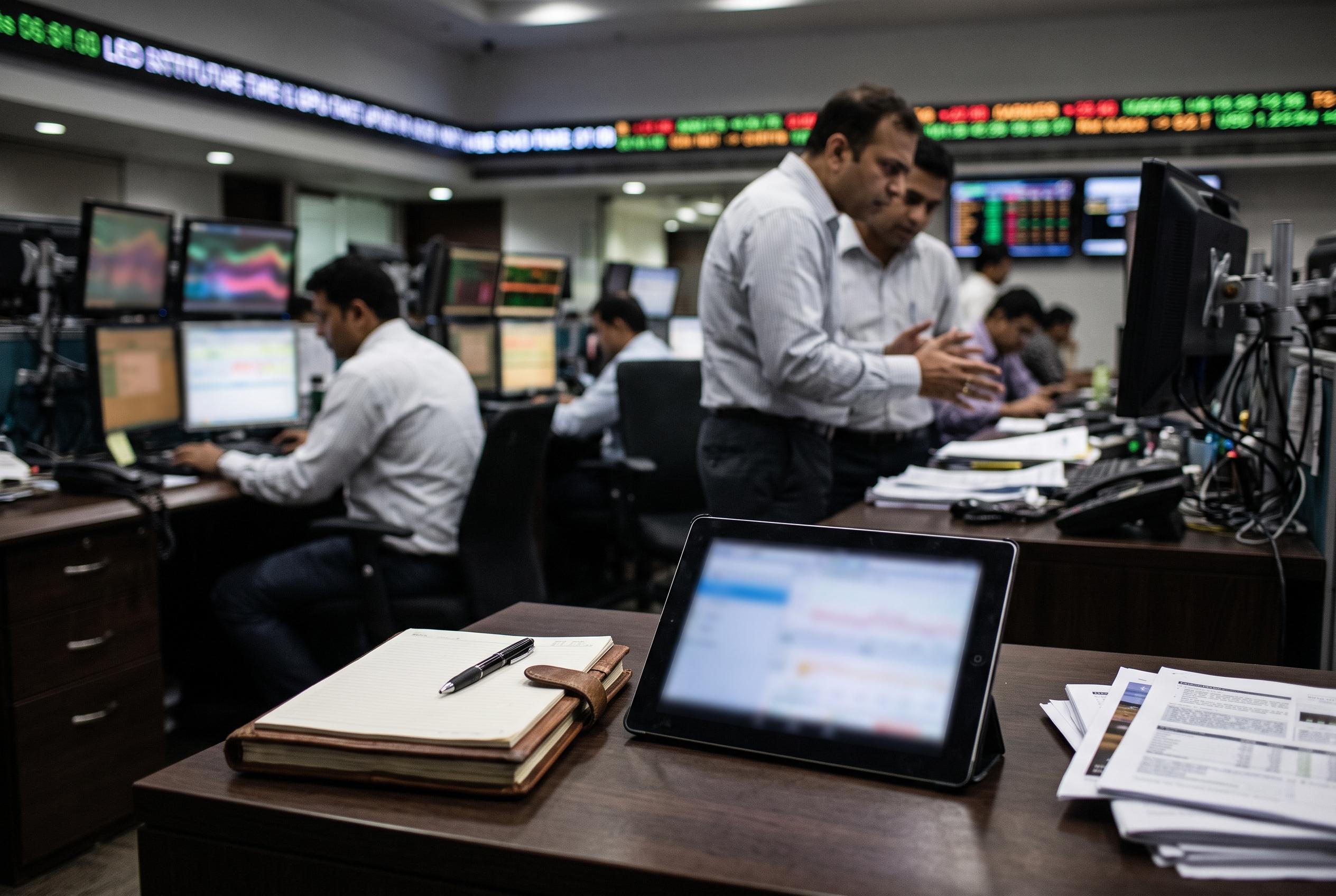

India’s government bond market is experiencing increased strain amid rising global yields and inflation pressures, with the benchmark 10-year G-Sec yield approaching its highest level in two years, driven by global crude price gains and domestic economic concerns.
India’s government bond market has been pushed into a fresh phase of strain, with the benchmark 10-year G-Sec yield climbing to 7.21% on October 1, its highest level in two years. The move reflects a wider sell-off in sovereign debt, driven by firmer global yields and rising inflation expectations at home, according to market reports.
The latest rise leaves the yield just below the 7.22% level seen on April 19, 2024, and it comes as investors reassess the outlook for interest rates, oil and inflation. In the United States, the 10-year Treasury yield advanced to 5.33%, its highest since 2002, as concern grew over public borrowing and higher energy costs. Rising crude prices have been a major pressure point, with Brent and other benchmarks staying above $100 a barrel amid continuing turmoil in West Asia.
Venkatakrishnan Srinivasan, managing partner at Rockfort Fincap LLP, told the publication that bond markets have already absorbed the jump in global yields, the uncertainty linked to the West Asia conflict and the surge in oil prices. He said current yield levels are unlikely to fall back below 7.2% unless tensions ease and crude drops below $80 a barrel and remains there.
The domestic policy backdrop is also adding to the caution. Markets have largely priced in a 25 basis point rate increase from the Reserve Bank of India at its Monetary Policy Committee meeting on October 7, as authorities weigh elevated retail inflation and a 13% rainfall deficit that could further complicate the food-price outlook. Higher crude has also weighed on the rupee, which traded at 96.25 to the dollar, 30 paise weaker on the day, according to CCIL data.
Traders said the central bank’s presence through dollar sales was not obvious in the market, and HDFC Securities analyst Dilip Parmar said the currency could weaken further towards 96.6 per dollar. The pressure across rates and foreign exchange has fed through to equities as well, with foreign fund outflows and a weaker rupee deepening risk aversion. Indian shares have fallen for eight straight weeks, only the second such losing streak in 25 years, and the Nifty ended at 22,421.95, more than 10.5% below its August 2026 level.
Disclaimer: This article is intended to inform and educate, not to recommend or endorse any financial product, investment or strategy. Please consider your own financial circumstances and seek professional advice where appropriate before making financial decisions.



