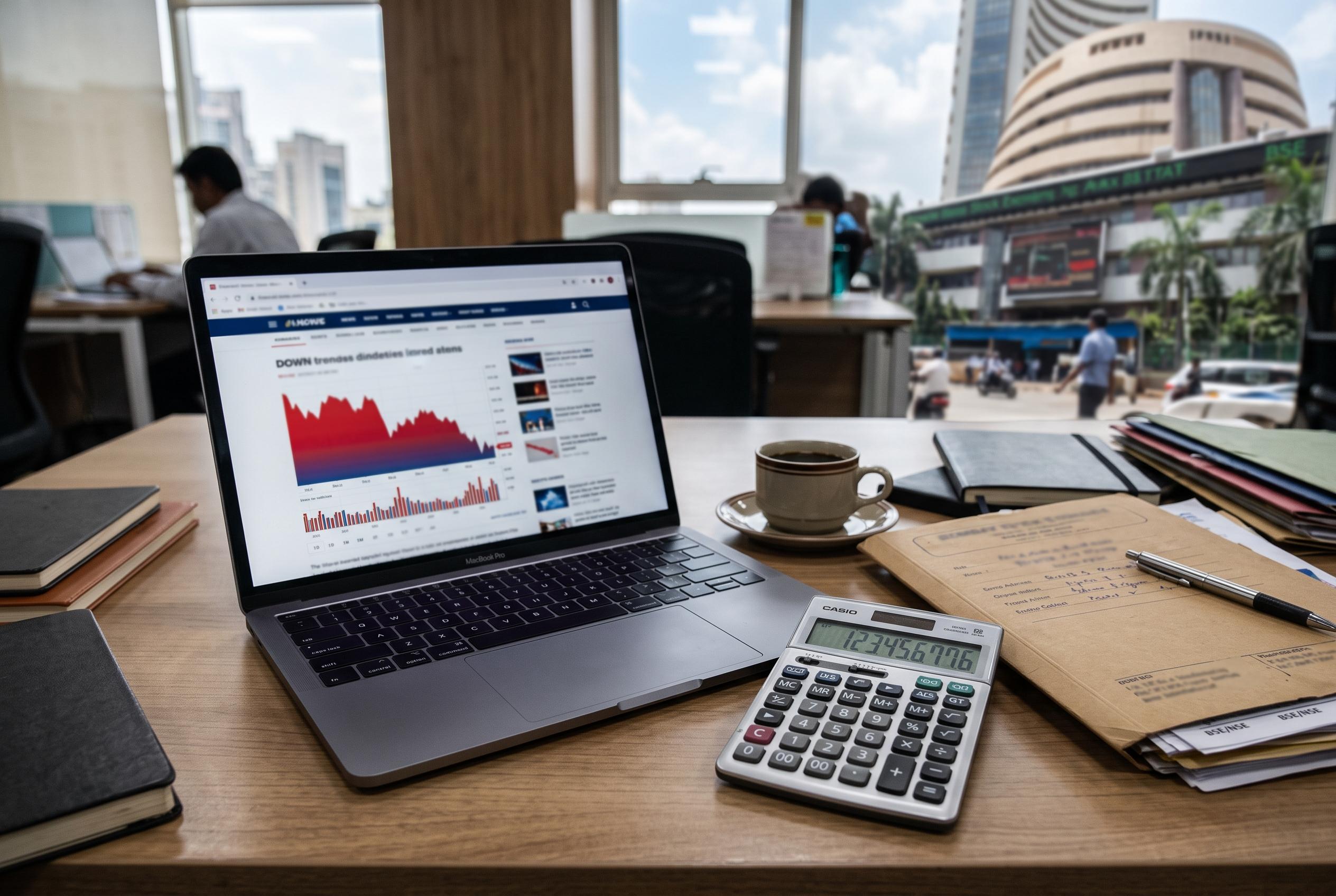

Indian markets ended a two-week rally with declines amid rising crude oil prices and renewed Middle East tensions, as global economic signals and geopolitical risks continue to influence investor sentiment.
Indian equities lost momentum in the week to 14 August 2026, ending a two-week advance as higher crude prices and renewed Middle East tensions outweighed broadly steady corporate earnings. According to the lead article, the Nifty 50 finished at 24,366, down 204.65 points for the week, while the Sensex fell to 78,009.25. Reuters notes that the Sensex is a 30-stock benchmark used as a broad gauge of Indian market sentiment, which makes its weekly slide a useful sign of how cautious investors remained.
The mood darkened as Brent crude moved up sharply during the week, with fears about supply from the region and stalled diplomatic efforts adding to the pressure on a major oil-importing economy. The lead article says the market repeatedly failed to hold gains above the 24,500-24,600 zone, leaving the index stuck in consolidation. Reuters has previously linked moves in Indian equities to global economic indicators, corporate results and geopolitical events, all of which were in play again last week.
Early-week trading was supported by softer-than-expected US labour data, which helped risk appetite across Asia, while a cooler US inflation reading later in the week briefly revived hopes of a Federal Reserve rate cut. The lead article says that foreign investors were net buyers on balance for the week, but domestic institutions provided the stronger cushion for the market, helping offset periods of retail-led profit taking. That pattern suggests the decline was less about panic selling and more about a market waiting for a clearer macro signal.
Sector performance was uneven but broadly weak. The lead article says 15 of the 16 major sectors ended lower, with metals and financials among the main drags, while mid-cap shares held up relatively better. One bright spot was defence, where stocks such as HAL, Mazagon Dock, BDL and BEL rallied after fresh capital acquisition approvals and earnings momentum, reinforcing the view that geopolitical risk has become a tailwind for parts of the sector rather than a headwind.
Bharti Airtel stood out as one of the week’s stronger large caps after reporting results that the company said beat expectations on average revenue per user, 5G additions and overseas operations. The lead article also points to Dr Reddy’s, BEL and Bharti Airtel among the top gainers, while Max Healthcare, Jio Financial and Trent were among the biggest laggards as investors trimmed expensive domestic names. With the Nifty still below its 200-day moving average, the near-term technical picture remains cautious, and the next move is likely to depend on crude, US macro data and any fresh developments around the Strait of Hormuz.
Disclaimer: This article is intended to inform and educate, not to recommend or endorse any financial product, investment or strategy. Please consider your own financial circumstances and seek professional advice where appropriate before making financial decisions.