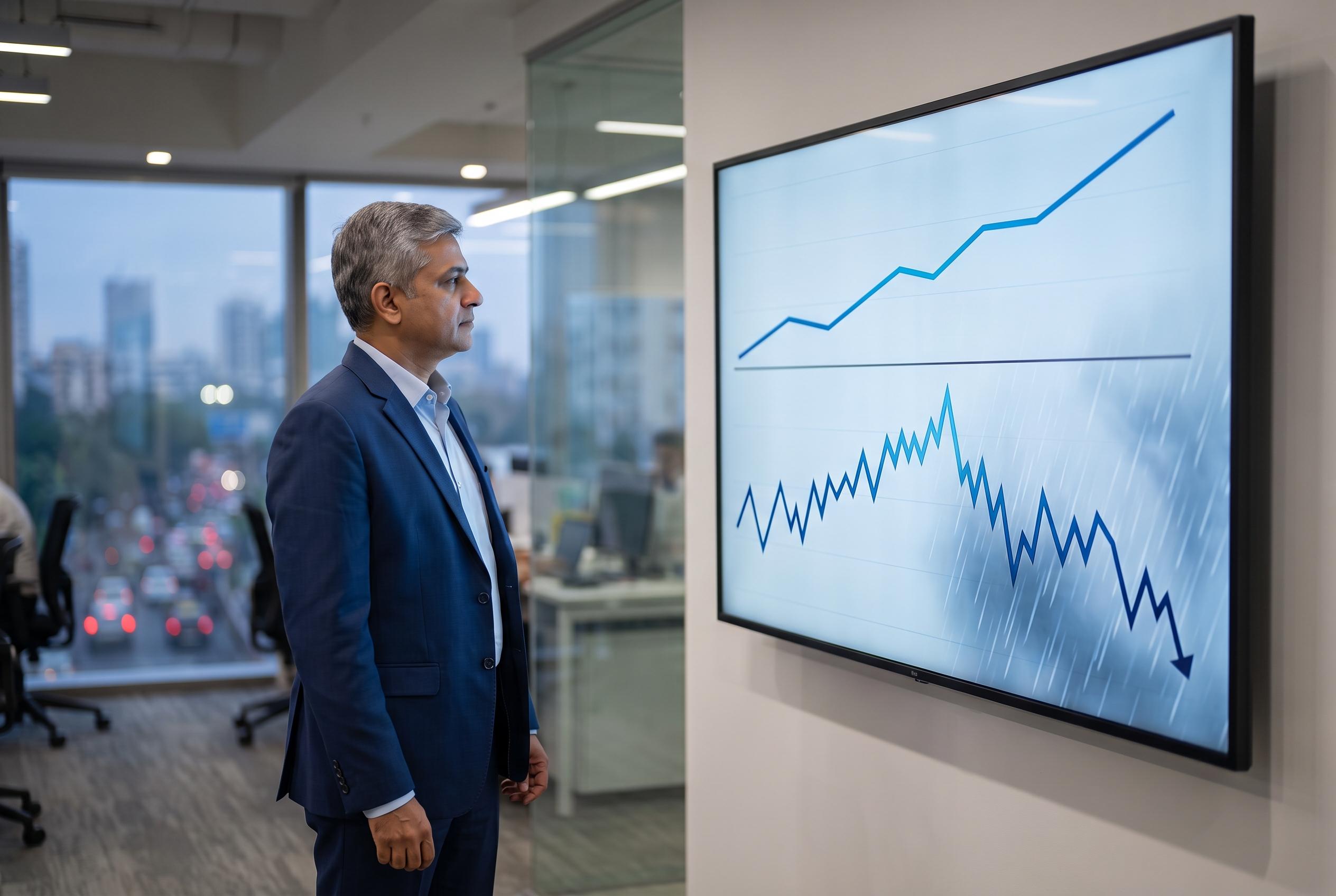

As India enters the latter half of 2026, investors remain cautious amid fluctuating oil prices, uncertain monsoon conditions, and geopolitical tensions, weighing potential for moderation against persistent risks.
Indian equities are entering the second half of 2026 with investors weighing a familiar mix of local and global risks: inflation, oil and the monsoon. Ajay Bagga, a market veteran, said uneven rainfall across several states could lift food prices in the months ahead, while higher crude prices and energy disruption linked to Iran remain key threats. He also pointed to uncertainty around Washington’s debate over sanctions on countries buying Russian oil, which could add another layer of pressure to already fragile sentiment.
Bagga said the Reserve Bank of India is likely to stay on hold for the next few months, with the direction of inflation shaped by the rupee and energy costs. That view comes as markets continue to judge whether the recent improvement in domestic activity can hold. According to Business Today, earnings downgrades have stopped, sales are still holding up and sectors such as real estate, autos and financials have been among the better performers.
Broader market strategists are not uniformly pessimistic. LiveMint reported that many experts see a more constructive backdrop for Indian stocks in the second half of 2026, helped by softer crude, easing inflation pressure and improving earnings prospects. Even so, they warned that rich valuations and an uncertain monsoon could limit gains, meaning investors may have to settle for only moderate returns despite the friendlier macro picture.
The biggest swing factor remains oil. LiveMint has reported that sustained crude prices above $90 to $100 a barrel could trigger an 8% to 10% correction in the Sensex and Nifty 50, while also worsening India’s import bill and trade balance. Other analysts have warned that a weak monsoon could hurt farm output, lift food inflation and weaken rural demand, which would matter for both growth and markets. For now, the balance of risks suggests caution rather than the start of a broad rally.
Disclaimer: This article is intended to inform and educate, not to recommend or endorse any financial product, investment or strategy. Please consider your own financial circumstances and seek professional advice where appropriate before making financial decisions.